
60-day deadline raises pressure on Trump to end war on Iran
 4 Min Read
A 60-day deadline under US law could force President Trump to seek approval or end the war on Iran, as divisions persist in Congress.
-
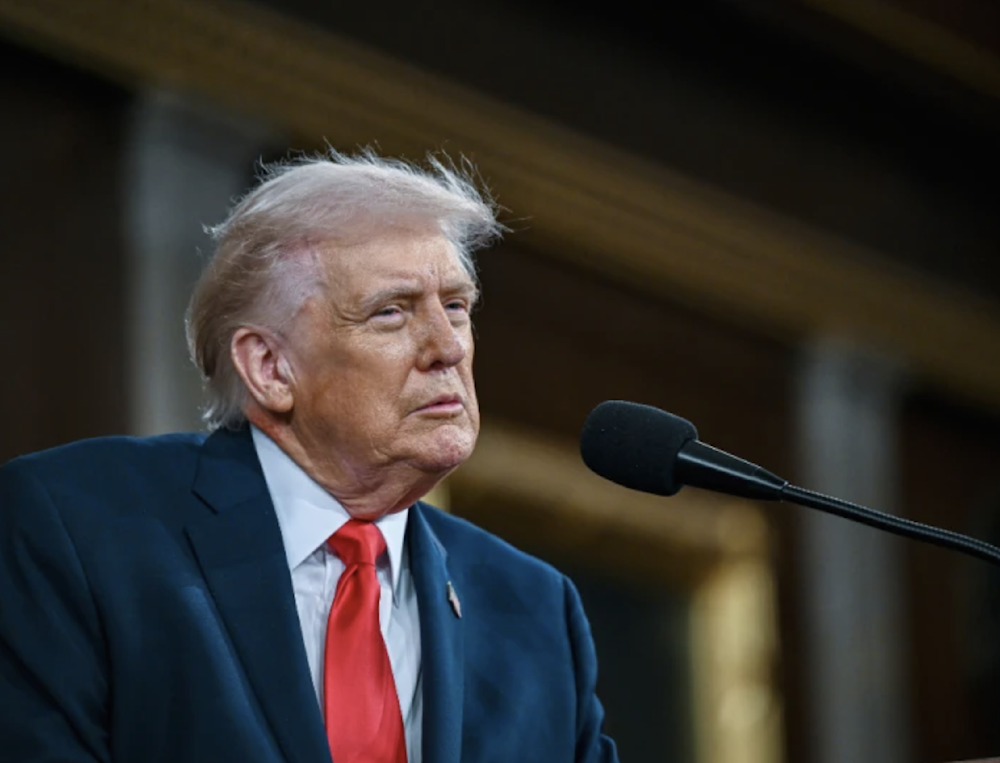
President Donald Trump delivers the State of the Union address to a joint session of Congress in the House chamber at the U.S. Capitol in Washington, Tuesday, Feb. 24, 2026. (AP)
A key deadline under US law is approaching that could increase pressure on President Donald Trump to either end the war on Iran or seek congressional approval that will allow it to continue.
The 1973 War Powers Resolution, enacted to limit a president’s ability to engage in military conflict without congressional authorization, establishes a 60-day window for such operations.
Under the law, the president must either withdraw US forces or obtain approval from Congress once the deadline is reached.
60-day countdown
The countdown began on February 28, after the US and "Israel" launched joint attacks on Iran, with Trump citing his authority as commander in chief.
Throughout nearly eight weeks of war, Democrats in Congress have repeatedly attempted to invoke the War Powers Resolution to halt the military campaign. However, these efforts have been blocked multiple times by Republicans, most recently in the Senate, where a measure was rejected for the fifth time since the start of the war.
Despite earlier resistance, some Republican lawmakers have indicated that the upcoming deadline could mark a turning point. They may expect the administration to either scale back operations or formally seek congressional authorization to continue the war.
Democrats argue that Trump initiated the war without proper legal authority, maintaining that congressional approval is required. The administration, along with most Republican lawmakers, insists that the president’s actions fall within the scope of existing war powers, allowing temporary military engagement without prior approval.
The first major deadline is expected on May 1, when the 60-day period effectively expires.
Possible 30-day extension
After the initial 60-day period, presidential options become more restricted unless Congress takes action. The president may either seek congressional approval, begin withdrawing forces, or invoke a one-time 30-day extension.
This extension is only permitted if the president certifies in writing that additional time is necessary to ensure the safe withdrawal of US forces. Importantly, it does not allow the continuation of offensive military operations during that period.
Congressional Authority and AUMF
Congress retains the authority to approve military action through an Authorization for Use of Military Force (AUMF). In recent decades, AUMFs have become the primary legal mechanism for approving military campaigns without a formal declaration of war.
The last major authorization of this kind was passed in 2002 for operations in Iraq. Since then, no new AUMF has been approved by the Senate.
While Republican lawmakers have largely resisted Democratic efforts to end the war, it remains uncertain whether they would unify behind a new authorization. Senator Lisa Murkowski, a Republican from Alaska, has indicated she is working with colleagues on a draft AUMF related to Iran, though it has not yet been formally introduced.
Murkowski has also criticized the administration for lacking clarity on objectives, costs, and timelines, arguing that a new authorization should reassert congressional authority and impose stricter limits on military operations.
Political implications and congressional pressure
It is worth mentioning that ignoring the 60-day deadline could create political pressure, particularly within Congress. Some lawmakers believe that the legal and political significance of the deadline will become more pronounced once it is reached.
Senator Chris Murphy, a leading Democratic voice on war powers legislation, has noted that several Republican lawmakers acknowledge the importance of the limit, suggesting that continued inaction after the deadline could become increasingly difficult to justify politically, especially if congressional oversight concerns intensify.
The War Powers Resolution continues to shape the balance between the executive and legislative branches over US military action. With the 60-day limit, a possible 30-day extension, and the option of a congressional AUMF, the debate over presidential war powers remains both legally and politically significant.


