
Amid Israeli violations, Hamas moves to continue Gaza ceasefire talks
 3 Min Read
Hamas affirmed its readiness to proceed with negotiations on the second phase of the Gaza ceasefire agreement, while accusing the Israeli occupation of stalling key commitments, including the entry of humanitarian aid and the reopening of border crossings.
-
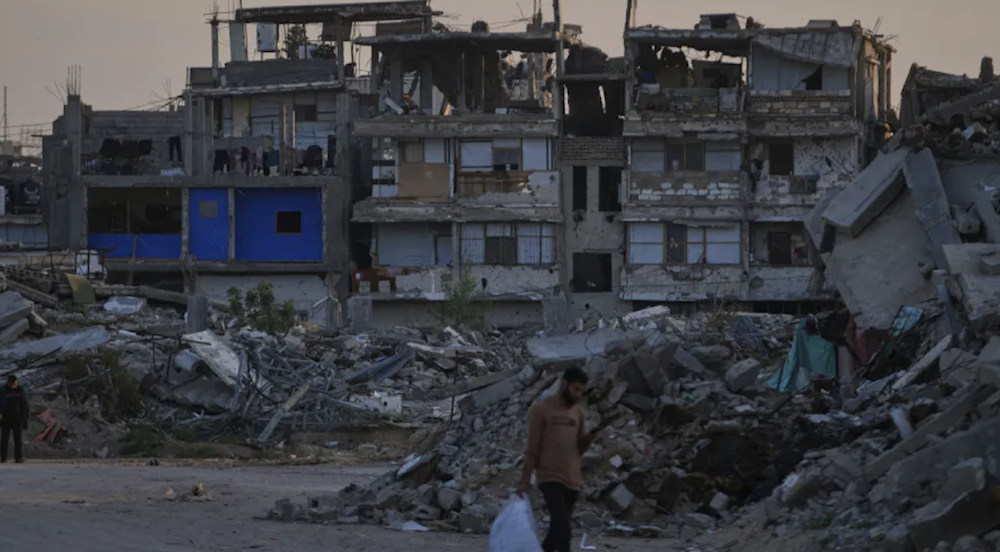
Palestinians walk along a street surrounded by buildings destroyed during Israeli air and ground operations in Khan Younis, southern Gaza Strip, on April 9, 2026. (AP)
The Islamic Resistance Movement in Palestine, Hamas, affirmed its willingness to proceed with negotiations on the second phase of the Gaza ceasefire, as the Israeli occupation continues to stall key commitments.
In six months since the ceasefire in Gaza came into effect, the Israeli occupation has violated the agreement 2,400 times.
In a statement, Hamas revealed that it had conducted extensive meetings and consultations in Cairo with mediators and Palestinian factions. The discussions focused on completing the remaining obligations of the first phase of the agreement and preparing for the next stage of negotiations.
The movement stated that it approached the proposals presented with “a high degree of responsibility and positivity,” aiming to reach an agreement that serves the interests of the Palestinian people.
Hamas confirmed its intention to submit a formal response to the proposals after concluding internal consultations with its leadership and other Palestinian factions.
Israeli obstruction continues
Despite progress in talks, Hamas pointed to continued obstruction by the Israeli occupation, particularly its refusal to fully implement key provisions of the agreement.
These include delays in reopening the Rafah crossing and restrictions on the entry of humanitarian aid into the Gaza Strip, both of which remain central to alleviating the humanitarian crisis.
The Gaza ceasefire agreement came into effect on October 11, 2025, following more than two years of sustained large-scale Israeli aggression. The deal is structured in multiple phases aimed at halting the war on Gaza and addressing humanitarian and political issues.
As negotiations move forward, Hamas emphasized its commitment to overcoming obstacles through dialogue, while holding the Israeli occupation accountable for its ongoing violations.
'Israel' still breaching ceasefire agreements
Local authorities stated that Israeli forces continue to breach the ceasefire agreement through concentrated airstrikes and artillery shelling targeting areas where displaced civilians are gathered. They also reported ongoing demolition operations and the destruction of buildings inside the so-called “yellow line” zone.
These developments come alongside continued restrictions imposed on the entry of goods and humanitarian aid, as well as limits on the movement of wounded and sick individuals seeking medical treatment abroad, further worsening living conditions in the besieged enclave.
According to cumulative figures from the ongoing war on Gaza since October 7, 2023, the death toll has reached 72,336, while 172,213 people have been injured, amid what local officials describe as catastrophic humanitarian and health conditions facing the population.
Israeli breaches of the ceasefire continue with complete impunity
Figures released by the Gaza Government Media Office report widespread Israeli breaches of the truce and continued restrictions on humanitarian aid.
More than six months after a ceasefire came into effect on October 10, 2025, the Gaza Government Media Office said that Israeli occupation forces have committed 2,400 violations of the agreement, resulting in 754 deaths and 2,100 injuries.
In a statement issued on April 14, the office described the violations as “serious and systematic” breaches of the ceasefire and accompanying humanitarian protocol. It said the violations included gunfire incidents, bombardments, and the demolition of residential structures.
According to the breakdown provided, the reported violations include 921 incidents of gunfire, 1,109 bombardment or targeting incidents, 97 cases of military vehicles entering residential areas, and 273 demolitions of homes and other buildings.


