
Aoun heads to Rome as UNIFIL future in Lebanon comes into focus
 4 Min Read
Lebanese President Joseph Aoun will visit Rome for talks on UNIFIL’s future as Beirut seeks to preserve an international presence in south Lebanon.
-
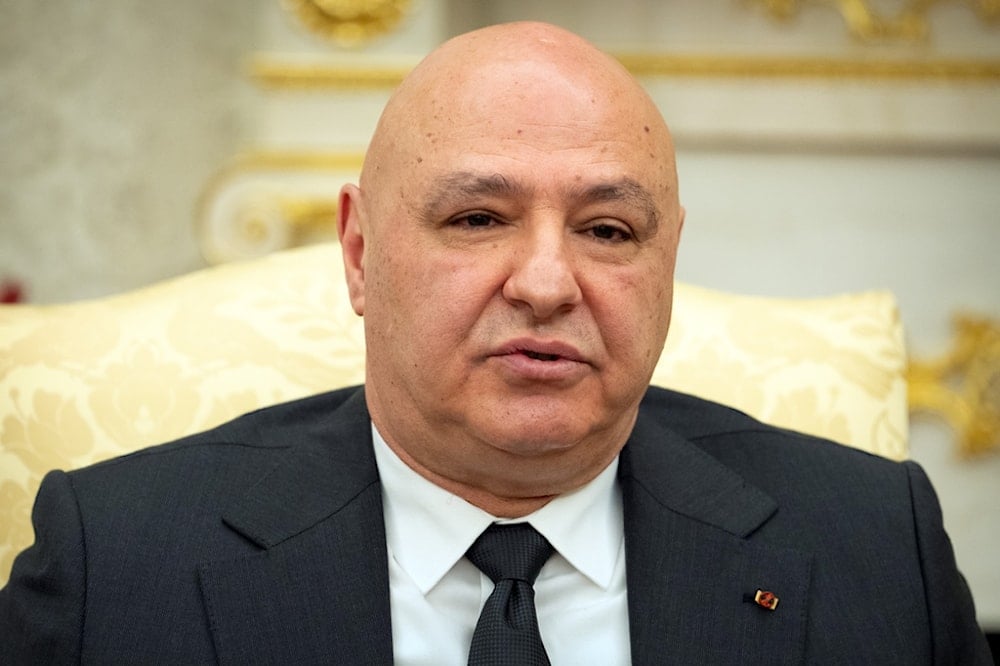
Lebanese President Joseph Aoun speaks while meeting with US President Donald Trump in the Oval Office at the White House, Tuesday, July 21, 2026, in Washington. (AP Photo/Mark Schiefelbein)
Lebanese President Joseph Aoun will travel to Rome on Thursday for talks on the future of the United Nations Interim Force in Lebanon (UNIFIL), whose current mandate is set to expire this year, a Lebanese official told AFP.
Aoun is expected to meet Italian President Sergio Mattarella and Prime Minister Giorgia Meloni to discuss the future of international forces in southern Lebanon.
The Lebanese official said the talks will focus on "the future of the international forces, particularly in light of the French-Italian initiative to set up a force to replace UNIFIL."
Italy and France announced in June that they wanted to establish a multinational force to succeed UNIFIL. Both countries currently contribute large troop contingents to the UN mission.
Aoun will also meet Pope Leo XIV at the Vatican and brief him on "the contacts Lebanon has been making since negotiations began" with "Israel", according to the Lebanese official.
Read more: Israeli attacks on S. Lebanon intensify, civilians bear brunt: UNIFIL
Beirut favors extending UNIFIL mandate
Aoun has said Lebanon’s preferred option is to extend UNIFIL’s mandate, whereas "Israel" opposes the extension of the UN mission.
Speaking on Monday, Aoun said that "the second choice is adopting a formula that ensures the continued presence of international forces in the south" alongside the Lebanese Army "and in coordination with it".
The issue has gained urgency amid continued Israeli aggression on southern Lebanon.
Despite a weeks-long lull in fighting, Israeli forces have continued intermittent strikes and large-scale demolition operations in the area, while maintaining positions in a strip of Lebanese territory extending around 10 kilometers inside the border.
The Lebanese state and other countries warned that the withdrawal of UNIFIL without an alternative arrangement could create a security vacuum in southern Lebanon.
France and Italy propose alternative force
The French-Italian initiative comes as Beirut faces a decision over the future of the international military presence in the south.
A framework agreement reached in June between Lebanon and "Israel" called for the disarmament of Hezbollah, the withdrawal of Israeli occupation forces from southern Lebanon, and the deployment of the Lebanese Army in the area, initially through "pilot zones."
The future role of international forces is closely linked to the implementation of any such security arrangement.
The Lebanese state and other actors continue to pin the withdrawal of Israeli occupation forces from southern Lebanon on the surrender of the Resistance's arms. However, sacrificing this proven line of defense exposes the south and other Lebanese regions to Israeli infiltration and occupation.
"Israel" is notorious for not abiding by ceasefire demands if it means that it won't have the freedom to commit the crimes it pleases.
During the previously imposed ceasefire in 2024, Hezbollah abided by its contingencies to show the state that it was willing to follow its demands; however, "Israel" continued to launch attacks against Lebanon, negating Lebanon's sovereignty and leading to the martyrdom and injuries of dozens of civilians.
The disarmament of Hezbollah strips Lebanon of a deterrent that has shown itself to be the only one in the region capable of kicking "Israel" out of its land; abdicating it would open a path for "Israel" to occupy the south under the guise of what it calls "buffer zones," similarly to what is currently happening to southern Syria.
Read more: Hezbollah’s weapons and the lessons of Syria, PLO, and Algeria
UN proposes options after UNIFIL
UN Secretary-General Antonio Guterres said in a June report that peacekeepers would still be needed after the end of UNIFIL’s current mission.
Guterres proposed three options for maintaining an international presence, ranging from nearly 2,000 to more than 5,500 UN personnel.
Last month, 86 Lebanese lawmakers signed a letter urging the UN Security Council to maintain the peacekeeping mission.
UNIFIL currently has around 7,500 personnel from nearly 50 countries. The mission has operated in Lebanon since 1978, although its presence has not prevented repeated outbreaks of conflict or Israeli violations of Lebanese territory.
Aoun’s Rome visit therefore comes as Lebanon seeks to prevent the end of UNIFIL’s mandate from creating a new security vacuum in the south, particularly while Israeli forces continue operating inside Lebanese territory.


