Araghchi: Delegations from 70 nations attended Sayyed Khamenei funeral
 5 Min Read
Iranian Foreign Minister Abbas Araghchi says representatives from more than 70 countries attended the funeral of Leader Sayyed Ali Khamenei, calling it a lasting milestone in Iran's international relations.
-
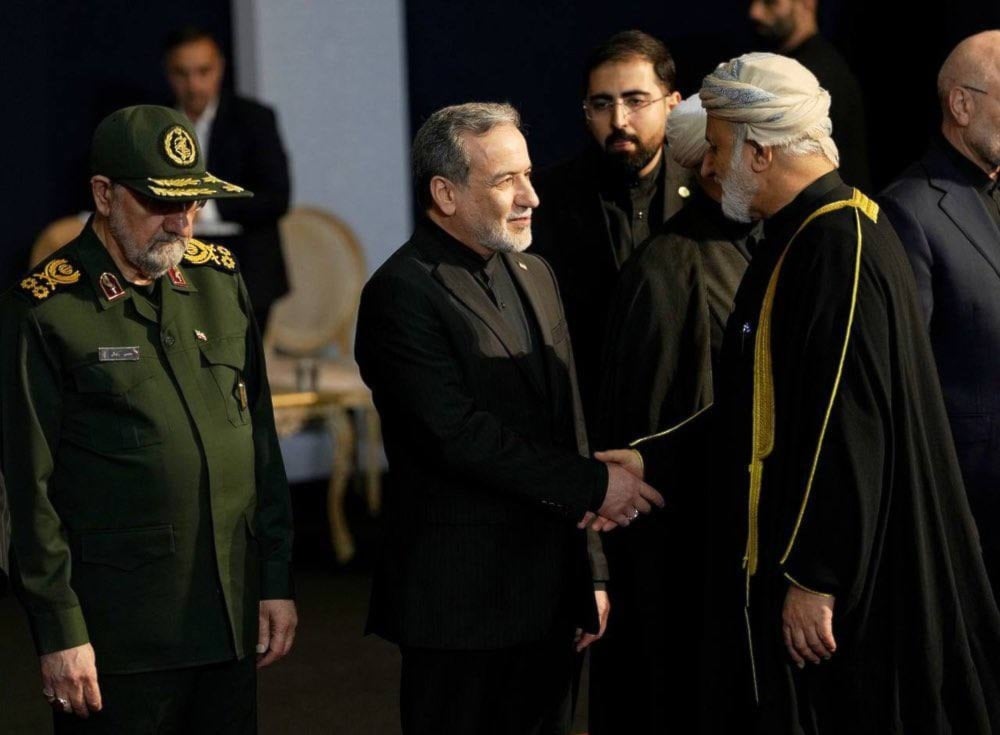
Iran's Foreign Minister Seyed Abbas Araghchi shakes hands with Abd al-Malik bin Abdullah Al-Khalili, Chairman of the State Council of the Sultanate of Oman, during the funeral ceremonies of martyred Leader Sayyed Ali Khamenei, in Tehran, posted by his official account on July 4, 2026 (Social media | @araghchi)
Iranian Foreign Minister Abbas Araghchi said on Saturday that representatives from more than 70 countries had traveled to Iran to participate in the funeral ceremonies for the martyred Leader of the Islamic Revolution, Sayyed Ali Khamenei, saying that the turnout was a lasting milestone in Iran's international relations.
"We are pleased to welcome representatives from more than 70 countries who chose to participate in honoring our martyred leader, including our loyal Arab brothers," Araghchi said in a post on X.
يسرّ إيران أنها استقبلت ممثلين من أكثر من سبعين دولة ممن اختاروا المشاركة في تكريم قائدنا الأعلى الشهيد، آية الله العظمى خامنئي، ومن بينهم إخواننا العرب الأوفياء.
— Seyed Abbas Araghchi (@araghchi) July 4, 2026
وسيظل هذا الإحياء التاريخي ذكرى خالدة في مسيرة علاقاتنا المشتركة. pic.twitter.com/g0LpjAiIwa
He added that the historic commemoration "will remain an enduring memory in the course of Iran's shared relations" with the participating countries.
Earlier, Iran's Foreign Ministry expressed its appreciation for the foreign guests and international delegations attending the funeral ceremonies.
In a statement, the ministry said the participating officials and delegations had "stood on the right side of history" by expressing solidarity with Iran despite external pressure and threats aimed at discouraging their attendance.
The ministry thanked the visiting delegations for taking part in a historic occasion honoring the late leader.
Second day of funeral ceremonies draws massive crowds
Millions of mourners gathered in Tehran on Saturday for the second day of funeral ceremonies for the martyred Iranian Leader, as Iran continued six days of national mourning marking one of the largest public commemorations in the country’s modern history.
The ceremonies have drawn participants from across Iran and more than 100 countries, according to Iranian estimates, alongside official delegations, religious scholars, and figures aligned with the Axis of Resistance. The turnout comes amid continued nationwide processions following Sayyed Khamenei’s martyrdom as a result of US-Israeli aggression.
Tehran’s streets were filled with mourners dressed in black, carrying Iranian flags, red banners symbolizing vengeance, and portraits of the late leader, alongside images of his successor, Sayyed Mojtaba Khamenei. Crowds repeatedly chanted slogans expressing loyalty to the Islamic Republic, including calls for retaliation and condemnation of the United States.
Public grief and political messaging in Tehran
Ahead of and during the ceremonies, large crowds gathered at the Grand Musalla in Tehran, with many participants traveling long distances to attend. Iranian state media reported that millions are expected to take part in the capital over the course of the mourning period, underscoring Sayyed Khamenei’s long-standing political and religious influence after more than three decades in leadership.
Witnesses described an atmosphere marked by both grief and determination. Some mourners said they had traveled hundreds of kilometers to attend, saying that their participation was an expression of loyalty and national commitment, while others described the event as a deeply personal loss.
Authorities have implemented extensive security measures across Tehran, including road closures and airspace restrictions, as the country hosts what is expected to be its largest public gathering since the 1989 funeral of Imam Ruhollah Khomeini.
Funeral procession and regional participation
The six-day funeral procession will continue across multiple cities in Iran before extending to the holy city of Qom and later to Shia religious centers in Iraq, concluding with burial in Mashhad. Iranian officials have described the ceremonies as both a national and regional event, reflecting broader political and symbolic significance beyond Iran’s borders.
Senior Iranian officials and international delegations have taken part in the commemorations, including political leaders, religious figures, and representatives from across Asia, West Asia, Africa, and Latin America. Officials from regional states and international organizations have also attended, underscoring the wide diplomatic presence at the ceremonies.
Iranian officials have stated that the funeral was a demonstration of national unity and political continuity, arguing that the scale of participation reflects internal cohesion despite external pressure. They say the turnout signals the failure of efforts by the United States and the Israeli occupation to isolate or weaken Iran.
The transition of leadership is, as stated by Iranian authorities, a continuation of the revolutionary path rather than a rupture, with officials emphasizing institutional stability amid regional tensions.
Iran has also warned of ongoing security risks linked to the broader regional escalation following the US-Israeli aggression, while reiterating that the country remains prepared for any further developments affecting its sovereignty or security.
The funeral proceedings have taken place alongside heightened regional tensions, including warnings issued by Iran to Western countries over developments in the Strait of Hormuz, as well as ongoing diplomatic friction linked to indirect negotiations involving Tehran, Washington, and regional actors.
Iran’s Intelligence Ministry has reiterated that accountability for Sayyed Khamenei’s martyrdom is inevitable, holding the United States and the Israeli occupation responsible while calling for mass participation in the ceremonies as a show of national unity.