
Araghchi: Iran emerged from war stronger, will grow stronger
 4 Min Read
Iranian Foreign Minister Abbas Araghchi says Iran emerged from the war stronger and will not bow to US pressure or threats.
-
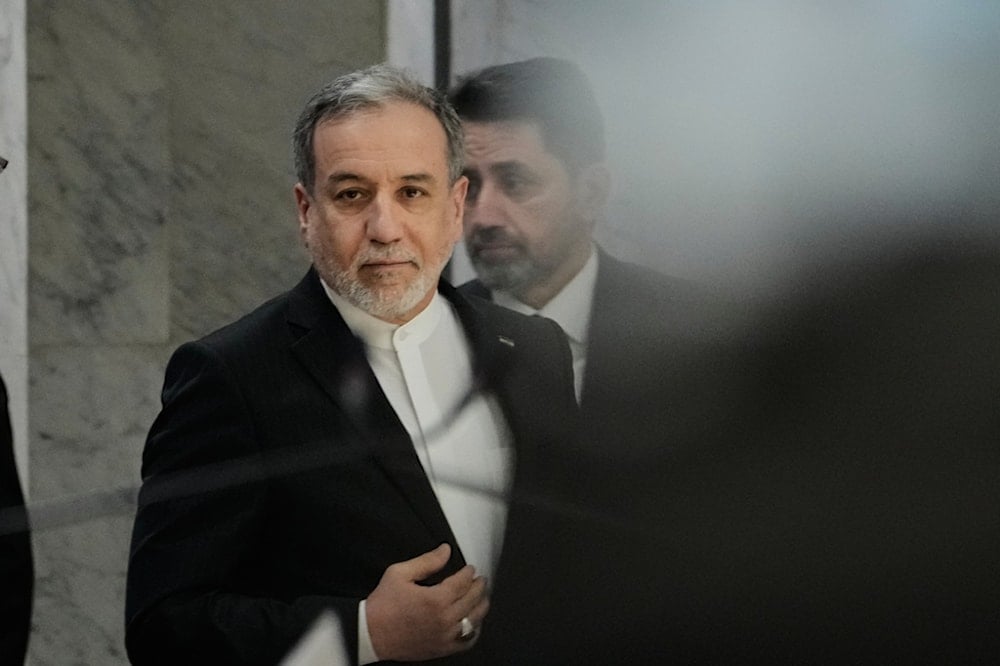
Iranian Foreign Minister Abbas Araghchi arrives to meet his Iraqi counterpart Fouad Hussein in Baghdad, Iraq, Sunday, June 28, 2026 (AP)
Iranian Foreign Minister Abbas Araghchi said Iran's standing is far stronger than it was in the past, adding that the country emerged from the war with greater strength and would overcome the next phase with even greater strength.
In remarks to Tasnim news agency, Araghchi said Iran is now recognized as a symbol of a strong, firm, and resilient state, adding that this is the path the country will continue to pursue in the future.
Iran maintains consultations with Russia, China
Araghchi said consultations with Russia and China are ongoing, noting that Iran regularly holds discussions with both countries whenever opportunities arise.
He added that he had met with his Russian and Chinese counterparts and held detailed meetings with them that addressed a wide range of issues.
Problem with US approach
Regarding relations with Washington, the Iranian foreign minister said, "We have no problem with mediation with the United States and the problem is the American approach."
Araghchi stressed that Iran has demonstrated that it will not submit to US arrogance, adding, "We do not fear threats, we do not submit to pressure, and we do not tolerate the language of threats."
He further said that as long as the goals and legitimate demands of the Iranian people have not been achieved, it is natural for Tehran to continue its efforts.
Illogical, expansionist, and authoritarian
Commenting earlier on the US' approach, Araghchi said Tehran has no issue with mediation efforts involving the United States, arguing that the main obstacle lies in Washington's "expansionist and authoritarian" approach.
In an interview with Iranian television, Araghchi said an agreement on security cooperation between Iran and Iraq has so far been implemented to an acceptable degree, adding that Tehran is seriously following up on its implementation.
Addressing mediation efforts between Iran and the United States, Araghchi said Tehran has no difficulty with the process, noting that there are enough countries willing to play a mediating role.
He said the central problem was instead Washington's approach, which he stated is "illogical, expansionist and authoritarian". Araghchi added that Iran has responded to this approach with "strong" positions.
Iran responds to renewed US attacks
Araghchi's remarks come as the United States has renewed its attacks on Iran in recent days, with most of the attacks concentrated along the country's southern coast.
The attacks have targeted ports, coastal observation towers, vital harbors and civilian infrastructure, according to the report.
In response, the Islamic Revolution Guard Corps (IRGC) announced that it had carried out a series of drone strikes against US military positions in Kuwait and Jordan, stating that the operations come as retaliation for the ongoing US attacks on Iran.
The IRGC said its forces targeted several US military facilities in Kuwait, including Ali Al Salem Air Base, Al-Udairi Camp, Camp Doha, and Camp Arifjan. According to the statement, the strikes hit military equipment and ammunition depots, fuel storage facilities, air defense systems and infrastructure used to support US military operations in the region.
The IRGC said the attacks on Ali Al Salem Air Base destroyed a major military equipment depot, a Patriot air defense system, and a hangar housing US MQ-9 drones. It also said strikes on Al-Udairi Camp, where US forces are stationed, caused extensive damage to helicopters and drones and resulted in several casualties among US personnel.


