
Araghchi: US approach 'illogical, expansionist and authoritarian'
 8 Min Read
Iranian Foreign Minister Abbas Araghchi says Tehran has no issue with mediation but insists US respect for Iran is essential for diplomacy to advance.
-
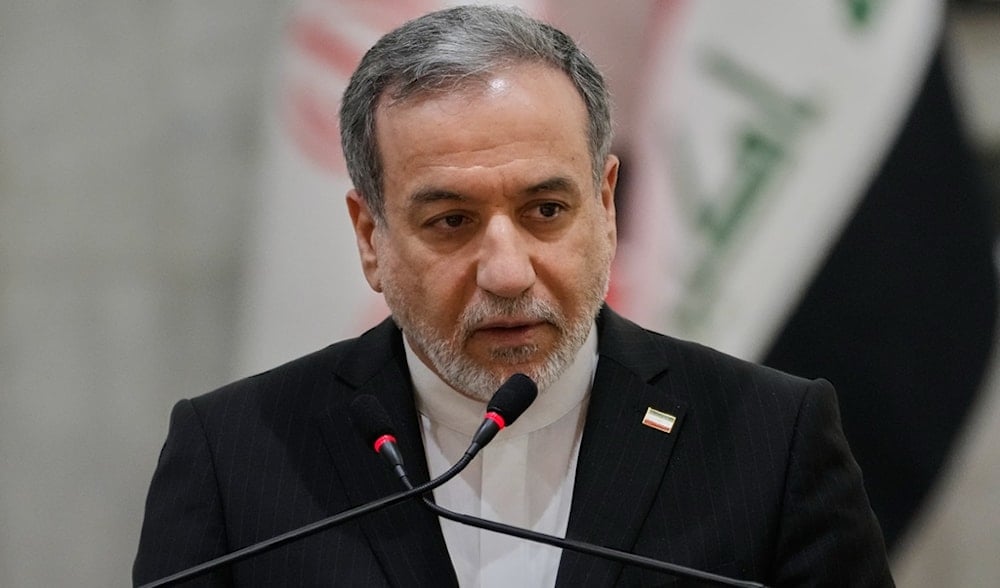
Iranian Foreign Minister Abbas Araghchi speaks during a news conference with his Iraqi counterpart Fouad Hussein after their meeting at the foreign ministry in Baghdad, Iraq, Sunday, June 28, 2026. (AP Photo/Hadi Mizban)
Iranian Foreign Minister Abbas Araghchi said Tehran has no issue with mediation efforts involving the United States, arguing that the main obstacle lies in Washington's "expansionist and authoritarian" approach.
In an interview with Iranian television, Araghchi said an agreement on security cooperation between Iran and Iraq has so far been implemented to an acceptable degree, adding that Tehran is seriously following up on its implementation.
Addressing mediation efforts between Iran and the United States, Araghchi said Tehran has no difficulty with the process, noting that there are enough countries willing to play a mediating role.
He said the central problem was instead Washington's approach, which he stated is "illogical, expansionist and authoritarian". Araghchi added that Iran has responded to this approach with "strong" positions.
The Iranian foreign minister stressed that Tehran would not take any steps unless the United States recognizes that "there is no way but to respect the Iranian people and their interests".
Iran responds to renewed US attacks
Araghchi's remarks come as the United States has renewed its attacks on Iran in recent days, with most of the attacks concentrated along the country's southern coast.
The attacks have targeted ports, coastal observation towers, vital harbors and civilian infrastructure, according to the report.
In response, the Islamic Revolution Guard Corps (IRGC) announced that it had carried out a series of drone strikes against US military positions in Kuwait and Jordan, stating that the operations come as retaliation for the ongoing US attacks on Iran.
The IRGC said its forces targeted several US military facilities in Kuwait, including Ali Al Salem Air Base, Al-Udairi Camp, Camp Doha, and Camp Arifjan. According to the statement, the strikes hit military equipment and ammunition depots, fuel storage facilities, air defense systems and infrastructure used to support US military operations in the region.
The IRGC said the attacks on Ali Al Salem Air Base destroyed a major military equipment depot, a Patriot air defense system, and a hangar housing US MQ-9 drones. It also said strikes on Al-Udairi Camp, where US forces are stationed, caused extensive damage to helicopters and drones and resulted in several casualties among US personnel.
The group further said US military assets at Camp Doha and Camp Arifjan were targeted, while a communications tower was struck in response to US attacks on communications infrastructure in Iran.
“The fighters also targeted a communications tower in response to the US attacks on communications towers in Iran,” the IRGC said.
IRGC announces strikes on US positions in Jordan
The IRGC also said it had conducted separate operations against US military facilities in Jordan, saying that they come as a response to repeated US attacks against Iran.
"O honorable and authentic Jordanian people, Your brothers, the Mujahideen in the Islamic Revolution Guard Corps, as part of punishing the child-killing American army and in response to its repeated attacks on the territory of the Islamic Republic of Iran, have carried out swift strikes against American bases," the IRGC said.
According to the group, the strikes destroyed a US THAAD radar system, a Patriot system and a C-RAM radar. It also claimed that fuel tanks were set ablaze and that a helicopter equipment depot and a helicopter maintenance and repair hangar were destroyed.
The IRGC linked the operations to the deaths of students in Minab, referring to the families who had held funerals for remains recovered from beneath the rubble. It said 168 students were killed on the first day of the war in US military aggression, adding that some attacks on Iran were being conducted through US bases in Kuwait.
“It is our legal, religious, and logical right to target the aggressor against our country and the killer of our children wherever it launches its attacks,” the IRGC stressed.
Separately, the Iranian Army announced that it had carried out its own drone operations against US military facilities as part of the 23rd phase of Operation Saegheh.
The army said its suicide drones struck US ammunition and logistical supply depots at Al Udeid Base, fuel storage facilities at Ali Al Salem Base and an ammunition depot at Arifjan Camp in Kuwait.
The separate announcements indicate the scale of Iran's retaliatory campaign against US military infrastructure across the region, as Tehran continues to maintain that American bases in neighboring countries are being used to facilitate attacks on Iranian territory.
US casualties raise questions over cost of war
The latest Iranian operations come as the war continues to take a growing toll on US forces stationed across West Asia.
A US military official said nearly a dozen US troops who sustained serious injuries in Iranian missile and drone strikes in Jordan and other countries this month were flown to a US military hospital in Germany for treatment. Flight tracking websites have also identified Air Force C-17 medical evacuation flights from Jordan to Germany in recent days.
The seriously wounded personnel are reportedly among roughly 100 US troops the Pentagon has said were injured in Iranian strikes since early July. Most of those service members have since returned to duty, according to US military officials.
Around 50 of the reported injuries were sustained during recent retaliatory strikes on US bases in Jordan, according to US officials. The Pentagon did not publicly disclose the latest casualties in Jordan and elsewhere until reports emerged about injuries sustained in four attacks last week. One of those attacks, carried out on Friday, reportedly killed three US soldiers and wounded several others.
A total of 18 US service members have been killed in the war since it began on February 28, while around 550 have been wounded, according to figures cited in US reporting. At least 1,700 Iranian civilians have also been killed in the war, according to the Human Rights Activists News Agency, a rights group focused on Iran.
Meanwhile, figures published on the Pentagon's Defense Casualty Analysis System website showed at least 482 US soldiers wounded in action. The figure had reportedly stood at 427 earlier in the week, according to CBS News.
Pentagon casualty figures face scrutiny
The growing number of reported casualties has intensified scrutiny of the US military's handling of information about losses sustained during the war.
The Pentagon has provided limited details on US military operations since a fragile truce collapsed earlier this month, with the last major briefing on the war taking place in early May. Following airstrikes on Iranian military positions last week, US Central Command said the operations were carried out in response to Iranian strikes on commercial vessels transiting the Strait of Hormuz, without publicly addressing Iranian strikes against US bases in the region.
Sean Parnell, the chief Pentagon spokesman, rejected allegations that the military had concealed or misrepresented casualty figures.
"Claims of concealment are fabrications meant to further distress the American people in the wake of three service members killed in action," he said in a statement on Monday.
Parnell later said on social media that the "vast majority" of the nearly 100 casualties reported since July 7 involved "mild concussions", adding that 96% of the affected service members had returned to duty. War Secretary Pete Hegseth also said in a social media post that the deaths of US troops in Jordan "only stiffens our resolve."
However, discrepancies between official US casualty figures and figures reported by independent media have continued to draw attention.
On March 10, the Pentagon had publicly acknowledged only eight seriously wounded personnel, before Reuters reported that as many as 150 US troops had been injured during the first 10 days of the war. The Pentagon subsequently acknowledged that approximately 140 service members had been injured.
Further discrepancies emerged in April, when the US War Department's casualty database listed 346 wounded troops while US Central Command separately told Military Times that the actual number had reached 381. CENTCOM also declined to provide details on how many troops had been medically evacuated from the region or the nature of their injuries.
Although the discrepancies have largely involved wounded personnel rather than confirmed fatalities, they have fueled questions over whether Washington is fully disclosing the scale of its military losses.
Read more: US military buildup contradicts claims of seeking end to war: Ghalibaf


