
Nearly dozen US troops seriously injured in Iranian retaliatory ops.
 5 Min Read
Nearly a dozen US troops severely wounded in Iranian missile and drone strikes in Jordan and other countries were flown to Germany for treatment.
-
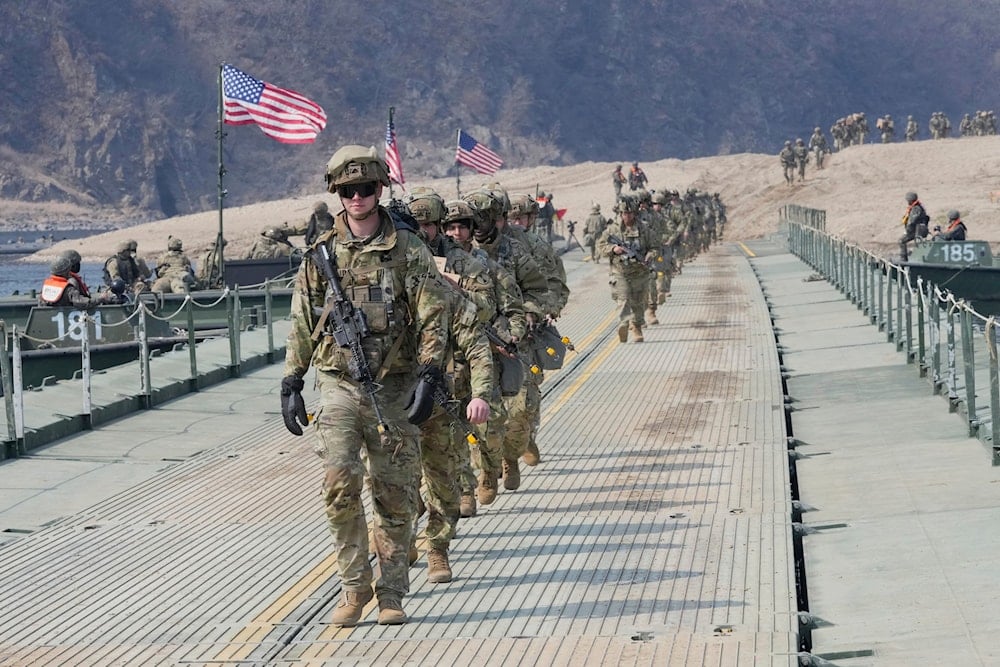
US Army soldiers cross a floating bridge on the Imjin River during a joint river-crossing exercise between South Korea and the United States as a part of the Freedom Shield military exercise in Yeoncheon, South Korea, March 20, 2025 (AP)
Nearly a dozen US troops were wounded severely enough by Iranian missile and drone strikes in Jordan and other countries this month that they were flown to a US military hospital in Germany for treatment, a US military official said on Wednesday.
Flight tracker websites have identified Air Force C-17 medevac flights from Jordan to Germany in recent days.
The seriously wounded service members are among the roughly 100 US troops that the War Department recently said were injured by Iranian attacks since early July. Most of those service members have returned to duty, the Pentagon said. About 50 of the injuries were suffered in recent attacks on bases in Jordan where US forces are stationed, US officials said.
The War Department did not disclose the latest casualties in Jordan and elsewhere in the Middle East until The New York Times reported on injuries from four attacks last week, the last of which, on Friday, killed three soldiers and wounded several others. A total of 18 US service members have been killed in the war since it started on Feb. 28, and about 550 have been wounded so far in the conflict. At least 1,700 Iranian civilians have been killed in the war, according to the Human Rights Activists News Agency, a rights group focused on Iran.
Meanwhile, the new figures appearing Wednesday on the Pentagon's Defense Casualty Analysis System website reported that at least 482 soldiers have been wounded in action, while the site earlier this week showed as many as 427 injuries, according to CBS News.
Little to no information
In the days since a fragile truce collapsed this month, the Pentagon has provided little information about the US military strategy after nearly five months of war. The last major Pentagon briefing on the war was in early May. In statements after airstrikes against Iranian military sites last week, US Central Command said it was retaliating for Iran’s attacks against commercial ships transiting the Strait of Hormuz, never mentioning Iran’s strikes on bases in the region, including in Jordan.
Sean Parnell, the chief Pentagon spokesman, said that the military had not withheld or misrepresented US casualties in the war. "Claims of concealment are fabrications meant to further distress the American people in the wake of three service members killed in action," he said in a statement on Monday.
He later posted on social media that the "vast majority" of the nearly 100 casualties since July 7 involved "mild concussions" and 96 percent of those service members have returned to duty. War Secretary Pete Hegseth said in a social media post over the weekend that the deaths of the troops in Jordan "only stiffens our resolve."
Pentagon casualty figures face scrutiny amid discrepancies
The US military's disclosure of casualty figures has come under increased scrutiny following repeated discrepancies between official Pentagon counts and independent reporting, as well as delays in acknowledging the full scale of US losses in the conflict with Iran.
On March 10, the Pentagon had publicly acknowledged only eight seriously wounded personnel. Reuters later reported that as many as 150 US troops had been wounded during the opening 10 days of the war. Only after the report was published did the Pentagon acknowledge that approximately 140 service members had been injured.
Further discrepancies emerged in April. The US War Department’s casualty database listed 346 wounded troops, while CENTCOM separately told Military Times that the actual figure had reached 381. The command also declined to disclose how many troops had been medically evacuated from the region or provide detailed information about the nature of their injuries.
While the documented discrepancies have largely concerned wounded personnel rather than confirmed fatalities, they have raised questions about whether the full extent of US losses is being disclosed promptly. The latest updates add to what officials have described as a mounting battlefield cost that Washington has struggled to disclose fully to the US public.
The Pentagon has faced repeated instances in which the scale of US losses became public only after media investigations contradicted or overtook official disclosures. In the days since a fragile truce collapsed this month, the department has provided little information about US military strategy after nearly five months of war.
Rather than the swift victory repeatedly projected by Washington, the growing toll points to a prolonged and costly confrontation in which Iranian retaliatory operations have continued to reach US forces across Jordan, Iraq, and the Gulf.


