
Araghchi says 'Israel' influencing US toward 'unwinnable war'
 3 Min Read
Iranian Foreign Minister Abbas Araghchi criticizes alleged Israeli influence on US policy after US President Donald Trump claimed foreign threats to elections, as Moscow denies interference claims.
-
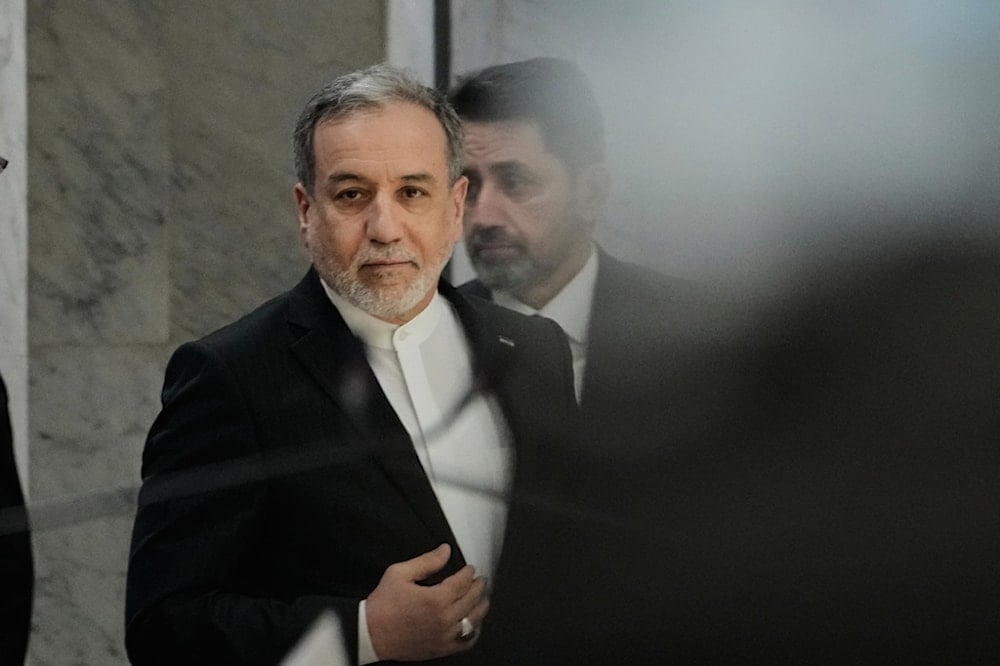
Iranian Foreign Minister Abbas Araghchi arrives to meet his Iraqi counterpart Fouad Hussein in Baghdad, Iraq, Sunday, June 28, 2026 (AP Photo/Hadi Mizban)
Iranian Foreign Minister Abbas Araghchi accused "Israel" of conducting an extensive influence campaign aimed at pushing the United States into "an unwinnable war of choice," after US President Donald Trump claimed that Iran was among the foreign threats to the US electoral system.
In a post on X on Friday, Araghchi questioned Washington's focus on foreign influence, writing, "Americans are being warned of Foreign Influence."
Americans are being warned of Foreign Influence.
— Seyed Abbas Araghchi (@araghchi) July 17, 2026
How about the extensive Israeli Campaign to bamboozle the U.S. Administration into an unwinnable war of choice?
Even worse: Israel is using U.S. taxpayer dollars to silence any U.S. critics.
It will all soon unravel. pic.twitter.com/sXYc3iuV7C
He continued, "How about the extensive Israeli Campaign to bamboozle the U.S. Administration into an unwinnable war of choice?"
Araghchi also stated that "Israel" was using "U.S. taxpayer dollars to silence any U.S. critics," adding: "It will all soon unravel."
The Iranian foreign minister attached a screenshot of a Time magazine article titled, "Trump's Ex-Campaign Manager Is Running An Israeli Influence Operation Targeting the MAGA Base," referencing reporting on former Trump campaign manager Brad Parscale.
Trump alleges foreign threats to US elections
Araghchi's remarks came after Trump, during a televised address from the White House on Thursday, claimed that Russia, China, Iran, and the Democratic People's Republic of Korea posed threats to the US electoral system.
Trump argued that the US election system remained vulnerable to foreign interference, presenting the countries as potential sources of influence over the electoral process.
Read more: Trump’s redacted classified files fail to prove election allegations
Kremlin rejects Trump's allegations
Russia strongly rejected Trump's accusations, with Kremlin spokesperson Dmitry Peskov dismissing claims that Moscow had interfered in US elections and reaffirming Russia's long-standing position that it does not meddle in the domestic affairs of other states.
Responding to Trump's remarks, Peskov said Moscow "had no influence on the United States elections in any way" and categorically denied the allegations.
"Russia had no influence on the United States elections in any way ... We reject any accusations, we reject them resolutely," Peskov told reporters on Friday.
The Kremlin spokesperson added that Russia has consistently maintained a policy of non-interference in the internal affairs of other countries and expects the same principle to be respected in return.
Peskov stressed that Moscow has never interfered in foreign electoral processes and said Russia expects that "no one will interfere in the internal affairs of Russia," reiterating the Kremlin's position on state sovereignty and non-interference.
China rejects Trump's claims
Additionally, the Chinese Embassy in Washington has rejected Trump's allegations that Beijing interfered in US elections, stating that China "has never and will never" interfere in presidential polls.
A spokesperson for the embassy told RIA Novosti that US elections are an internal matter decided by American voters, reaffirming China's stated policy of non-interference in other countries' domestic affairs.
The response followed Trump's recent claims that China attempted to undermine his 2020 re-election bid and had allegedly obtained millions of US voter records. Beijing has denied the accusations.
The remarks have drawn criticism from opponents, with officials and civil rights groups accusing Trump of undermining election institutions after he removed the remaining members of the US Election Assistance Commission, the federal body responsible for election system standards.


