
Arab officials thought Iran would face instability in war: WaPo
 3 Min Read
Officials say Iran’s leadership structure remains intact six days into the US-Israeli aggressions against it, according to assessments reported by The Washington Post.
-
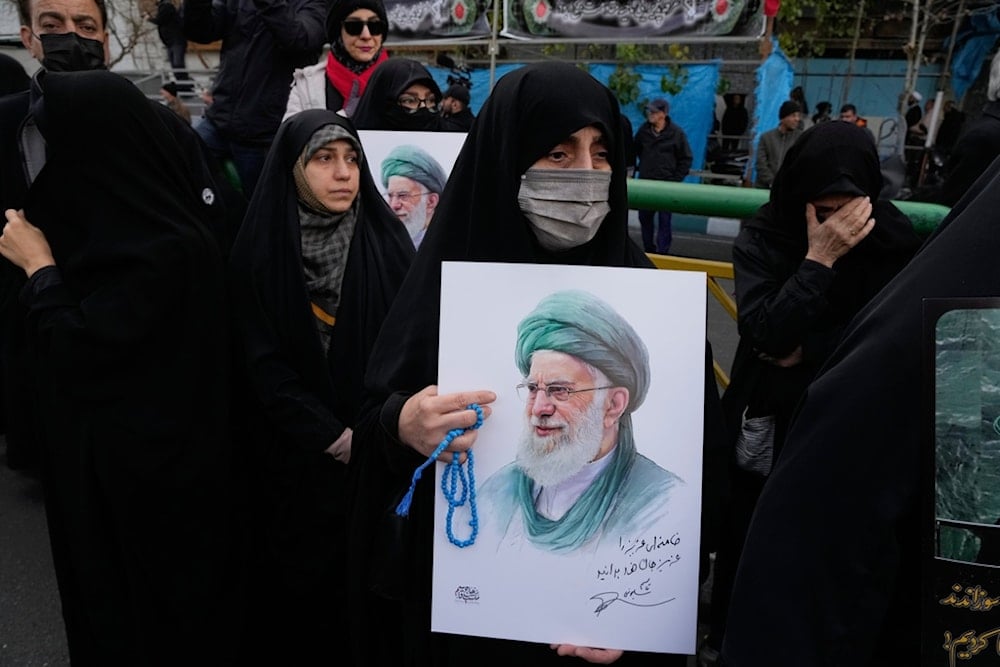
A woman holds a poster of the Iranian Leader Sayyed Ali Khamenei during a funeral ceremony for a group of security forces in Tehran, Iran, Wednesday, January 14, 2026. (AP Photo/Vahid Salemi)
Six days into the ongoing US-Israeli aggressions on Iran, Tehran's political leadership retains firm control, according to assessments cited by The Washington Post from European and Arab officials familiar with evaluations of the situation.
Officials told the US paper that despite the scale of military operations and the widening scope of the war, the Iranian government has continued to function without visible disruption.
Command systems designed to endure targeted strikes reportedly remain operational, allowing Iran to carry out retaliatory attacks against "Israel" and hostile bases in Gulf states shortly after the initial hostilities began.
According to the assessments shared with The Washington Post, there have been no confirmed signs of defections among Iranian officials or security forces since the war on the nation erupted. Observers also reported a lack of public uprisings in the country during the early phase of the war.
Read more: US troops being told war on Iran is 'God's divine plan'
US Intel sees no signs of anti-state protests
US intelligence assessments have reportedly reached similar conclusions. Sources cited by the report indicated that early monitoring detected no signs of internal unrest or fractures within the governing structure.
“There is no indication of a collapse or a split in the regime. None whatsoever,” said a senior European official, speaking anonymously about internal government briefings. “Control is tight.”
Officials further noted that Iran’s leadership has developed what they described as a “multi-layered system” of governance intended to preserve continuity during crises. The structure reportedly includes decentralized command mechanisms that allow multiple officials to assume responsibilities should senior figures be killed.
Regional observers said some Gulf governments had expected Iran to face greater instability once the war on the nation began. According to one senior Arab official cited in The Washington Post's report, officials had anticipated widespread protests or internal fractures in the wake of escalating military pressure.
However, the assessments instead pointed to a degree of cohesion within the country’s political structure despite the sustained bombing campaign. European and Arab officials warned that the internal dynamics of the Iranian system remain difficult to gauge from outside the country, making predictions about potential collapse highly uncertain.


