
Pentagon fears war could spiral, says no intel Iran would strike first
 4 Min Read
The Pentagon is "intense and paranoid," and officials have now admitted to Congress there was no intel that Iran would strike first.
-
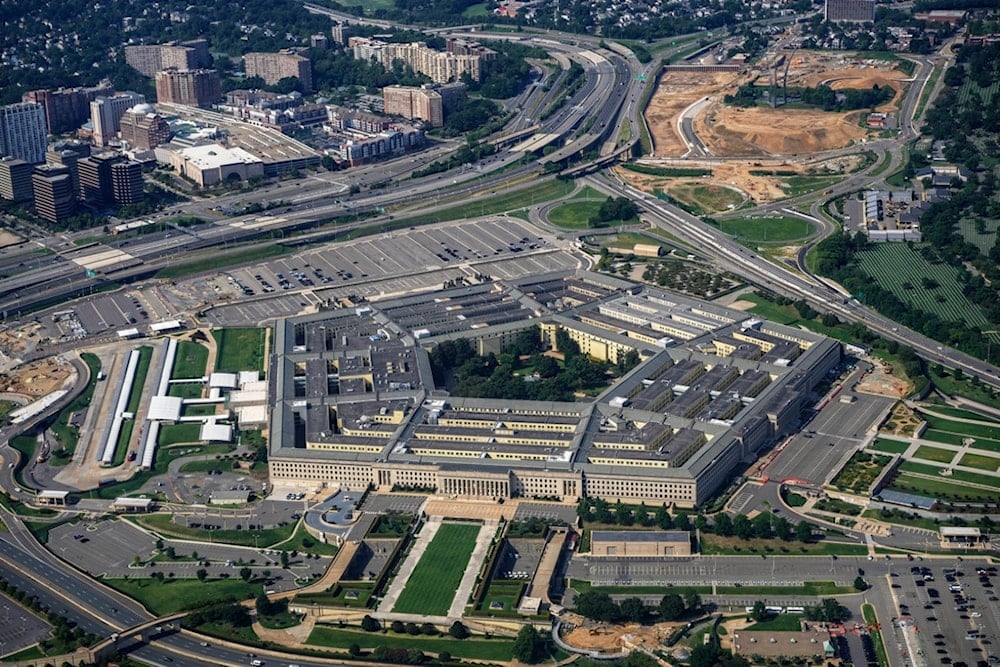
The Pentagon is seen on Sunday, August 27, 2023, in Washington. (AP Photo/Carolyn Kaster)
Senior officials inside the Pentagon are growing increasingly alarmed that the US-Israeli aggression against Iran could spiral out of control, as the Trump administration faces mounting questions over whether the war was built on accurate intelligence.
The Washington Post reported that the mood inside the Pentagon is "intense and paranoid," according to one person familiar with the situation. Senior military leaders are anxious that fighting will extend for weeks, further straining already limited US air defense stockpiles.
"There is concern about this lasting more than a few days," another person told The Post. "I don't think people have fully absorbed yet, like, what that has done with stockpiles," they added, noting that it often takes two or three interceptors to stop a single incoming missile.
Those concerns had been raised before the first bomb fell. Joint Chiefs Chairman Gen. Dan Caine had already warned the White House that munitions shortfalls and a lack of broad allied support would add considerable risk to any Iran operation. The House Armed Services Committee's top Democrat, Rep. Adam Smith, echoed that warning on Sunday. "It will stretch our ability to defend everything that we need to defend," he said, describing US resources as "stretched thin."
No intelligence Iran would strike first
In closed-door briefings with congressional staff on Sunday, administration officials conceded there was no intelligence indicating Iran had planned to attack US forces first, directly contradicting the public rationale senior officials had offered just 24 hours earlier, two sources familiar with the briefings told Reuters.
Those officials had told reporters that Trump launched the strikes partly because of indicators Iran might strike US forces "perhaps preemptively," and that Trump was not going to "sit back and allow American forces in the region to absorb attacks." Sunday's briefings told a different story.
Trump's broader intelligence claims have also come under fire. His assertion during the February 24 State of the Union that Iran was developing missiles that would "soon reach the United States" was not backed by US intelligence reports and appeared to be exaggerated, sources told Reuters.
A Defense Intelligence Agency assessment found Iran might not achieve intercontinental ballistic missile capability until 2035. One US official told the New York Times they feared "senior aides may have exaggerated the dangers or that intelligence was being selectively presented or distorted."
A deal was within reach
Hours before the aggression began on February 28, Omani Foreign Minister Badr Albusaidi declared a breakthrough on live US television, saying Iran had agreed to zero stockpiling of enriched uranium, surpassing the terms of the 2015 nuclear deal, subject to full IAEA verification.
Iranian Foreign Minister Abbas Araghchi confirmed on Sunday that both delegations had left Geneva satisfied after seven hours of talks, with an agreement "within reach." It was the second time in 12 months, Araghchi said, that Iran had been attacked while negotiations were actively underway, a pattern he described as "a very bitter experience."
The New York Times had also reported that Trump's envoys had been negotiating in good faith over Iran's nuclear program, but that Trump and Israeli Prime Minister Benjamin Netanyahu's actual objective was regime change, a goal Trump had publicly endorsed at Fort Bragg in February.
US Central Command admitted on Sunday that three US troops were killed, while five were seriously wounded in the ongoing aggression against Iran, as the Islamic Republic continues to pound US bases across the Gulf.
While more senior ranks in the Trump administration are uncertain about the trajectory of the aggression on Iran, the American people appear more decisive. A Reuters/Ipsos poll showed that 43% of Americans oppose the strikes, against 27% of Americans who approve.
In a related development, Secretary of Iran's Supreme National Security Council Ali Larijani affirmed in a post on X that Tehran would not negotiate with Washington, and accused Trump of having turned "America First" into "Israel First."


