
At least 300 children killed in Gaza since ceasefire: UNICEF
 3 Min Read
UNICEF says children in Gaza remain exposed to displacement, malnutrition, disease, unsafe water and damaged sanitation.
-
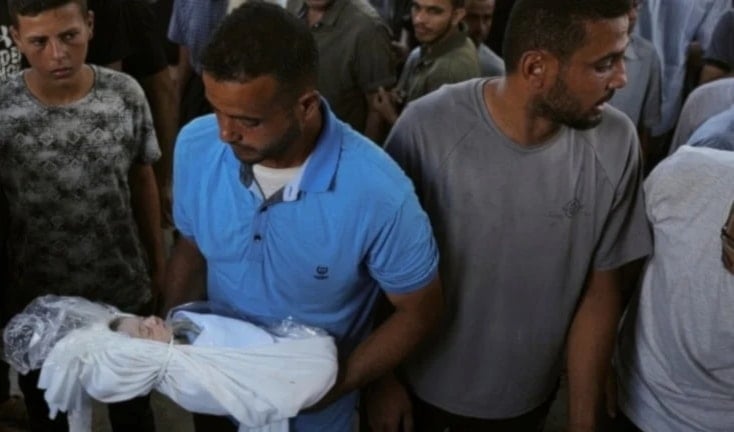
A relative carries the lifeless body of a Palestinian infant who was killed in an Israeli aggression during his funeral outside Al-Shifa Hospital in Gaza City, Thursday, September 4, 2025 (AP)
At least 300 children have been killed in the Gaza Strip during the 300 days since a ceasefire was announced last October, UNICEF said Thursday, warning that continued Israeli aggression and dire humanitarian conditions are placing children at severe risk.
"A ceasefire that leaves an average of one child dead each and every day is failing children," - @UNICEFmena Regional Director Edouard Beigbeder. "With hundreds more children injured, many severely, children in Gaza are still waiting for the end to the violence they were… pic.twitter.com/pkm34Mqj16
— UNICEF (@UNICEF) August 6, 2026
"A ceasefire that leaves an average of one child dead each and every day is failing children," said UNICEF Regional Director for the Middle East and North Africa, Edouard Beigbeder. "With hundreds more children injured, many severely, children in Gaza are still waiting for the end to the violence they were promised."
Displacement and worsening humanitarian conditions
UNICEF said many families have been forced into roughly one-third of Gaza, where they are living amid unsafe conditions, destroyed buildings, rubble, and accumulated waste.
The agency said children continue to endure a deteriorating humanitarian crisis marked by acute malnutrition, disease outbreaks, restricted access to clean water, and damaged sanitation systems.
Recent announcements detailing a possible next phase of the ceasefire, including efforts to halt hostilities and increase humanitarian assistance, have raised hopes that conditions may improve, UNICEF said.
“This offers new hope and a chance to finally stop children being killed,” said Beigbeder. “For children in Gaza, the test is simple: Does the killing stop? Does aid reach them at scale? Do hospitals reopen and water flow? Will children return to school safely in September?”
“Children have heard promises before. This time, agreements must translate into action,” he stressed.
UNICEF calls for protection and humanitarian access
UNICEF called on all parties to uphold their obligations under international humanitarian and human rights law, including protecting children and guaranteeing access to essential services such as health care, education, food, and safe drinking water.
The agency also called on authorities to permit and facilitate “safe, rapid and unimpeded” humanitarian access for children and families.
This comes as the Gaza Government Media Office reported earlier today that the Israeli occupation committed 4,091 ceasefire violations over 300 days, killing 1,254 Palestinians, injuring 4,121, arresting 159, and severely restricting aid and travel.
The Government Media Office condemned the occupation’s systematic policy of targeting and exterminating the Palestinian people, alongside its relentless campaign of killing.
It held the Israeli occupation fully responsible for the continued deterioration of humanitarian conditions in Gaza and called on the mediators and guarantors of the ceasefire agreement to compel it to implement the deal and halt its ongoing violations.


