
Attack on Sayyed Khamenei would mean all-out war: Pezeshkian
 4 Min Read
Iranian President Masoud Pezeshkian warned that any attack on Iran’s spiritual leader Sayyed Ali Khamenei would constitute an act of war.
-
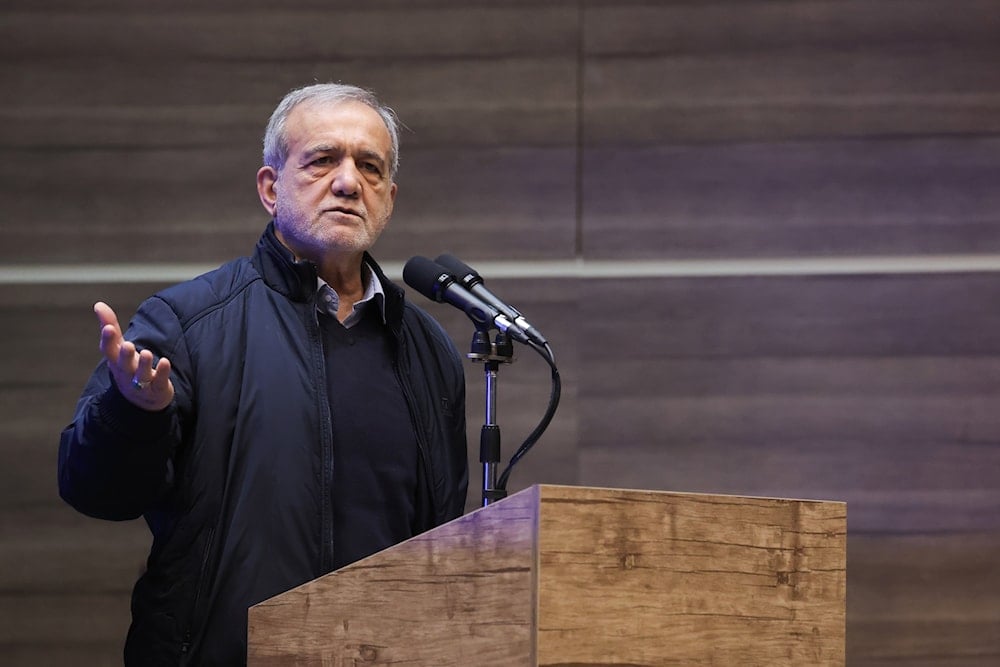
Iran's President addresses seminar on Islamic councils, public participation in constitution (Iranian Presidency)
Iranian President Masoud Pezeshkian on Sunday warned that any aggression against Iran’s spiritual leader would amount to an all-out war against the Iranian nation, as reports emerged that Washington had stepped back from plans for military strikes and Iranian officials accused the United States of fueling unrest as part of a broader destabilization effort.
Speaking amid heightened regional tensions, Pezeshkian said that targeting Sayyed Ali Khamenei would constitute an act of war against Iran itself, reinforcing what officials describe as a longstanding red line within Iran’s deterrence doctrine.
Pezeshkian directly linked Iran’s economic hardship to the United States’ “maximum pressure” campaign. “If the people of Iran face hardship and difficulties in their lives, one of the main reasons for it is the longstanding enmity and inhumane sanctions imposed by the United States government and its allies,” he said.
Iranian officials maintain that the sanctions policy was designed to discredit the state through economic warfare but has failed to undermine Iran’s political system or erode popular resolve.
Washington retreats from strike plans
Pezeshkian’s remarks came days after diplomatic sources told Al Mayadeen that a friendly regional party had informed Tehran that Washington had reversed course on plans to carry out military strikes against Iran. According to the sources, the decision followed a US review of military and security assessments, including evaluations of the likely consequences of a large-scale attack and a reassessment of internal security conditions inside Iran.
The sources said US President Donald Trump ultimately concluded that domestic conditions in Iran had shifted in favor of the government, reducing the viability of military action. Despite this, Iranian authorities say they remain on full alert while keeping diplomatic channels open.
The reported US pullback came amid growing speculation of imminent aggression following weeks of escalatory rhetoric from Trump, who later moderated his tone.
Gulf states move to defuse escalation
Regional diplomacy also intensified on Thursday, when Saudi Arabia, Qatar, and Oman launched a coordinated effort to dissuade Washington from attacking Iran. According to senior Saudi officials cited by AFP, the three countries warned that any US strike could trigger uncontrollable regional repercussions.
The Gulf states urged Washington to give Tehran space to demonstrate good intentions while continuing parallel engagement with Iranian officials. One Saudi official described the effort as “a sleepless night to defuse more bombs in the region,” as communications worked to consolidate fragile momentum toward de-escalation.
A separate Gulf official said Tehran was also warned that any attack on US facilities in the region would negatively affect Iran’s relations with neighboring countries.
‘US-led sedition’
Against this backdrop, Sayyed Khamenei said on Saturday that the Iranian people had “crushed the back of the sedition,” crediting unity and public awareness with defeating what he described as a US-led plot to destabilize the country.
Speaking on the occasion of Al-Mab’ath, Sayyed Ali Khamenei accused the United States of backing recent unrest as a prelude to a larger operation against Iran, singling out Trump for openly encouraging riots and threatening the Islamic Republic.
Khamenei said the distinguishing feature of this episode was the US president’s direct involvement, describing the unrest as an American-instigated effort aimed at restoring political and economic domination over Iran. He stressed that Washington cannot tolerate an independent Iran with strategic depth, scientific capacity, and autonomous policies.
“We are not leading the country into war,” he said, “but we will not show leniency toward criminals operating inside the country.”
Arrests and security operations continue
Iranian authorities say the unrest initially emerged from legitimate economic grievances tied to inflation, currency depreciation, and sanctions-driven hardship, with demonstrations permitted under police protection. Officials say these protests were later hijacked by organized armed networks seeking to provoke violence and undermine state authority.
Security forces have announced thousands of arrests across multiple provinces, including alleged ringleaders, saboteurs, and operatives linked to foreign-backed networks. Officials reported the seizure of weapons, explosives, and communications equipment, describing the violence as coordinated and premeditated.
Iranian intelligence agencies say many detainees were in contact with foreign entities, including Israel’s Mossad, and were tasked with escalating unrest, attacking security personnel, and damaging public infrastructure.
Read more: Iran ready for comprehensive cooperation deal with Iraq: Araghchi


