
Iran ready for comprehensive cooperation deal with Iraq: Araghchi
 5 Min Read
At talks in Tehran, Iran and Iraq signaled closer coordination on security and regional issues.
-
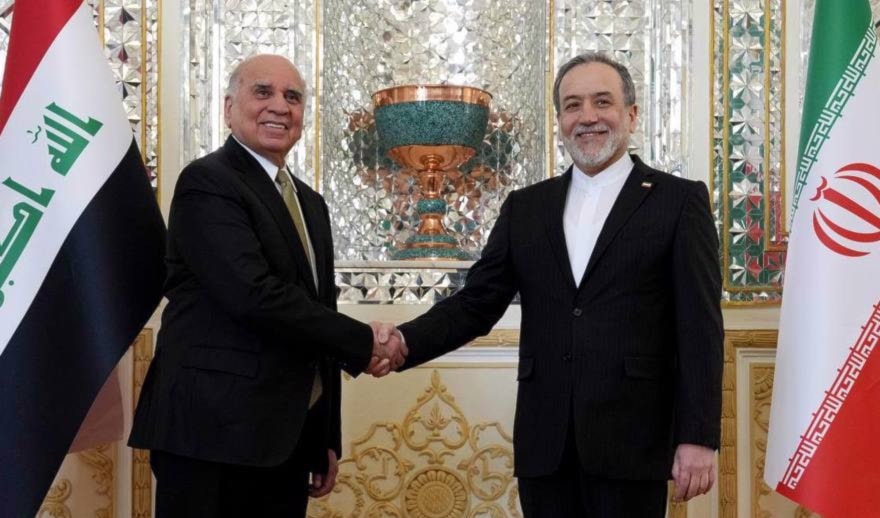
Iranian Foreign Minister Abbas Araghchi met with Iraqi Foreign Minister Fuad Hussein on January 18, 2025 (Iranian media)
Tehran is prepared to deepen relations with Iraq across all sectors and work toward a comprehensive bilateral cooperation agreement, Iranian Foreign Minister Abbas Araghchi said on Sunday.
Speaking at a joint press conference in Tehran with Iraqi Foreign Minister Fuad Hussein, Araghchi said he had provided Iraqi officials with “comprehensive explanations” regarding recent developments inside Iran.
Araghchi also welcomed the withdrawal of the US from the Ain al-Assad base, western Iraq, describing it as “an important indicator” of Iraq’s growing independence and national sovereignty. He said Baghdad has demonstrated its ability to play a constructive role in promoting regional cooperation through dialogue, noting a shared understanding between Iran and Iraq on security and broader regional issues.
He added that officials from both countries are working toward organizing a joint security cooperation agreement.
For his part, Hussein said his visit to Tehran reflects the strong and longstanding ties between the two neighbors, including in economic, cultural, and political fields. He stressed the importance of continued communication between Baghdad and Tehran to address the evolving regional situation.
Iraqi Army fully takes over Ain al-Assad base following US withdrawal
The Iraqi Armed Forces have fully assumed control of the Ain al-Assad air base in western Iraq following the complete withdrawal of United States forces, Iraqi officials confirmed on Saturday, marking a significant step in the implementation of a bilateral agreement to end US military presence in the country.
According to Iraqi military officials, all US personnel have departed the base and removed their equipment. Chief of the General Staff of the Iraqi Armed Forces Lieutenant General Abdul Amri Rashid Yarallah oversaw the reassignment of tasks and duties to Iraqi military units at Ain al-Assad after the withdrawal.
In a statement, the military said Yarallah instructed relevant authorities to intensify efforts, enhance joint work, and strengthen coordination among all units stationed at the base, while fully utilizing its capabilities and strategic location.
A Ministry of Defense official, speaking to The Associated Press on condition of anonymity, confirmed that the withdrawal was complete. There was no immediate statement from the US military regarding the pullout.
Timeline of US withdrawal
Washington and Baghdad agreed in 2024 to wind down the US-led coalition in Iraq by September 2025, with US forces departing bases where they had been stationed. The agreement came after dozens of attacks launched by Iraqi Resistance factions, who reject the presence of foreign military forces in the country. US forces in Ain al-Assad were a main target of these operations, which were executed via one-way attack drones and rockets.
While the agreement initially stipulated a full US withdrawal from Ain al-Assad by September, a small unit of US advisors and support personnel, estimated at between 250 and 350, remained temporarily.
Iraqi Prime Minister Mohammed Shia al-Sudani said in October that “developments in Syria” had required maintaining a limited presence at the base. Those remaining US personnel have now also left, completing the handover.
However, US forces continue to maintain a presence in Iraq's Kurdistan region in the north and in neighboring Syria.
The question of weapons
The move comes amid ongoing deliberations in Baghdad over arms control, as political and security circles increasingly push to confine the possession of weapons exclusively to state-affiliated institutions.
In a July interview for AP, al-Sudani said that once the coalition withdrawal is complete, “there will be no need or no justification for any group to carry weapons outside the scope of the state.”
In a speech on January 4, commemorating the martyrdom of Lieutenant General Qasem Soleimani and former deputy chief of the Popular Mobilization Forces, Abu Mahdi al-Muhandis, al-Sudani said that the state monopoly over weapons is intended to strengthen and unify Iraq, rejecting claims that the process aims to weaken the country.
“The mission of [weapons' monopoly by the state] is not meant to weaken Iraq, as some portray it, but to strengthen and unify it,” al-Sudani said, stressing that the decision would be "purely Iraqi" and taken in line with and under the guidance of the supreme religious authority, without any external dictates.
He reiterated that the policy does not target any specific group, but is aimed at protecting Iraq and “cutting off the pretexts of aggressors,” noting that the religious authority has repeatedly affirmed this principle.
Read more: Iraqi resistance urges next government to end foreign presence


