
Australia's new hate laws raise concerns for pro-Palestine voices
 5 Min Read
Australia's government is expanding hate-speech and counter-extremism laws in response to the Bondi attack, prompting concerns that the new powers will crack down on pro-Palestine activism and shield Israeli policies from criticism.
-
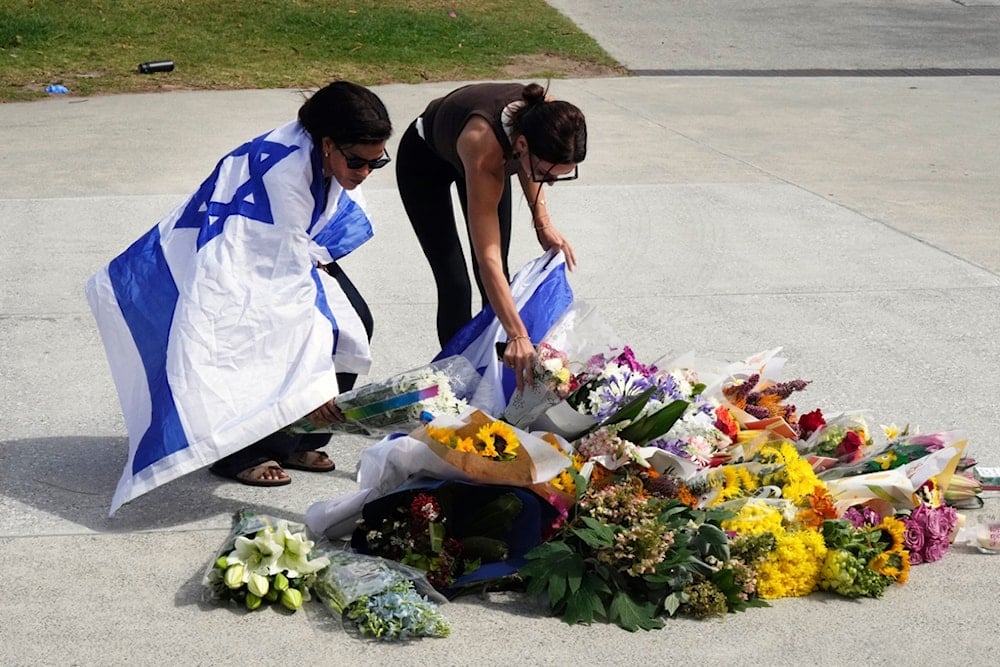
Women place flowers at a memorial outside Bondi Pavilion at Sydney's Bondi Beach, on December 15, 2025, a day after a shooting. (AP Photo/Mark Baker)
Australia's government has unveiled a sweeping expansion of hate-speech and counter-extremism powers, a move Palestinian advocacy groups and civil-rights lawyers say risks conflating legitimate criticism of "Israel's" ongoing war in Gaza with extremism. Prime Minister Anthony Albanese framed the measures as a response to rising antisemitism following last weekend's deadly shooting at a Hanukkah event in Bondi, despite growing concern that the debate has sidelined the context of "Israel's" actions and Australia's political alignment with Tel Aviv.
The new framework would widen the government's authority to prosecute religious leaders and community figures accused of promoting violence, introduce a federal register of organisations deemed to engage in hate speech, and impose harsher penalties for online threats. In addition, the home affairs minister would gain sweeping power to cancel or deny visas to people accused of spreading "hate and division", an authority some observers fear could disproportionately target pro-Palestinian voices, particularly those criticizing Israeli military policy.
Parliament pressure
Facing pressure from both mainstream media and conservative lawmakers, Albanese conceded the government had come under fire for its handling of the issue. "Look, of course, more could have always been done. Governments aren't perfect. I'm not perfect," he said, following a meeting of the national security committee.
The opposition swiftly seized on his comments, demanding even harsher measures. Coalition deputy leader Sussan Ley argued that "more should have been done" in the aftermath of October 7, 2023, and proposed a package that includes cutting funding to arts and research projects accused of "antisemitic activities," reviving citizenship-stripping powers for dual nationals, and halting visas for anyone coming from what the opposition brands a "terrorist enclave", specifically naming Gaza, whose population has endured over two years of siege, bombardment, and famine.
Ley also called for parliament to be recalled before Christmas, escalating a political contest in which Palestinian communities fear their rights to protest war crimes and apartheid are becoming collateral damage.
Expanding state powers
The political pressure intensified after former prime minister John Howard accused Albanese of prioritizing gun-control discussions over tackling antisemitism. Albanese insisted the government "adopts and fully supports" Jillian Segal's national plan, though official documents show the recommendations remain under review.
Home Affairs Minister Tony Burke defended the decision to lower the legal threshold for prosecuting hate speech. "There have been organisations which any Australian would look at and say, their behaviour, their philosophy and what they are trying to do is about division and has no place in Australia," he said, adding: "And yet, for a generation, no government has been able to successfully take action against them because they have fallen just below the legal threshold. Today, we're announcing that we're shifting the threshold."
Burke did not name any groups, though ASIO has previously listed Hizb ut-Tahrir, a long-targeted Muslim political organisation, alongside a neo-Nazi formation, the National Socialist Network, as entities that "stretch the boundaries of legality." Critics argue that placing a Muslim political group and an explicitly white-supremacist formation in the same category reflects long-standing political biases.
Tragedy politically weaponised
Authorities maintain the Bondi shooting, which left 15 people dead, including 10-year-old Matilda, "appears inspired by Islamic State ideology." Albanese called the attack both an assault on the Jewish community and an attack on "the Australian way of life", saying: "Australians are shocked and angry. I am angry. It is clear we need to do more to combat this evil scourge, much more."
Ley, speaking after attending Matilda's funeral, intensified her criticism. "While there is sadness in the Jewish community, there is also white hot, palpable anger at a prime minister who has had so many opportunities to take action," Liberal MP Julian Leeser added, arguing that the government's response is consistently too slow.
The Greens voiced concern over the scope of the measures. Justice spokesperson David Shoebridge warned that bans and expanded criminal powers could deepen division rather than address its causes. "In an open society, there must be scope to freely criticise the actions of state actors that engage in acts of violence or discrimination," he said. "Simply outlawing criticism is not an answer to complex international issues."
Meanwhile, the education minister, Jason Clare, announced an antisemitism taskforce for schools led by business figure David Gonski. "Children aren't born antisemitic. Children aren't born racist. Children aren't born with hate in their hearts. This is something that's taught. This is something that's learned," he said.
Civil-rights groups and Palestinian advocates warn that by expanding state policing of speech under the banner of fighting antisemitism, at the height of international outrage over "Israel's" two-year aggression on Gaza, the government risks criminalizing political dissent, shielding Israeli state policy from scrutiny, and deepening the chilling effect on those speaking out against war crimes and apartheid.
Read more: Albanese refuses linking recognizing Palestine to Bondi Beach attack


