
Baghaei: Iran capable of responding to any military attack
 4 Min Read
Iranian Foreign Ministry spokesperson Esmaeil Baghaei says Iran can respond to any attack and calls for a regional security mechanism independent of foreign powers.
-
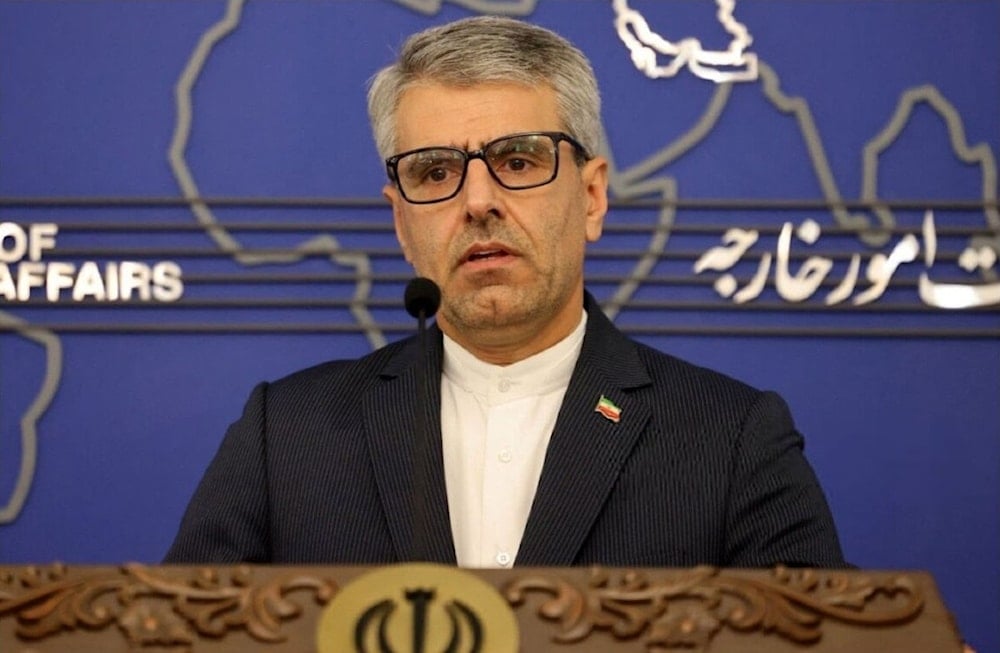
Iranian Foreign Ministry spokesperson Esmaeil Baghaei speaks at a press conference, undated (IRIB)
Iranian Foreign Ministry spokesperson Esmaeil Baghaei affirmed Tehran’s ability to respond to any bombing or military attack, while calling on regional countries to cooperate in establishing a joint security mechanism independent of foreign intervention.
Speaking at a press conference on Tuesday, Baghaei stressed that the security of the Strait of Hormuz and the Gulf should be guaranteed by the countries bordering the vital waterway.
“The Strait of Hormuz and the Persian Gulf must derive their security from the countries bordering this vital waterway,” he said, adding that the Russian proposal regarding the strait had not been fully conveyed to the public.
Baghaei said Russia, China, and Iran have plans aimed at establishing security in the Strait of Hormuz, emphasizing that regional countries should cooperate and build confidence among themselves rather than relying on foreign powers.
“If the countries of the region are serious about establishing security, they must build a security mechanism” to prevent outsiders from exploiting the region, he said.
Iran says diplomacy serves national interests
Addressing Tehran’s position toward Washington and the prospects of negotiations, Baghaei said Iran’s priority is safeguarding the interests of its people.
“Iran insists on nothing except securing the interests of its people,” he said, stressing that Tehran has experienced Washington’s breaches of commitments and is therefore obligated to protect its national interests by every means available.
Baghaei described diplomacy as part of Iran’s defense strategy, saying Tehran seeks to use diplomatic and political channels as much as possible to reduce tensions.
Responding to US claims that Washington had informed Iran in advance of its intention to launch attacks, Baghaei questioned the credibility of the assertion. “Do you believe this?” he asked, adding that Iran’s strikes against US bases located in Arab countries were carried out in self-defense.
He also called for caution regarding Pentagon statements concerning the investigation into Minab, stressing that all US military attacks constitute a major crime.
Iran reaffirms nuclear position during Lavrov visit
Regarding Russian Foreign Minister Sergey Lavrov’s visit to Tehran and Iran’s nuclear file, Baghaei said Tehran would not abandon its principles, particularly regarding its nuclear program, which he said serves the interests of the Iranian people.
He stressed that the nuclear issue was not the main focus of the talks with Lavrov.
The discussions covered issues of mutual interest, including the Caucasus, the Strait of Hormuz, and Iran’s nuclear file, while Baghaei stated that relations between Tehran and Moscow are “very good.”
Tehran rejects moves that undermine Islamic unity
On the Organization of Islamic Cooperation and the Saudi war on Yemen, Baghaei reiterated Iran’s opposition to including any provision that does not serve the interests and unity of the Muslim world.
He said the Iranian Foreign Ministry had held several consultations on the matter, including its latest discussions within the Organization of Islamic Cooperation.
Baghaei noted that Yemen had become a point of disagreement among Islamic countries, which he said contradicts the organization’s founding philosophy and undermines unity.
He reiterated Tehran’s position that the Yemen issue can be resolved diplomatically between Yemen and Saudi Arabia.
He also said Iran maintains “good” relations with Pakistan, stressing that the two countries’ leaders have strong ties. He similarly pointed to good relations with Qatar and stressed the importance of good-neighborly relations.
Baghaei further highlighted the importance of joint diplomatic initiatives to confront escalation, settlement expansion, and crimes committed by “Israel” across the region.
Iran calls for respect for Azerbaijani people’s rights
Addressing relations with Azerbaijan, Baghaei said Tehran maintains brotherly relations with Baku and expressed hope that Azerbaijan would respect the rights of its people.
On the issue of the hijab ban, he stressed that the Azerbaijani people should determine how the matter should be addressed.
“We hope that Azerbaijan, with which we have brotherly relations, respects the rights of its people,” he said.
Baghaei also said Iran had been prepared to negotiate and engage in dialogue with neighboring countries, adding that “some” parties prevented the Salalah meeting from taking place.


