
Bangladesh begins campaigning for first elections since Hasina ouster
 4 Min Read
Bangladesh launches official campaigns for the February 2026 elections, the first national vote since the 2024 uprising ousted Sheikh Hasina.
-
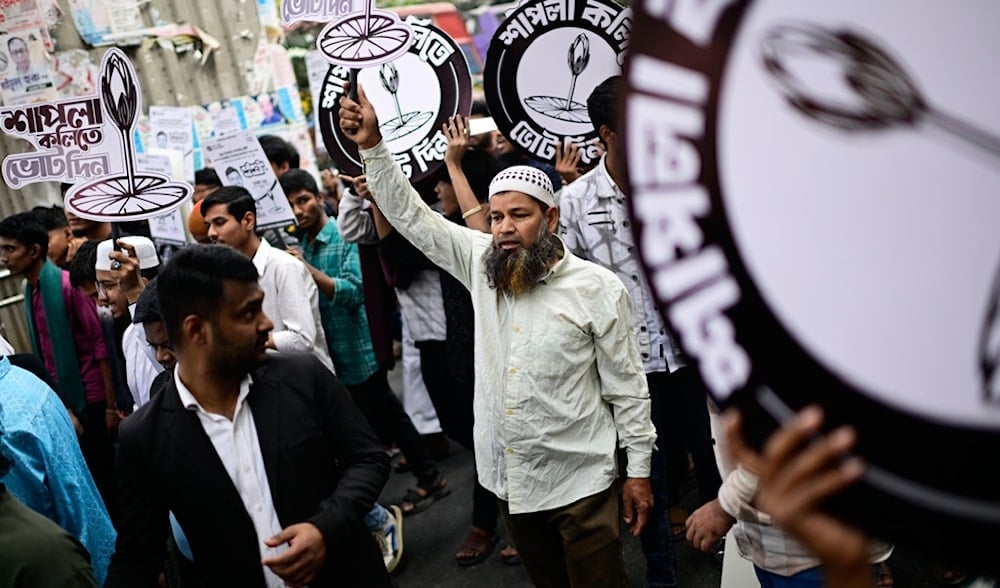
Supporters of Bangladesh's National Citizen Party hold a campaign rally ahead of next month's national elections in Dhaka, Bangladesh, Thursday, Jan. 22, 2026. (AP)
Campaigning officially began Thursday for Bangladesh’s much-anticipated general elections, the first since the 2024 uprising ended Sheikh Hasina’s autocratic rule.
Tens of thousands of supporters of the Bangladesh Nationalist Party (BNP) leader and prime ministerial candidate Tarique Rahman packed the streets of Sylhet, waving flags and chanting his name. "Do we have a leader? Yes, we do," they shouted, holding up placards of Rahman, who returned to Bangladesh in December after 17 years in exile.
The South Asian country of 170 million will vote on February 12 to elect 350 lawmakers in an election expected to reshape its political future and regional alignments. It follows years of turmoil and is marked by ongoing insecurity, including the recent killing of a student leader who played a key role in the anti-Hasina protests.
The European Union’s election observers have called the vote the “biggest democratic process of 2026.”
Tarique Rahman leads BNP's return
Tarique Rahman, also known as Tarique Zia, assumed leadership of the BNP after the death of his mother, former Prime Minister Khaleda Zia, in December.
"He will carry forward the legacy of his parents," said Harun Ur Rashid, a 40-year-old supporter, referring to Khaleda Zia and former President Ziaur Rahman, who was assassinated in 1981.
Sylhet, home to the revered Sufi shrine of Shah Jalal, has long been a traditional starting point for political campaigns in Bangladesh. Crowds cheered as Rahman prayed at the shrine on Wednesday night, with supporters lining the streets as his election bus passed by.
Islamist parties return to the fore
The Jamaat-e-Islami party, historically aligned with the Muslim Brotherhood and critical of Sufi traditions, began its campaign in the capital, Dhaka, later on Thursday. Jamaat is contesting in alliance with the National Citizen Party (NCP), formed by student leaders who led the 2024 uprising.
Since Hasina fled to India, key Jamaat leaders have been released from prison, and the group has regained political space after years of crackdowns and bans.
Shafiqur Rahman, Jamaat’s leader, is contesting from his home constituency in Dhaka. The NCP is expected to formally launch its campaign later in the day.
“I haven’t decided whom to vote for yet,” said Raqibul Hasan Shawon, 26, an engineer watching the BNP rally. “We have heard commitments before, but they were never fulfilled.”
The path to a 'new Bangladesh'
Additionally, Nobel Peace Prize laureate Muhammad Yunus, 85, who led the post-uprising caretaker government as chief advisor, will step down after the elections. He returned from exile in August 2024 at the request of protest leaders.
Blasting the political system he inherited as “completely broken,” Yunus has championed a reform charter designed to prevent a return to authoritarianism. A national referendum on these reforms will be held alongside the general election.
“If you cast the ‘yes’ vote, the door to building the new Bangladesh will open,” Yunus said in a January 19 broadcast. However, he warned of growing threats from disinformation campaigns: “They have flooded social media with fake news, rumours, and speculation,” he said, blaming both foreign media and domestic actors.
Hasina in hiding post-conviction
Meanwhile, Hasina, 78, remains in hiding in India after fleeing in 2024 as protesters stormed her palace. In November 2025, she was sentenced to death in absentia for crimes against humanity tied to her deadly crackdown on demonstrators in a failed bid to retain power.
Relations between Bangladesh and India have since deteriorated sharply.
Read more: Ousted Bangladesh PM says upcoming elections risk deepening divide


