
Bangladesh's BNP wins two-thirds majority in landmark election
 4 Min Read
BNP secures a two-thirds majority in the Bangladesh general election 2024 as voters also weigh constitutional reforms.
-
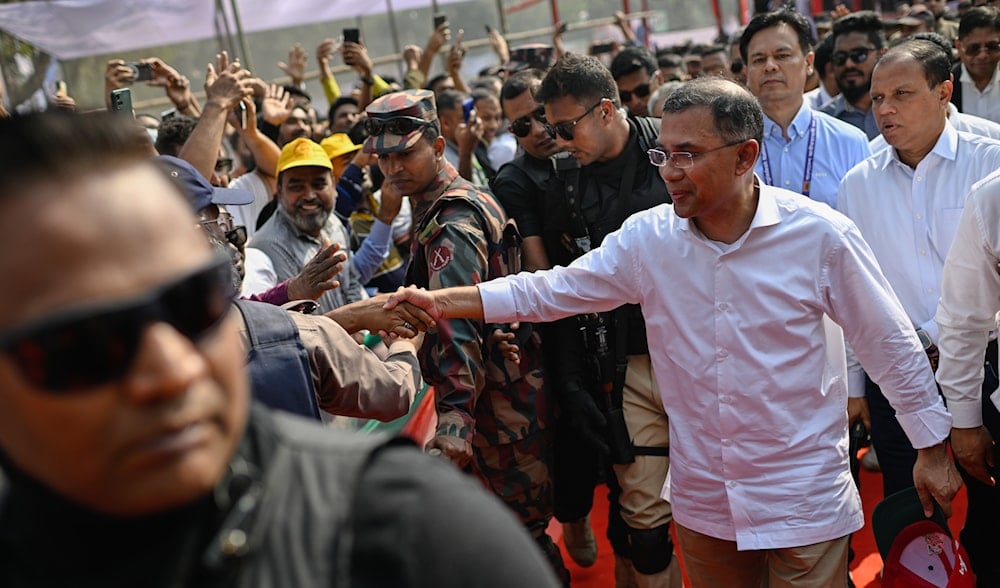
Bangladesh Nationalist Party (BNP) Chairperson Tarique Rahman shakes hands with supporters during an election campaign in Dhaka, Bangladesh, on February 9, 2026. (AP Photo/Mahmud Hossain Opu)
The Bangladesh National Party (BNP) won a decisive two-thirds majority in the Bangladesh general election, marking a major political shift after months of unrest following the ouster of former Prime Minister Sheikh Hasina in a Gen Z-led uprising.
Latest counts from the polls showed the BNP and its allies securing at least 212 of the 299 contested seats in the Jatiya Sangsad, or House of the Nation, according to domestic television channels. The opposition Jamaat-e-Islami and its allies won 70 seats.
The BNP returns to power after two decades, surpassing its 2001 victory when it secured 193 seats. However, Sheikh Hasina’s Awami League had won 230 seats in 2008. Elections in previous years were widely described as one-sided, boycotted, or contentious.
The party thanked voters soon after securing a majority in the overnight vote count and called for nationwide prayers. "Despite winning ... by a large margin of votes, no celebratory procession or rally shall be organised," the party said in a statement calling for prayers nationwide.
BNP leader Tarique Rahman is widely expected to be sworn in as prime minister. The son of party founder and former president Ziaur Rahman, he returned to the capital, Dhaka, in December after 18 years abroad.
Aftermath of Sheikh Hasina’s ouster
The clear election outcome was widely seen as crucial for stability in the Muslim-majority nation of 175 million people, months after deadly anti-Hasina unrest that disrupted daily life and key industries, including the garments sector, where Bangladesh ranks second globally in exports.
Hasina fled to neighboring India in August 2024 and is currently in exile in New Delhi. Nobel Peace Prize laureate Muhammad Yunus, 85, served as interim head following her departure.
Bangladesh politics has long been dominated by Hasina and Khaleda Zia, Rahman’s mother. Rahman’s father, Ziaur Rahman, was a leading independence figure who ruled from 1977 until his assassination in 1981.
Supporters gathered at the BNP headquarters in Dhaka as the scale of the party’s victory became clear.
The head of Jamaat-e-Islami conceded defeat and said the party would not engage in the "politics of opposition" merely for its own sake. "We will do positive politics," Shafiqur Rahman told reporters. However, the National Citizen Party (NCP), led by youth activists who played a key role in toppling Hasina and aligned with the Jamaat-led alliance, won just five of the 30 seats it contested.
Turnout and ballot details
Manual counting of paper ballots continued through Friday after polling closed on Thursday.
Turnout appeared set to exceed the 42% recorded in the 2024 election, with media reporting that more than 60% of registered voters were expected to have participated. More than 2,000 candidates, including many independents, were on the ballot, representing a record 50 parties. Voting in one constituency was postponed following the death of a candidate.
A constitutional reform referendum was held alongside the parliamentary election. Broadcaster Jamuna TV reported that more than 2 million voters chose "Yes", while over 850,000 voted "No", although no official results were immediately announced.
The proposed changes include a two-term limit for prime ministers, strengthened judicial independence, enhanced women’s representation, provisions for neutral interim governments during election periods, and the establishment of a second chamber in the 300-seat parliament.


