
Big Tech to raise billions as AI spending outpaces cash flow
 5 Min Read
Alphabet, Amazon, and Meta face rising funding needs as AI capital spending surges beyond cash flows, pushing tech giants toward debt and equity markets.
-
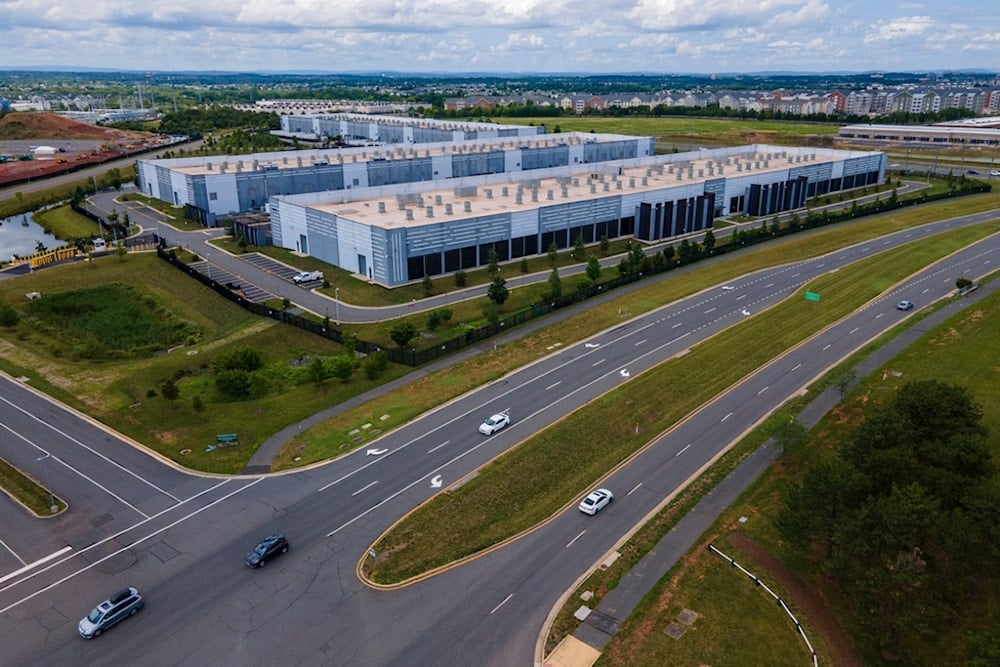
Cars drive past data centers that house computer servers and hardware required to support modern internet use, such as artificial intelligence, in Ashburn, Virginia, July 16, 2023. (AP)
Big Tech companies are expected to raise tens of billions of dollars this year to finance rapidly expanding investments in artificial intelligence, as capital expenditure increasingly outstrips cash flows even at some of the world’s most profitable firms, The Financial Times reported.
Recent earnings updates from Alphabet, Amazon, and Meta revealed the scale of planned AI spending, surprising investors and triggering a sell-off in technology stocks. More than $660 billion is expected to be invested this year in chips, data centres, and related infrastructure as companies compete to dominate what many in Silicon Valley see as the most significant technological shift since the internet.
Analysts say the unprecedented build-out is forcing technology groups to choose between reducing shareholder returns, drawing down cash reserves, or raising fresh debt and equity. Analysts at JPMorgan Chase said the implications for high-grade debt issuance were clear, forecasting that technology and media companies would issue at least $337 billion in investment-grade bonds this year.
Big Tech turns to bond markets
Technology stocks declined in recent days as investors questioned when the heavy spending would begin to generate returns, though some shares recovered at the end of the week. Amazon signalled on Friday, in a regulatory filing, that it may raise new capital through debt or equity issuance, without specifying the size or timing. The company’s shares closed down 5.6 percent following the disclosure.
Amazon’s planned capital expenditure of about $200 billion this year is expected to exceed its estimated $180 billion in operating cash flow, according to S&P Capital IQ.
Elsewhere, Oracle raised $25 billion in bond markets last week to support its AI expansion, easing investor concerns over how it would finance a reported $300 billion agreement to provide computing power to OpenAI, the developer of ChatGPT.
Analysts at TD Securities said the coming week could see up to $80 billion in investment-grade bond issuance, double the typical seasonal pace, driven by potential large-scale deals from companies including Amazon, Meta, and Alphabet. They added that US investment-grade credit spreads have widened in anticipation of increased borrowing.
Eroding free cash flow
The scale of investment required to build and operate AI systems such as ChatGPT, Google’s Gemini, and Anthropic’s Claude is increasingly weighing on free cash flows. Analysts at BNP Paribas said free cash flow at Oracle, Alphabet, Amazon, and Meta was falling sharply, with Microsoft appearing more resilient for now.
Meta has guided for capital spending of up to $135 billion this year, compared with analysts’ expectations of about $130 billion in operating cash flow. The company raised $30 billion in bonds in October, its largest issuance to date.
Alphabet is expected to generate $195 billion in operating cash flow against projected capital spending of $185 billion, while also funding share buybacks and dividends. The company’s long-term debt rose sharply last year, although it ended the year with $126.8 billion in cash and equivalents.
Russ Mould, investment director at AJ Bell, said concerns were growing that major technology groups were shifting from asset-light business models toward more capital-intensive structures, making cash flows less predictable.
Amazon's $200bn investment
Amazon has announced plans to invest $200 billion in artificial intelligence, robotics, and related technologies over the coming year, marking one of the largest single-year capital spending commitments yet in the intensifying AI race among global tech giants.
The announcement came just one day after the Washington Post, owned by Amazon founder Jeff Bezos, said it would cut roughly a third of its workforce.
The spending pledge accompanied Amazon’s fourth-quarter earnings report, which showed strong revenue growth but fell slightly short of Wall Street expectations.
The company reported quarterly revenue of $213.4 billion, up 14% from $187.8 billion a year earlier. Net income reached $21.2 billion, or $1.95 per share, compared with $20 billion, or $1.86 per share, in the same period last year. Analysts surveyed by FactSet had forecast earnings of $1.97 per share on revenue of $211.4 billion.
Tech giants press ahead with AI spending
Amazon’s investment announcement adds to mounting evidence that major cloud-computing companies are pressing ahead with aggressive AI spending plans. Amazon, Microsoft, Alphabet’s Google, and Meta are collectively expected to invest more than $630 billion this year in artificial intelligence and related technologies.
Jeff Bezos, Amazon’s founder and executive chair, has owned the Washington Post since purchasing it for $250 million in 2013. He stepped down as Amazon’s CEO in 2021 after nearly three decades leading the company.
Amazon stock, which accounts for the bulk of Bezos’s estimated $235 billion net worth, fell nearly 9% in after-hours trading following the earnings report. Forbes estimated Bezos’s wealth declined by about $9 billion, or 3.7%, after the announcement.


