
Both diplomacy and war are on the table: Araghchi
 3 Min Read
"We are a people of diplomacy, and of war, though we do not seek [war]" Iranian FM Araghchi declared, affirming Iran’s readiness for both negotiation and confrontation in defense of its sovereignty.
-
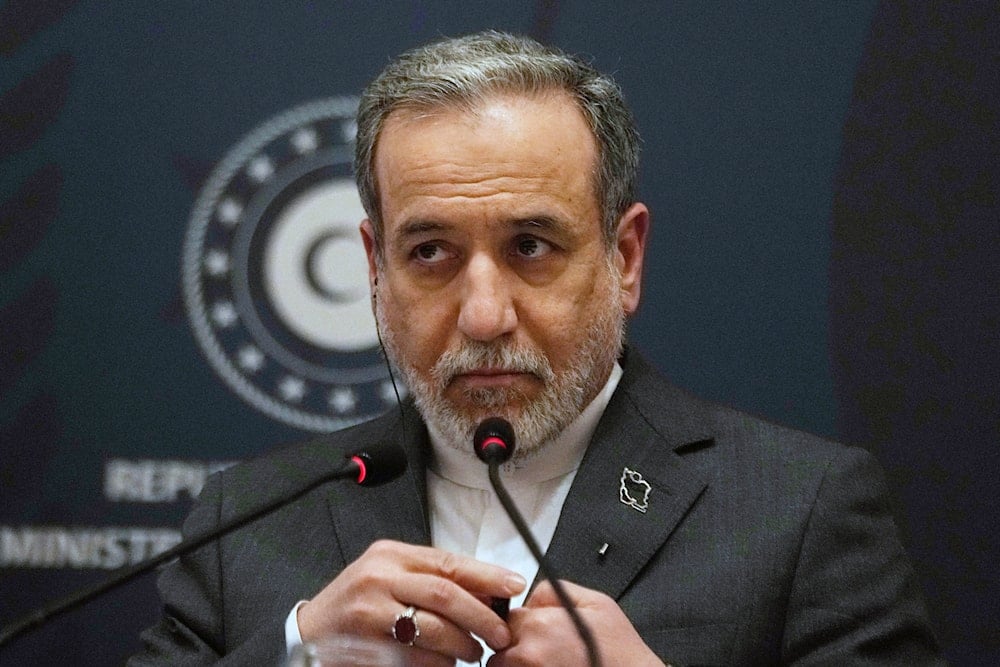
Iranian Foreign Minister Abbas Araghchi speaks to journalists during a press conference in Istanbul, Turkey, Friday, Jan. 30, 2026. (AP Photo/Khalil Hamra,File)
Iranian Foreign Minister Abbas Araghchi affirmed that ongoing talks with the United States cannot yield results "unless the other side respects and recognizes the rights of the Iranian people."
Speaking at the National Conference on Policy and History of Foreign Relations in Iran, Araghchi stressed that "Iran does not accept any dictates, and there is no solution except through negotiations." He reiterated that the country’s goal remains to secure the national interests of the Iranian people through a path that honors their rights.
Araghchi dismissed the notion that pressure or military threats could force Iran to retreat from its stance. "Some people think attacking Iran will force it to surrender; this cannot happen," he said.
In a historical comparison, he contrasted the current government’s stance with that of the Shah, stating, "The Shah went where they wanted. Iran today stands firm and will not give up its rights." He emphasized that Iran is prepared for both diplomacy and confrontation: "Iran is capable of diplomacy and capable of war, even if it does not want it. If they choose the path of diplomacy, we are ready for it."
Araghchi reaffirmed Iran’s unwavering stance on its nuclear program, including uranium enrichment. He stated that Iran would not accept any demand to eliminate its enrichment activities, saying, "No party has the right to demand that we zero out uranium enrichment."
Dialogue with Washington is a positive step: Pezeshkian
Iranian President Masoud Pezeshkian described on Sunday the recent negotiations between Iran and the United States, held with the support of friendly governments in the region, as "a step forward."
He reaffirmed that dialogue remains a strategic approach for Tehran in resolving disputes peacefully. Pezeshkian explained that Iran’s nuclear stance is based on the legal framework outlined in the Treaty on the Non-Proliferation of Nuclear Weapons (NPT). "The Iranian people have always responded to respect with respect, but they do not accept the language of coercion and threats," he stated.
The latest negotiation session marked the first direct contact between Iran and the United States since the aggression launched by "Israel" and the US against Iran in June.
On Friday, Iran’s state news agency IRNA reported that reaching a political statement following the first round of indirect nuclear talks between Iran and the United States could represent a constructive step toward reducing current regional tensions by providing a framework for resolving the Iranian nuclear issue.
The agency noted that both the Iranian and US sides now have a clearer and more realistic understanding of the costs of confrontation, as well as the mutual need to manage the crisis.
IRNA highlighted that the defining feature of this round of talks, which could produce a different outcome from previous rounds, is a stronger element of realism. Statements by Iranian officials indicate that Tehran entered the negotiations with a clear agenda and a strong focus on tangible results.


