
Canada, France establish consulates in Greenland amid sovereignty push
 3 Min Read
Officials say quiet talks and expanded diplomatic presence aim to manage US security demands in the Arctic, while underscoring that Greenland’s territorial status is not up for negotiation.
-
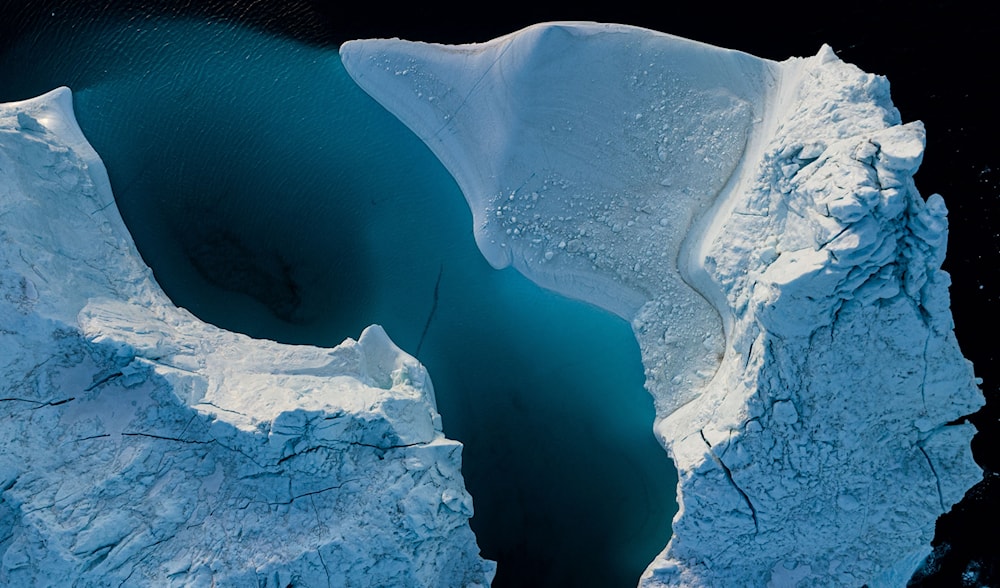
An icebergs floats at Disko Bay near Ilulissat, Greenland, on Thursday, Jan. 29, 2026. (AP)
Since returning to the White House last year, US President Donald Trump has repeatedly argued that Washington must exert control over Greenland, citing security imperatives tied to the Arctic island’s strategic location and mineral wealth.
Last month, Trump appeared to dial back earlier threats to seize the territory, saying he had reached a “framework” understanding with NATO secretary general Mark Rutte aimed at expanding US influence without direct confrontation.
In response, a joint US–Denmark–Greenland working group has been formed to address Washington’s security concerns in the Arctic, though officials have not disclosed details of the discussions.
While both Copenhagen and Nuuk acknowledge shared security interests with the United States, they have stressed that sovereignty and territorial integrity remain non-negotiable.
Diplomatic pushback in Nuuk
The opening of new diplomatic missions in Greenland has been widely interpreted as a collective response to Trump’s rhetoric.
“In a sense, it’s a victory for Greenlanders to see two allies opening diplomatic representations in Nuuk,” said Jeppe Strandsbjerg, a political scientist at the University of Greenland. “There is great appreciation for the support against what Trump has said.”
French President Emmanuel Macron announced Paris’s decision to open a consulate during a visit to Nuuk in June, where he voiced Europe’s “solidarity” with Greenland and criticised Trump’s ambitions. The newly appointed French consul, Jean-Noel Poirier, previously served as France’s ambassador to Vietnam.
Canada, meanwhile, said in late 2024 that it would also establish a consulate in Greenland to deepen cooperation.
Arctic analysts say the diplomatic moves are designed to internationalise the dispute.
“The opening of the consulates is a way of telling Donald Trump that his aggression against Greenland and Denmark is not just their problem,” said Ulrik Pram Gad of the Danish Institute for International Studies. “It’s also a question for European allies, and for Canada as an ally and a friend of Greenland.”
Christine Nissen, a security and defence analyst at the Europa think tank, described the move as part of a broader strategy. “It’s a small step, but it’s about making this a European issue,” she said. “The consequences are not just Danish – they are European and global.”
Recognition of growing autonomy
Beyond geopolitics, experts say the new consulates signal growing recognition of Greenland’s expanding self-rule.
Strandsbjerg noted that the missions, which will be attached to the French and Canadian embassies in Copenhagen, offer Greenland an opportunity to “practice” independence, an aspiration long held by many Greenlanders.
Nissen pointed to Greenland’s 2009 Self-Government Act as a milestone underpinning the shift. “Direct contact with other European countries supports Greenland’s own sovereignty ambitions,” she stressed.
Pram Gad added that diversifying Greenland’s international ties could gradually reduce its reliance on Denmark by expanding links in trade, investment, and political cooperation.
Greenland has maintained diplomatic relations with the European Union since 1992, the United States since 201,4 and Iceland since 2017. Iceland opened a consulate in Nuuk in 2013.
The United States, which operated a consulate in the Greenlandic capital from 1940 to 1953, reopened its mission in 2020. The European Commission followed by opening an office in Nuuk in 2024.


