
NATO chief says Arctic talks with Trump aimed at curbing China, Russia
 4 Min Read
NATO Secretary General Mark Rutte said talks with US President Donald Trump focused on coordinating Arctic security efforts to prevent Russia from gaining greater access to Greenland.
-
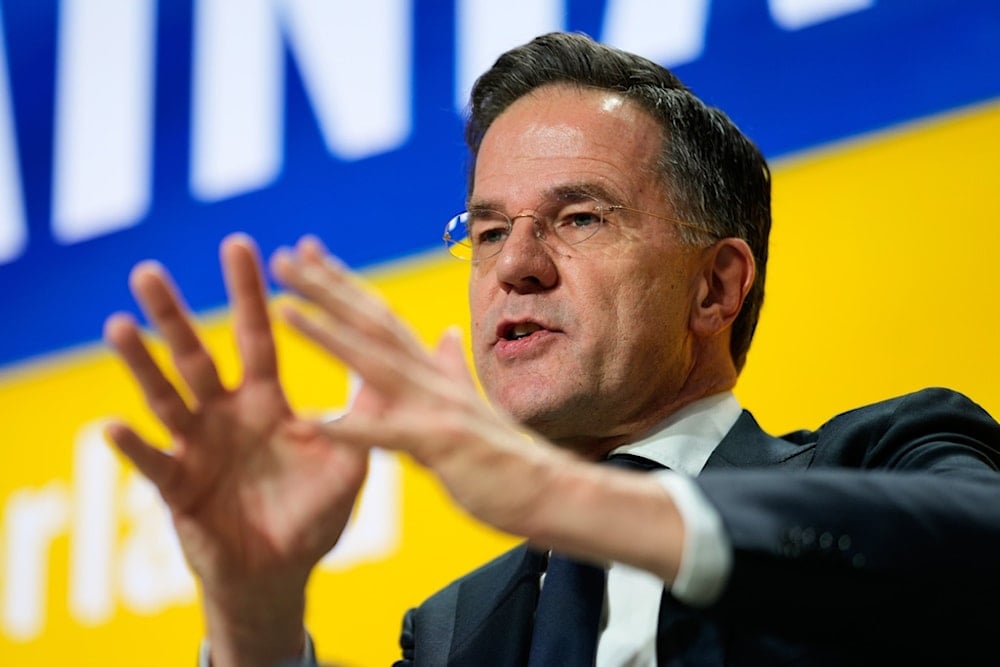
Secretary General of NATO Mark Rutte speaks during a Ukrainian Breakfast alongside the Annual Meeting of the World Economic Forum in Davos, Switzerland, Thursday, January 22, 2026. (AP)
NATO Secretary General Mark Rutte said Thursday that he discussed Arctic security with Donald Trump, amid renewed international attention on Greenland and its strategic role in the High North.
Speaking on the sidelines of the World Economic Forum in Davos, Rutte said he had a "very good discussion" with Trump on how NATO members could coordinate their approach to Arctic security. He said the talks covered not only Greenland but all seven NATO countries with territory in the Arctic.
The comments come against a backdrop of heightened geopolitical interest in the region, where climate change is opening new shipping routes and improving access to natural resources. Greenland, an autonomous territory of Denmark, has drawn particular attention because of its location and mineral potential, including deposits of rare earth elements important for global supply chains.
Greenland ownership tensions
Trump has repeatedly argued that Greenland is critical to US national security and has said he wants the territory to come under US control, remarks that prompted diplomatic pushback from Danish and Greenlandic officials and raised concerns within NATO about alliance unity. Following talks with Rutte, however, Trump said Wednesday that he would not use force and suggested a negotiated outcome could be within reach.
Rutte later clarified that the issue of Greenland’s sovereignty was not raised during his discussion with Trump, indicating an effort by NATO officials to steer the focus toward cooperation rather than ownership. The talks build on a meeting held in Washington last week between US officials and delegations from Denmark and Greenland, which sought to ease tensions triggered by Trump’s earlier statements.
Draft framework details
Additional reporting published earlier Thursday said a draft agreement between the United States and Denmark does not include a transfer of sovereignty over Greenland but would expand US military and strategic involvement on the island. According to a report by Axios, the framework would update the 1951 Greenland Defense Agreement and include provisions for the deployment of the US "Golden Dome" missile defense system, expanded NATO activity in the Arctic, and cooperation on the extraction and management of raw materials.
While sovereignty would formally remain unchanged, the proposed measures would significantly increase the US military and economic footprint in Greenland, prompting concerns among some European observers about further militarization of the Arctic.
During remarks at Davos, Trump downplayed Greenland’s geography, describing it as "a piece of ice, cold and poorly located," while stressing its strategic importance for global security. He described acquiring the territory as "a very small ask compared to what we have given them for many, many decades."
Arctic power dynamics
At Davos, Rutte framed NATO’s current approach as preventive, arguing that the alliance should act to limit external influence in Greenland before it materialises. "One workstream coming out of yesterday ... is to make sure when it comes to Greenland, particularly, that we ensure that the Chinese and the Russians will not gain access to the Greenland economy (or) militarily to Greenland," he told a panel.
Russia has long maintained extensive military infrastructure across its own Arctic territory, while China has sought a greater economic and scientific presence in the region, describing itself as a "near-Arctic" actor. Moscow has rejected Western claims that it seeks to expand into Greenland, and some analysts note that Russia’s Arctic posture largely predates the current tensions.
The United States already maintains a military presence in Greenland through Pituffik Space Base under a long-standing defense agreement with Denmark, a fact that has led some observers to question whether the latest initiatives reflect immediate security needs or longer-term strategic and economic interests tied to the Arctic’s rapid transformation.
While NATO officials portray the discussions as part of a collective effort to manage emerging risks in the High North, the episode has underscored persistent tensions within the alliance over sovereignty, economic access, and the balance of influence between the United States and its European partners.
Read more: Putin offers $1bln in frozen assets to Trump’s 'Board of Peace'


