
Rutte downplays NATO discord over Greenland
 3 Min Read
NATO Secretary General Mark Rutte sought to reassure allies and signal continuity as internal tensions rise over Greenland’s strategic status and concerns about US intentions in the Arctic.
-
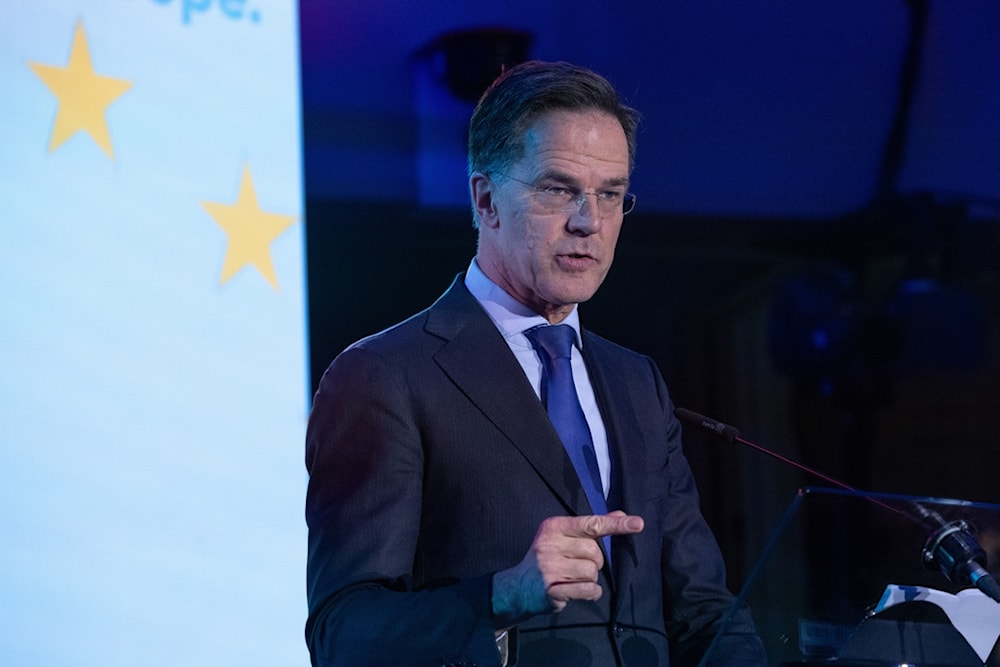
NATO Secretary General Mark Rutte addresses the audience during the Global Europe Forum at the European Parliament in Brussels, Belgium, Tuesday, Jan. 13, 2026. (AP Photo/Omar Havana)
NATO Secretary General Mark Rutte on Tuesday sought to project continuity within the alliance, as internal tensions sharpen over Greenland and growing unease among European allies about US intentions in the Arctic.
Speaking at the Renew Europe Global Europe Forum in Brussels, Rutte dismissed speculation about imminent leadership change, stressing that succession is a natural process rather than a sign of instability.
“I was not planning to quit already, but I am sure there will be a successor someday. I have no idea how long I will be in this job because nobody told me, but I have no idea how long I will be appointed,” Rutte said.
NATO Greenland Rift
His remarks come as NATO grapples with unusually sharp disagreements linked to Greenland’s strategic role. The friction has been fueled by renewed debate in Washington over whether the United States should seek to acquire or exert direct control over the Danish autonomous territory in the name of national and Arctic security. Such calls have unsettled European capitals, where officials argue that any attempt to alter Greenland’s status would directly challenge Danish sovereignty and risk fracturing alliance cohesion.
On Monday, the government coalition in Greenland publicly moved to anchor the island’s defense firmly within NATO, announcing it would intensify coordination with Denmark to ensure that any future defense developments remain under the alliance’s framework. In a formal statement, the Greenlandic government said Greenland is part of the Danish Commonwealth and that, as a NATO member, “the defense of Greenland must therefore be through NATO,” adding that all alliance members, including the United States, share a common interest in its defense.
The statement followed what the government said was positive feedback from six NATO member states on Greenland’s strategic importance and was widely interpreted as a rejection of unilateral approaches to Arctic security. Greenland’s leadership also stressed its belief that the island would “forever be part of the Western defense alliance,” underscoring its commitment to collective defense amid mounting geopolitical pressure.
Annexation Talk Escalates
The dispute has been further inflamed by remarks from Donald Trump, who recently reiterated past assertions that the United States would take over Greenland “one way or another.” Adding to European concern, US Republican lawmaker Randy Fine on Monday introduced the Greenland Annexation and Statehood Act, legislation that would grant the White House broad authority to pursue the annexation or acquisition of Greenland under the banner of national security, without outlining a diplomatic or legal pathway.
Senior European officials have warned that any unilateral US move against a NATO ally would constitute a fundamental breach of the alliance’s principles. Some have gone as far as to suggest that a military confrontation involving Denmark would call into question NATO’s continued viability, while pointing to alternative European security guarantees enshrined in EU treaties.
Against this backdrop, Rutte’s comments appeared aimed at dampening fears that the Greenland debate could spiral into an existential crisis for NATO. Nonetheless, the alliance chief signaled that the bloc’s institutional foundations remain intact, even as disagreements over Arctic security and sovereignty grow more pronounced.
Read more: Germany signals greater Arctic role after Trump ogles Greenland


