
NATO chief discusses Arctic security with Trump ahead of Davos meeting
 3 Min Read
NATO chief Mark Rutte confirmed talks with US President Donald Trump on Arctic security, with Greenland emerging as a key focal point.
-
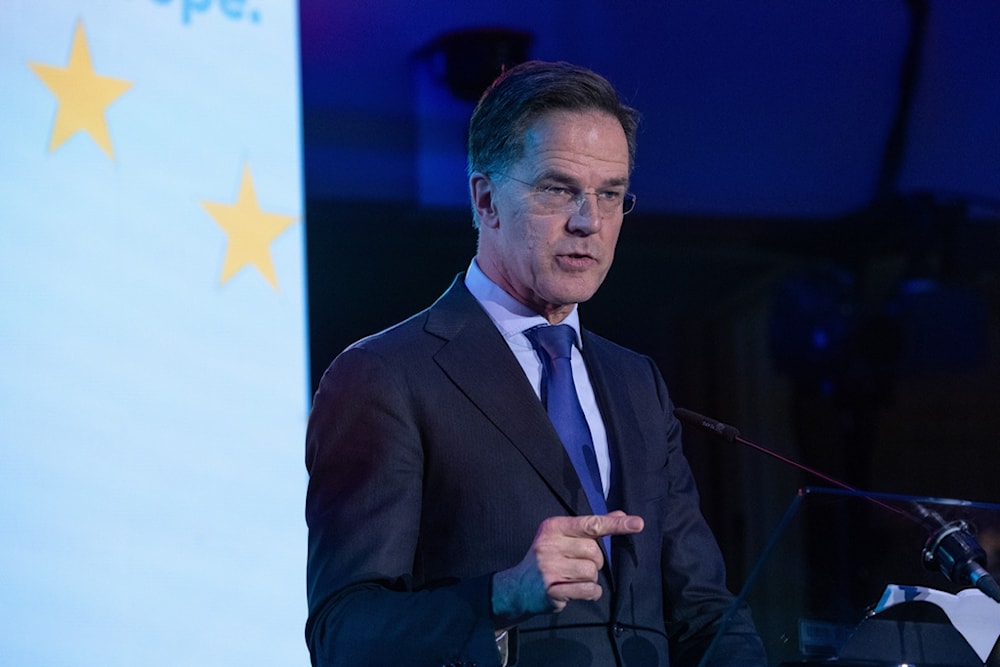
NATO Secretary General Mark Rutte addresses the audience during the Global Europe Forum at the European Parliament in Brussels, Belgium, Tuesday, Jan. 13, 2026. (AP Photo/Omar Havana)
NATO Secretary General Mark Rutte said he has spoken with U.S. President Donald Trump about security developments in Greenland and the wider Arctic, as geopolitical tensions continue to grow in the High North.
"Spoke with @POTUS regarding the security situation in Greenland and the Arctic. We will continue working on this, and I look forward to seeing him in Davos later this week," Rutte said in a post published on X.
Spoke with @POTUS regarding the security situation in Greenland and the Arctic. We will continue working on this, and I look forward to seeing him in Davos later this week.
— Mark Rutte (@SecGenNATO) January 18, 2026
The remarks come at a sensitive moment for NATO, as Greenland’s role in Arctic defense has become the focus of unusually sharp disagreements among allies. The island’s location between North America and Europe makes it central to missile detection, space surveillance, and early-warning systems, and it already hosts major US military infrastructure under long-standing defense agreements with Denmark.
Tensions have escalated following renewed debate in Washington over whether the United States should move toward acquiring or exerting direct control over the Danish autonomous territory in the name of national and Arctic security. European officials argue that any attempt to alter Greenland’s status would directly challenge Danish sovereignty and risk undermining NATO’s principle of collective defense.
Against this backdrop, Greenland’s governing coalition moved this week to reaffirm the island’s defense alignment within NATO, announcing plans to intensify coordination with Denmark to ensure that all future defense arrangements remain under the alliance’s framework. In a formal statement, Greenland’s government said the island is part of the Danish Commonwealth and that, as Denmark is a NATO member, “the defense of Greenland must therefore be through NATO,” stressing that all allies, including the United States, share responsibility for its security.
The statement followed what Greenlandic authorities described as positive feedback from six NATO member states regarding the island’s strategic importance and was widely interpreted as a rejection of unilateral approaches to Arctic security. Greenland’s leadership also said the island would “forever be part of the Western defense alliance,” seeking to close the door on speculation about alternative security arrangements.
Annexation Talk Escalates
The controversy has been further inflamed by Trump’s recent remarks reviving earlier assertions that the United States would take over Greenland “one way or another.” Adding to European alarm, U.S. Republican lawmaker Randy Fine has introduced legislation titled the Greenland Annexation and Statehood Act, which would grant the White House broad authority to pursue Greenland’s annexation or acquisition on national security grounds, without outlining a diplomatic or legal process.
European officials have warned that any unilateral US move against a NATO ally would amount to a fundamental breach of alliance norms, with some privately questioning whether NATO could withstand a confrontation involving Denmark.
The dispute has also spilled into the economic realm. In recent weeks, Trump has renewed threats to impose tariffs on European states, citing trade imbalances and burden-sharing disputes. EU officials see the timing of the warnings as particularly destabilizing, arguing that trade pressure risks being used in parallel with security arguments to extract concessions from allies already under strain over Greenland and Arctic policy.
Read more: Europe hits back at Trump's threat of tariffs over Greenland grab bid


