
Ceasefire will support regional stability, Pezeshkian tells Erdogan
 3 Min Read
Iranian President Masoud Pezeshkian told Turkish President Recep Tayyip Erdogan that a ceasefire could support regional stability, stressing cooperation and warning against renewed escalation in West Asia.
-
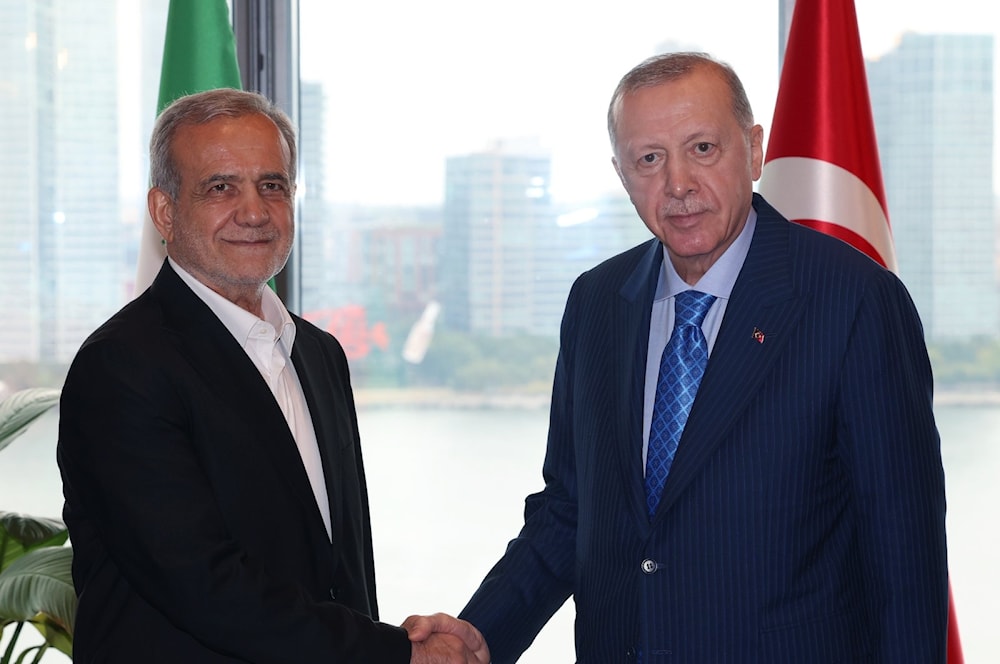
President Recep Tayyip Erdoğan and Iranian President Masoud Pezeshkian shake hands at the Turkish House in New York, Sept. 23, 2024. (AP)
Iran's decision to accept a ceasefire “will pave the way for stability in the region,” the Iranian presidency stated, following a phone call between President Masoud Pezeshkian and his Turkish counterpart, Recep Tayyip Erdogan.
Pezeshkian reportedly emphasized the importance of regional cooperation and coordination to prevent renewed aggression and attacks, adding that the viability of the ceasefire depends on both sides fully respecting their commitments.
He also stressed that sustained dialogue among regional states is essential to reducing tensions and avoiding further escalation.
Iran highlights cooperation with 'friendly countries'
Pezeshkian expressed appreciation for the positions of “friendly countries,” including Türkiye, in condemning the US-Israeli aggression against Iran, also praising the solidarity shown by the Turkish people toward Iranians.
According to the Iranian presidency, Pezeshkian reiterated Iran’s readiness to respond positively to ceasefire calls from regional countries, despite the United States’ record of undermining diplomacy and its decision to attack Iran despite diplomatic talks.
He further stressed that continued regional instability is directly linked to ongoing hostile policies, actively calling for an end to all actions that undermine diplomatic efforts.
The Iranian president also voiced the need for all parties to respect diplomatic frameworks and avoid steps that could reignite wider confrontation.
Calling for an end to the aggression on all fronts, including Lebanon, Pezeshkian stated that "Israel" seeks to ignite and destabilize the region, urging relevant states to pressure both the Israeli entity and the US to halt attacks on Lebanon and prevent further escalation.
Regional ceasefire collapses following Trump-Netanyahu call
The United States and Iran agreed to a two‑week ceasefire on April 7 after intensive mediation led by Pakistani PM Mohammad Shahbaz Sharif and Pakistani military officials, marking a diplomatic breakthrough following weeks of war.
On April 8, Islamabad publicly announced that the ceasefire agreed between Washington and Tehran would apply “everywhere,” including Lebanon, and invited US and Iranian delegations to further negotiations scheduled for April 10 in Pakistan. Also on April 8, Pakistan warned that continued hostilities, such as Israeli strikes on Lebanon, risked undermining the ceasefire and the broader peace process between the United States and Iran.
According to diplomatic sources cited by CBS News, US President Donald Trump was informed that the ceasefire framework applied to the broader West Asia, and he reportedly agreed that this would include Lebanon. A White House official also told CBS News that "Israel" had agreed to the terms of the deal, reinforcing the initial understanding that the ceasefire extended to Lebanon.
However, in one of the deadliest escalations in decades, Israeli forces launched a coordinated wave of strikes across Beirut and other regions, killing more than 300 people in ten minutes.
Despite these repeated confirmations from mediators and regional officials, the US position reportedly shifted following a phone call between President Trump and Israeli occupation Prime Minister Benjamin Netanyahu.
Read more: Trump says Iran deal 'within reach' despite attacks on Lebanon


