
US ceasefire position on Lebanon shifted after Trump–Netanyahu call
 4 Min Read
CBS reports, citing diplomatic sources, that Washington shifted its position on Lebanon within the ceasefire framework following a call between Trump and Netanyahu.
-
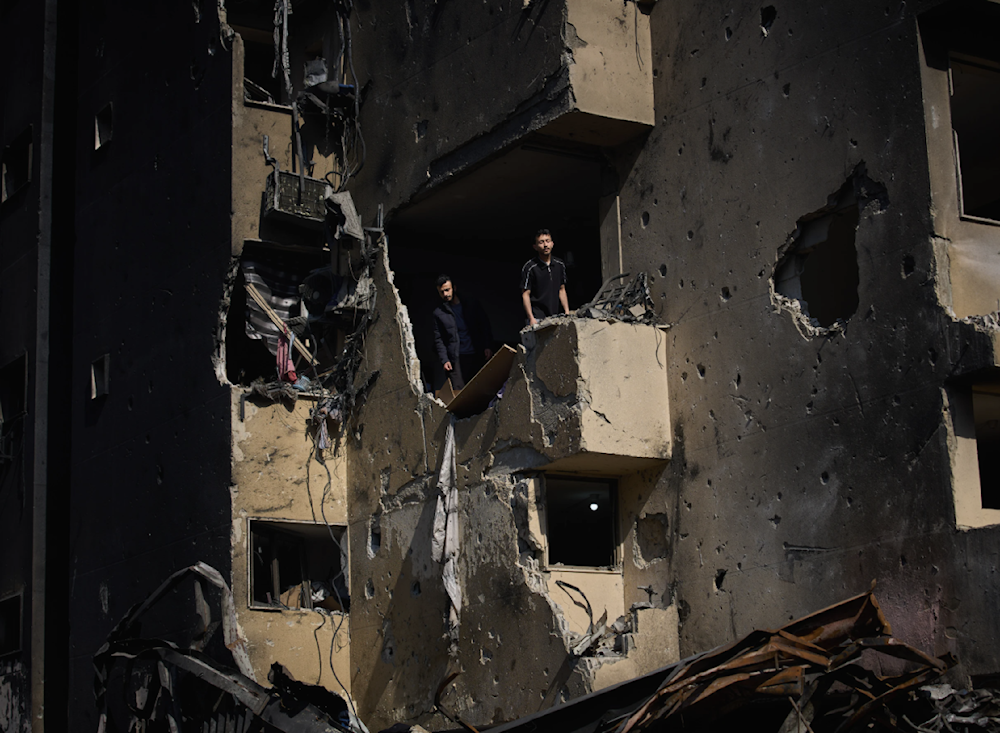
Men inspect the damage to their home destroyed in an Israeli airstrike a day earlier in Beirut, Lebanon on April 9, 2026. (AP)
Confusion surrounding the proposed ceasefire in Iran has intensified amid inconsistencies in the US position regarding Lebanon’s inclusion, raising questions about Washington’s credibility in the negotiations.
The United States and Iran agreed to a two‑week ceasefire on April 7 after intensive mediation led by Mohammad Shahbaz Sharif and Pakistani military officials, marking a diplomatic breakthrough following weeks of war.
On April 8, Islamabad publicly announced that the ceasefire agreed between Washington and Tehran would apply “everywhere,” including Lebanon, and invited US and Iranian delegations to further negotiations scheduled for April 10 in Pakistan. Also on April 8, Pakistan warned that continued hostilities, such as Israeli strikes on Lebanon, risked undermining the ceasefire and the broader peace process between the United States and Iran.
According to diplomatic sources cited by CBS News, US President Donald Trump was informed that the ceasefire framework applied to the broader West Asia, and he reportedly agreed that this would include Lebanon. A White House official also told CBS News that "Israel" had agreed to the terms of the deal, reinforcing the initial understanding that the ceasefire extended to Lebanon.
However, in one of the deadliest escalations in decades, Israeli forces launched a coordinated wave of strikes across Beirut and other regions, killing more than 300 people in ten minutes.
US position shifts after Netanyahu–Trump call
Despite these repeated confirmations from mediators and regional officials, the US position reportedly shifted following a phone call between President Trump and Israeli occupation Prime Minister Benjamin Netanyahu.
Two sources familiar with the matter told CBS News that Washington’s stance changed after the call, raising questions about the consistency and independence of US decision-making in the negotiations.
The same sources added that the abrupt shifts in Washington’s position, combined with what they described as a fragmented and inconsistent approach within the Iranian side, have made diplomacy increasingly unstable and difficult to manage.
Growing questions over credibility of US mediation
The conflicting accounts from US officials, mediators, and regional actors underscore what appears to be a lack of coherence in Washington’s handling of the ceasefire process, particularly regarding the inclusion of Lebanon.
As negotiations continue, the repeated reversals and contradictory statements have further complicated efforts to establish a clear and enforceable agreement, deepening uncertainty across the region.
In an interview for #AlMayadeen, Professor Mohammad Marandi affirmed that “it’s very clear that #Lebanon was a part of the ceasefire,” stressing that both #Iran and the Pakistani Prime Minister stated this explicitly.
— Al Mayadeen English (@MayadeenEnglish) April 9, 2026
He highlighted that "The United States is lying. The… pic.twitter.com/LJvpcgYQdS
Lebanon seeks ceasefire before engaging in talks with 'Israel'
Lebanon has yet to receive an official date from the United States to begin negotiations with "Israel", with Beirut insisting that a ceasefire must be established before any talks take place, Al Mayadeen’s correspondent in Beirut reported.
According to the correspondent, the upcoming Lebanese delegation will include Ambassador Simon Karam and another senior diplomat, with Beirut awaiting a response from Washington on the expected start of negotiations next week. Additionally, Al Mayadeen's correspondent reported that Lebanon's official option is a ceasefire before engaging in negotiations.
According to two senior US officials, Trump spoke with Israeli Prime Minister Benjamin Netanyahu, urging him to reduce the intensity of attacks to preserve negotiations. Trump confirmed the call, claiming that Israeli operations were being scaled back. “I spoke with Bibi and he’s going to low-key it. I just think we have to be sort of a little more low-key,” he said.
Vance echoed this, stating that Israeli forces may “check themselves a little bit,” even as the scale of recent attacks suggested otherwise.
Netanyahu, however, made it clear that "Israel" has no intention of halting its campaign, explicitly excluding Lebanon from any ceasefire arrangement. “I insisted that the temporary ceasefire with Iran not include Hezbollah, and we continue to strike them forcefully,” he said, reaffirming Tel Aviv’s commitment to continued aggression despite ongoing diplomacy.


