
China backs Pakistan mediation in Iran-US ceasefire talks
 4 Min Read
Pakistan and China discussed regional developments and Islamabad’s mediation efforts between Iran and the United States, while stressing the importance of a permanent ceasefire and secure navigation through the Strait of Hormuz.
-
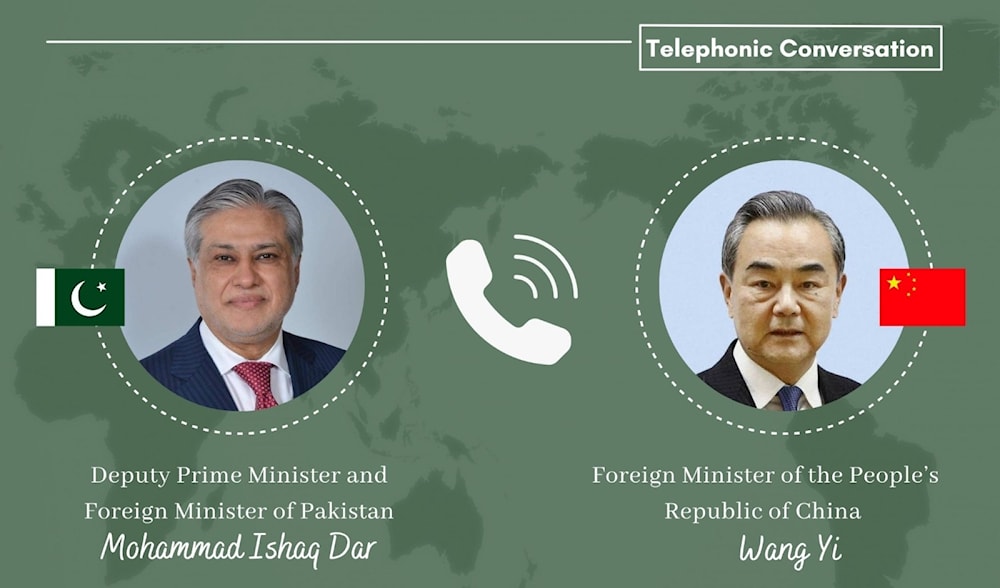
Mohammad Ishaq Dar and Wang Yi hold a phone call on May 12, 2026, to discuss regional developments, Pakistan’s mediation efforts between Iran and the United States, and the importance of sustaining the ceasefire and regional stability (X,@ForeignOfficePk)
China Foreign Minister Wang Yi and Pakistan Deputy Prime Minister and Foreign Minister Mohammad Ishaq Dar discussed regional developments and ongoing mediation efforts between Iran and the United States during a phone call on April 13, according to a statement released by China’s Foreign Ministry.
During the call, Dar provided a comprehensive briefing on Pakistan’s mediation efforts between Iran and the United States and expressed appreciation for China’s efforts to promote peace. He also said Pakistan is prepared to maintain close communication and coordination with China to support regional stability.
Wang Yi reiterated Beijing’s “principled position” on the crisis and praised Pakistan for facilitating a temporary ceasefire between Washington and Tehran, as well as for hosting the Islamabad talks, saying Islamabad had played a “fair and balanced mediating role.”
The Chinese foreign minister warned that the current ceasefire remains “highly fragile” and described the regional situation as being at a “critical turning point.”
“The pressing priority is to do everything possible to prevent the resumption of hostilities and sustain the hard-won momentum of the ceasefire,” Wang Yi said, according to the statement.
He added that the international community should intensify efforts to promote peace talks and “unequivocally oppose any actions that undermine the ceasefire and escalate confrontation.”
Wang Yi also referred to the Five-Point Initiative proposed by China and Pakistan for restoring peace and stability in the Gulf and Middle East region, saying it reflects a broad international consensus on advancing peace efforts.
China behind Tehran
The discussions also reflected the broader geopolitical and economic stakes surrounding the US-Israeli war on Iran, particularly the struggle over energy routes, sanctions networks, and strategic influence across the Gulf region.
Although the military assault has been carried out against Iran, the broader campaign increasingly appears tied to efforts to weaken China’s expanding economic and strategic reach across Eurasia and the Global South.
The Strait of Hormuz remains central to those stakes, as a substantial share of Chinese crude imports transit through the strategic waterway. Any prolonged destabilization or militarization of Hormuz threatens not only Iranian exports, but also the wider Gulf energy network relied upon heavily by Asian economies, particularly China.
At the same time, Washington has intensified sanctions targeting Chinese “teapot” refineries, shipping firms, banks, and commercial networks accused of facilitating Iranian oil exports to China, while US pressure campaigns have increasingly expanded beyond Tehran itself toward the broader infrastructure underpinning China’s energy security.
China containment campaign
Analysts and observers have increasingly argued that the war on Iran cannot be viewed in isolation from the wider US campaign to contain China’s rise, particularly through pressure on trade corridors, maritime chokepoints, alternative payment systems, and sanctions-resistant energy partnerships involving Iran and other states outside Washington’s sphere of influence.
Against that backdrop, Pakistan has emerged as a key intermediary in the crisis, leveraging its ties with both Tehran and Washington while coordinating closely with Beijing on de-escalation efforts aimed at preserving the ceasefire and preventing a wider regional war that could severely disrupt Chinese-linked energy and trade flows.
The Chinese foreign minister further stated that Beijing welcomes a greater Pakistani role in regional diplomacy and is prepared to continue coordinating with Islamabad and the wider international community to support the restoration of peace and stability in the Middle East.
Read more: China blocks US sanctions on five refiners over Iran oil purchases


