
China blocks US sanctions on five refiners over Iran oil purchases
 3 Min Read
China has issued an injunction to block enforcement of US sanctions on five domestic refiners accused of purchasing Iranian oil.
-
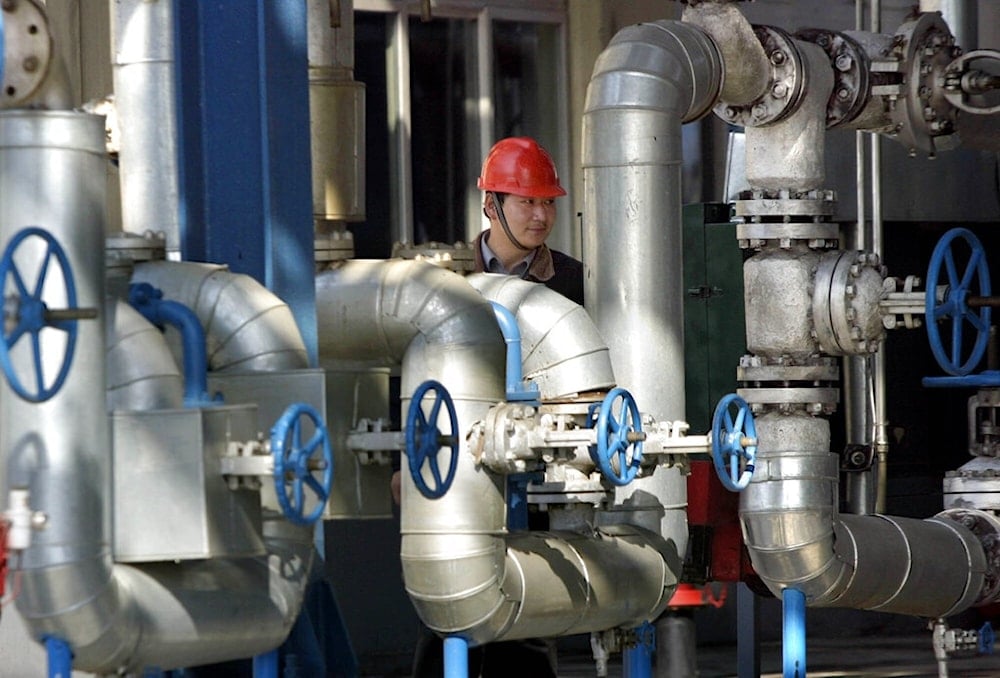
A Chinese worker walks past equipment at an oil refinery of the PetroChina Jilin Petrochemical Co. in Jilin, northeast China, Monday, May 24, 2004 (AP)
China has moved to counter US sanctions targeting several of its oil refiners accused of importing Iranian crude, with authorities issuing a formal injunction to prevent enforcement of the measures, in a step that reflects growing resistance to Washington’s expanding economic pressure campaign.
The decision was announced by the Ministry of Commerce of the People's Republic of China, which named five affected companies, including Hengli Petrochemical (Dalian) Refinery and four independent “teapot” operators: Shandong Jincheng Petrochemical Group, Hebei Xinhai Chemical Group, Shouguang Luqing Petrochemical, and Shandong Shengxing Chemical.
The move follows action by the United States Department of the Treasury, which in April sanctioned Hengli for allegedly purchasing billions of dollars’ worth of crude from Iran, while the other four refiners had already been targeted under earlier rounds of sanctions.
Beijing strongly rejected the measures, stating they violate "international law and the basic norms of international relations," and announced a legal mechanism to block their application domestically.
"The injunction stipulates that the United States cannot recognize, implement, or comply with the sanctions imposed on the aforementioned five Chinese companies," the Ministry said.
Sanctions strain, trade persists
The dispute unfolds within a widening US effort to choke Iran’s oil exports by weaponizing sanctions against not only Tehran, but also the global shipping and financial and commercial networks that sustain its trade. Recent US measures have targeted dozens of vessels and intermediaries linked to what officials describe as Iran’s “shadow fleet", alongside threats of secondary sanctions against banks facilitating transactions.
Despite this pressure, Iran’s oil trade has proven resilient. China continues to absorb the overwhelming majority of Iran’s seaborne crude, more than 80% in recent estimates, primarily through independent refiners operating with limited exposure to the US financial system. These refiners, concentrated in Shandong province, play a central role in sustaining Iran’s exports, often relying on yuan-based transactions, intermediaries, and rebranded shipments to bypass restrictions.
Industry data indicates that these “teapot” refiners account for roughly a quarter of China’s refining capacity and handle the bulk of Iranian crude entering the country. Their continued activity reflects the limits of US sanctions, which have struggled to dismantle a decentralized trade network that has adapted through alternative logistics and payment systems.
At the same time, the sanctions have introduced friction. Targeted refiners have faced difficulties securing shipments, accessing financing, and marketing their products, in some cases resorting to relabeling output to avoid detection.
Trade defiance
China’s injunction signals a more assertive posture, effectively shielding its companies and rejecting Washington’s attempt to impose extraterritorial control over global energy trade. For Tehran, the continued flow of oil to Asia, despite mounting pressure, illustrates the persistence of parallel economic channels that operate beyond US oversight.
The confrontation, analysts note, is no longer limited to Iran’s oil revenues alone. It reflects a broader struggle over whether independent trade networks, linking producers like Iran to major consumers such as China, can function outside a system increasingly shaped by US sanctions and financial leverage.


