
Court ruling puts Mahmoud Khalil at risk of re-arrest, deportation
 3 Min Read
A US appeals court ruling may lead to the re-arrest of pro-Palestinian activist Mahmoud Khalil, reviving deportation efforts by the Trump administration.
-
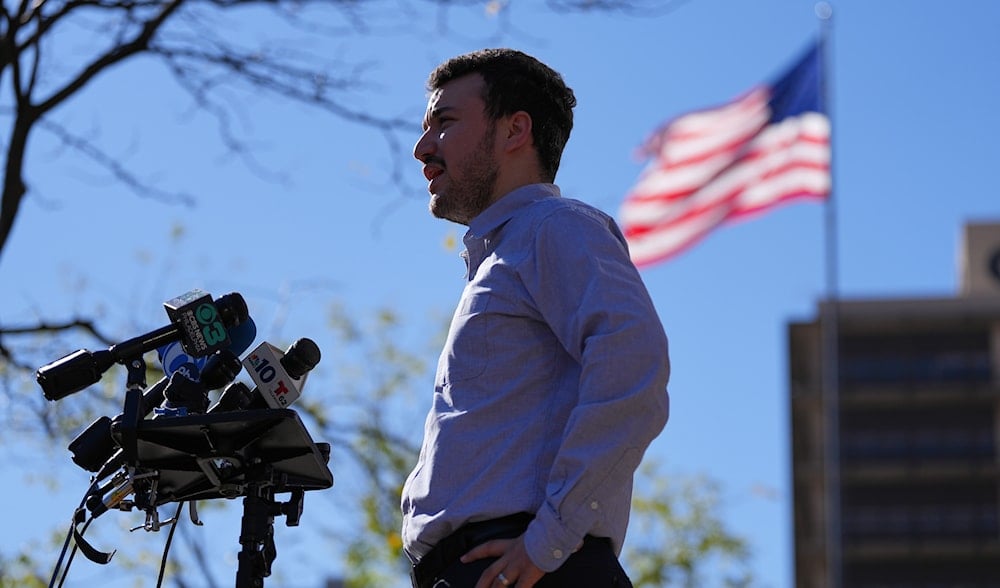
Palestinian activist Mahmoud Khalil holds a news conference outside Federal Court on Tuesday, Oct. 21, 2025, in Philadelphia (AP)
A US federal appeals court has ruled against Columbia University graduate Mahmoud Khalil in a case that could pave the way for his re-arrest and deportation, underscoring the Trump administration's ongoing crackdown on pro-Palestine student activists.
In a 2-1 decision issued Thursday, the 3rd US Circuit Court of Appeals determined that the lower district court lacked jurisdiction to order Khalil's release from immigration custody, effectively nullifying an earlier legal victory for the activist.
Judges Thomas Hardiman and Stephanos Bibas, both appointed by Republican presidents, wrote that Khalil's constitutional claims should be raised through an appeal of a final deportation order, not through a separate lawsuit.
However, Judge Arianna Freeman, appointed by former President Joe Biden, issued a strong dissent, arguing that the ruling effectively denies Khalil access to judicial review of his First Amendment rights. Freeman emphasized that Khalil had demonstrated serious harm during his detention, asserting that his claims of political retaliation should not be brushed aside.
Khalil, a legal US resident of Palestinian descent born in Syria and holding Algerian citizenship, has become a symbolic figure in the US student movement for Palestine. As a lead organizer of the Columbia University Apartheid Divest coalition, he emerged as a vocal critic of "Israel's" war on Gaza and a prominent face of the nationwide protests across university campuses during 2024 and 2025.
Ongoing legal battle
In a statement following the ruling, Khalil described the decision as "deeply disappointing" but reaffirmed his commitment to Palestine. "The door may have been opened for potential re-detainment down the line," he said, "but it has not closed our commitment to Palestine and to justice."
Khalil's lawyers say they will appeal the ruling, and for now, the decision does not take immediate effect, sparing Khalil from immediate re-detention. But it removes a key legal pathway used to challenge politically motivated deportations.
In September, Immigration Judge Jamee Comans ordered Khalil's deportation to either Algeria or Syria, citing alleged misrepresentation on his permanent residency application. US authorities claim he failed to disclose employment and political activities, including his role in campaigns supporting the boycott of "Israel".
The Trump administration has invoked Cold War-era immigration laws to justify his removal, arguing that Khalil's presence threatens US foreign policy interests. Secretary of State Marco Rubio cited his role in "disruptive and antisemitic" campus protests as grounds for his deportation.
Targeted for advocacy
Khalil was first detained on March 8 by immigration agents in the lobby of his residence in Manhattan, just weeks after US President Donald Trump publicly labeled the campus protests "antisemitic" and vowed to deport any foreign nationals involved.
His arrest triggered widespread condemnation, with students staging protests during graduation ceremonies and demanding his release. Although he was later freed in June after Judge Michael Farbiarz ruled that his detention appeared to be a form of political punishment, Thursday's decision now casts uncertainty over his legal status and safety.
Civil rights advocates, including the American Civil Liberties Union, warn that the case sets a dangerous precedent, criminalizing political dissent and enabling immigration laws to silence pro-Palestinian voices.


