
Cuba unveils emergency plan to address fuel crisis amid US blockade
 3 Min Read
Measures include decentralizing fuel imports and advancing solar energy projects.
-
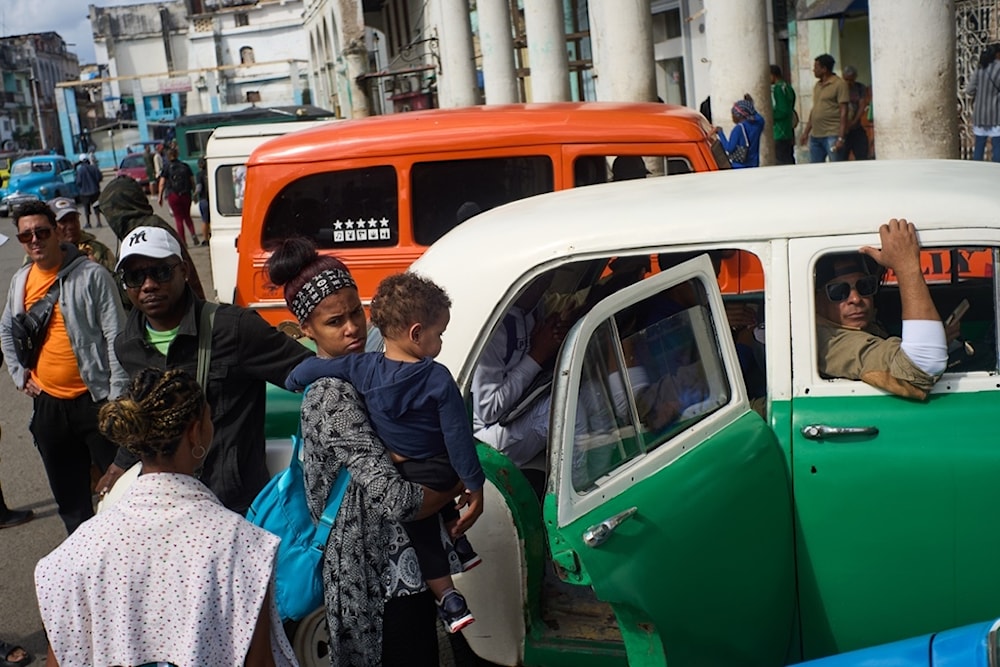
People wait their turns to board shared taxis in Havana, Cuba, Friday, February 6, 2026 (AP)
The Cuban government has announced a package of emergency measures to mitigate the worsening Cuban fuel crisis driven by the tightening of the US blockade on Cuba. Deputy Prime Minister Oscar Pérez-Oliva Fraga presented the plan on Friday, prioritizing the protection of essential services in Cuba.
The measures include the decentralization of fuel imports, authorizing capable companies to purchase fuel directly. The government also plans to accelerate its Cuban energy strategy by continuing the installation of photovoltaic solar parks.
Speaking on the televised program Mesa Redonda, Pérez-Oliva Fraga outlined the sectors that will receive priority access to available fuel. These include electricity generation using domestic crude, gas, and renewables; water supply systems; basic healthcare services; local food production; and foreign currency-generating industries.
He attributed the current crisis to "financial persecution and secondary sanctions" by the United States against vessels attempting to deliver fuel to the island.
Despite external forecasts of collapse, he emphasized, "the Cuban people do not collapse and have proven it throughout their history."
Read more: Russia, Cuba deepen ties as political, economic cooperation expands
Protecting essential services in Cuba
Minister of Education Naima Trujillo Barreto explained that steps have been taken to ensure educational continuity. Priority will be given to in-person classes for early childhood and primary students.
Higher education will adopt a hybrid approach based on local conditions, ensuring personalized support for all students, particularly those in their final year.
Eduardo Rodríguez Dávila, Minister of Transport, addressed the reorganization of mobility nationwide. Critical logistical operations will continue, including port and airport activity, foreign trade-related transport, and the Medibus service for patients requiring ongoing medical treatment.
As part of a long-term Cuban energy strategy, the government is investing in electric mobility. This includes solar-powered charging stations for electric tricycles and the planned purchase of electric minibuses and cargo vehicles for provincial distribution.
Read more: Lavrov condemns US economic pressure on Cuba, pledges support
Fidel Castro’s legacy and national resilience
As the country marks the centenary of revolutionary leader Fidel Castro Ruz, the broadcast concluded by recalling his words from 1993, affirming the enduring nature of Cuba's revolutionary principles.
"We are fighting for the same things we fought for in Moncada, in the Granma, in the Sierra, in the Escambray, defending the same things we defended during the October Crisis. We are defending the same things we defended in our glorious and victorious internationalist missions," Castro is quoted as saying. "We are defending the principles for which we have not surrendered when so many others have. We are defending the principles for which we are willing to give our lives. We are defending the principles for which we are facing this Special Period."
The speech emphasized that the island is defending the ideals "for which we are writing one of the most glorious pages in history," just 90 miles from the United States.
His speech noted that despite the collapse of the socialist bloc, "we knew how to remain firm and move forward." The defense of these principles, Castro concluded, lies in the honor of the homeland, its people, and generations of revolutionaries, saying "we are far more revolutionary than counter-revolutionary."
Read more: US pressure intensifies as Cuba becomes next regime change target


