
Economic strain, displacement grapple northern Israeli settlements
 3 Min Read
Sustained Resistance operations from Lebanon are driving economic collapse and mass displacement in northern Israeli settlements.
-
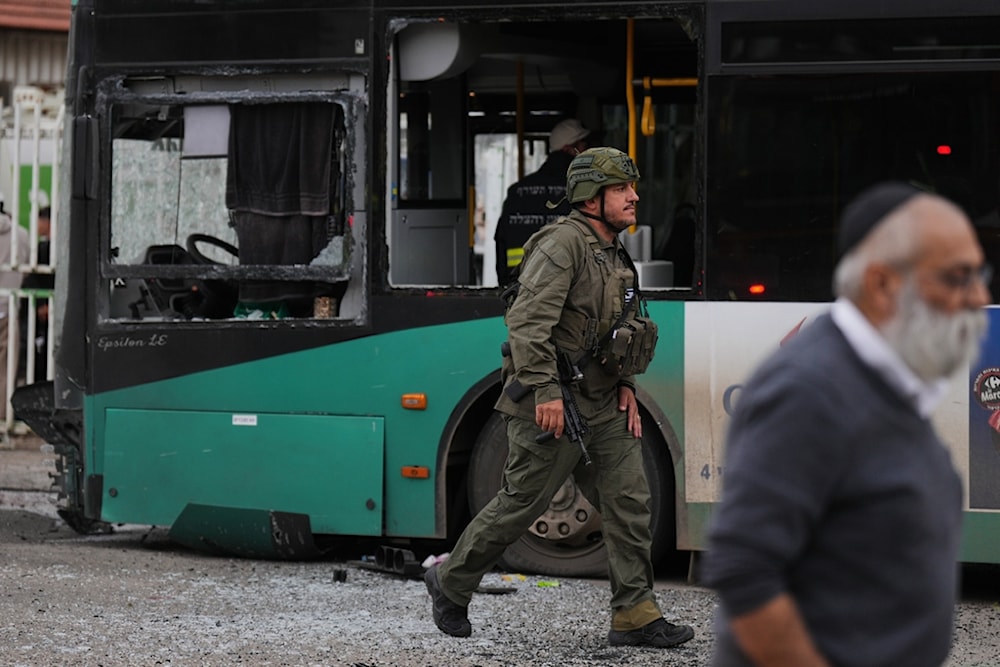
Israeli security forces inspect the site struck by a rocket fired from Lebanon, in Kiryat Shmona, northern occupied Palestine, Monday, March 23, 2026 (AP)
Sustained Resistance operations from Lebanon are driving a deepening economic crisis and accelerating displacement across Israeli northern settlements, as the costs of the ongoing war on Lebanon increasingly weigh on frontline settler communities.
According to the Israeli broadcaster Kan, the situation has triggered growing calls within Israeli circles for a comprehensive rescue and reconstruction plan, as both economic activity and population stability continue to erode.
Kan’s northern correspondent, Ruby Hammershlag, said the end of the war remains uncertain, but discussions surrounding the "day after" have become increasingly urgent. He stressed the need for Israeli authorities to present a clear strategy aimed at reinforcing northern settlements and outlining a cohesive vision for their recovery.
84% of business owners see decline
Data cited in the report shows that 84% of business owners in frontline settlements experienced a decline in revenues over the past year due to the war. Around 70% were forced to either scale down their operations or seek external support, reflecting mounting pressure on communities directly exposed to the confrontation.
The demographic impact has also been significant. The number of settlers in Kiryat Shmona has reportedly dropped from approximately 23,000 before the war to around 10,000 currently, with further decline expected in the coming months if conditions persist.
Hammershlag pointed to several proposals aimed at containing the fallout, including the establishment of a free trade zone in Kiryat Shmona and the expansion of protective infrastructure. Plans under discussion include building shelters and fortified areas for more than half of the population, amid an existing shortage of such facilities.
Growing distrust between local authorities, central government
In a related development, the report highlighted the cancellation of Kiryat Shmona Mayor Avichai Stern’s participation in a Knesset session after he requested to join remotely via Zoom, a move seen as reflecting growing distrust between local authorities and the central government.
The report concluded that Israeli leadership is facing mounting pressure to offer a clear path forward for northern residents and demonstrate a meaningful commitment to addressing the worsening conditions.
In the meantime, the Islamic Resistance in Lebanon continues to escalate its operations, reporting sustained and coordinated attacks on Israeli positions and settlements across the northern front.
Escalating Resistance operations
Earlier on Wednesday, Hezbollah carried out a series of rocket and drone strikes targeting Israeli occupation forces and settlements.
According to Resistance statements, more than 20 rockets were launched within minutes toward settlements in northern occupied Palestine, triggering sirens in areas including Kiryat Shmona, Dovev, and Misgav Am, while additional barrages targeted sites across the Western al-Jalil.
The group also reported successive rocket-artillery strikes on Israeli troop positions in southern Lebanon, particularly in Bint Jbeil and al-Khiam, alongside a swarm of FPV drones targeting the Mattat Barracks.
In a further development, Hezbollah announced that it engaged Israeli aircraft by launching surface-to-air missiles over southern Lebanon, signaling an expansion in the scope of its defensive operations.
Read more: April 15: Hezbollah rockets, FPV drones target Israeli positions


