
Egypt, Sudan reject Ethiopia's unilateral moves amid Nile dispute
 3 Min Read
Egypt and Sudan renew their stance in the Egypt Sudan Nile dispute, rejecting unilateral measures in the Eastern Nile Basin and urging compliance with international law.
-
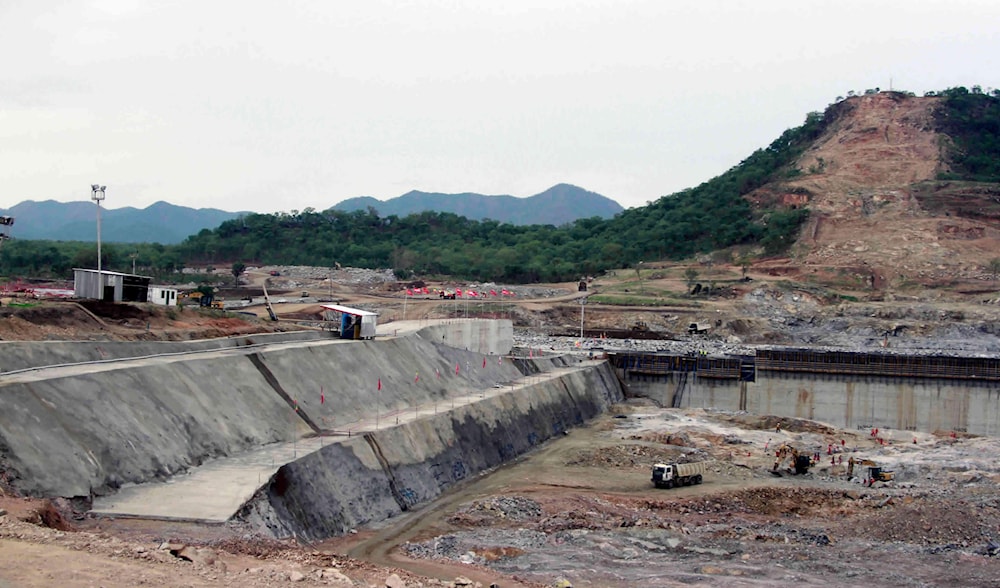
Construction work takes place at the site of the Grand Ethiopian Renaissance Dam near Assosa, Ethiopia, on June 28, 2013 (AP)
Egypt and Sudan on Thursday reaffirmed their rejection of any unilateral measures in the Eastern Nile Basin that could harm their water interests, calling on Ethiopia to abandon such actions and adhere to international law governing shared waterways.
The appeal came during talks in Cairo between Egyptian Prime Minister Mostafa Madbouly and Sudan’s transitional Prime Minister Kamel Idris, where the two sides reviewed the latest developments related to the Nile file.
In a joint stance, the prime ministers urged Ethiopia to abandon its unilateral approach and to comply with established international principles regulating transboundary water resources, including prior notification, consultation, avoidance of significant harm, and consensus among riparian states.
Nile should remain source of cooperation, prosperity
They stressed that the Nile River should remain a source of cooperation and shared prosperity for all countries along its course, rather than a point of contention.
Both downstream nations underscored the need to safeguard their water security and preserve their full water rights and uses in accordance with the 1959 Nile Waters Agreement and relevant rules of international law.
The two sides also agreed to fully coordinate their positions in regional and international forums addressing Nile-related issues, emphasizing that Egyptian and Sudanese water security is “one indivisible whole.”
Reiterating their categorical rejection of any unilateral measures in the Eastern Nile Basin that could undermine downstream water interests or threaten national water security, Egypt and Sudan warned that such actions constitute a violation of international law and remain a persistent source of regional instability.
Tensions persist while talks falter
The renewed Egyptian-Sudanese position comes amid longstanding objections by both countries to Ethiopia’s unilateral measures regarding the Grand Ethiopian Renaissance Dam (GERD), a mega project capable of holding up to 74 billion cubic meters of water.
Cairo and Khartoum have repeatedly voiced concerns that unilateral and uncoordinated filling and operation of the dam could negatively impact their water security and national interests, particularly during periods of drought or flooding.
Egypt, which relies on the Nile River for approximately 98 percent of its renewable water resources, has consistently warned that it will not accept any infringement upon, or relinquishment of, what it considers its historical share of Nile waters.
In December, Egypt’s Foreign Minister Badr Abdelatty said that any harm inflicted on Egypt as a result of the Ethiopian dam project would be addressed in accordance with international law, citing the country’s right to self-defense.
Despite reiterating that they do not oppose development efforts in Ethiopia, Egypt and Sudan have long called for a binding legal agreement governing the filling and operation of the dam to safeguard their water interests.
Ethiopia, however, has consistently rejected calls for such a binding accord, effectively bringing more than a decade of negotiations between the three countries to a standstill.


