
EU considers European alternative to NATO amid Trump-era doubts
 4 Min Read
European Union member states are reassessing their reliance on NATO amid growing doubts over US military support, particularly under President Donald Trump.
-
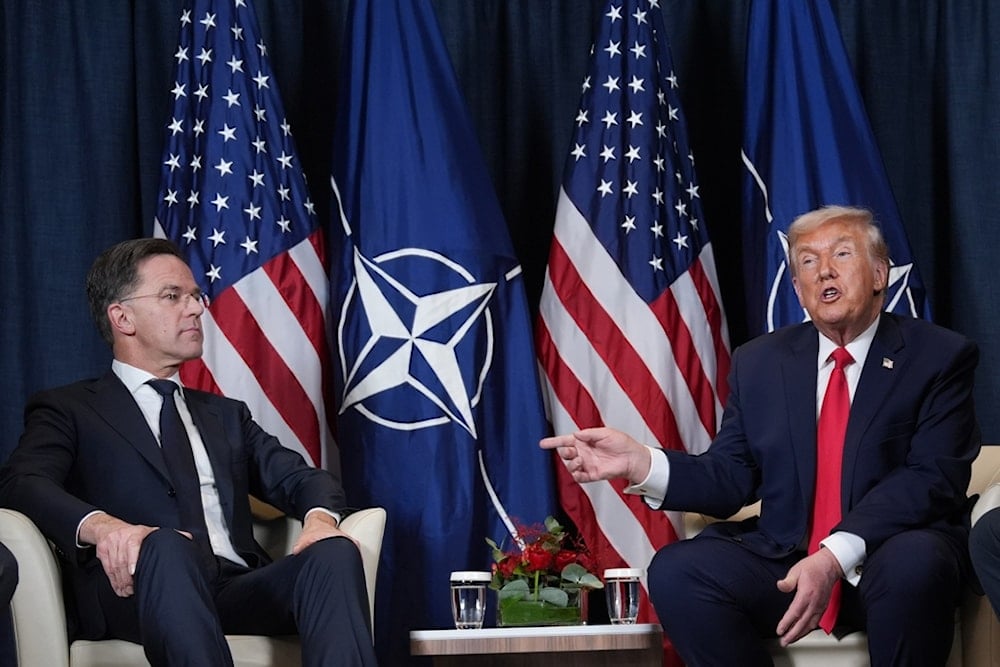
President Donald Trump, right, meets with NATO Secretary General Mark Rutte, Jan. 21, 2026. (AP)
European Union member states are reconsidering their dependence on NATO’s Article 5 collective defense clause, exploring a European alternative to NATO due to increasing skepticism over the reliability of US military support, Politico reported on Tuesday.
While the EU mutual defense clause, Article 42.7 of the Lisbon Treaty, has existed since 2009, it has largely been seen as redundant alongside NATO’s collective defense mechanism. That view is now shifting, as doubts mount over whether US President Donald Trump would honor the alliance's core commitment to defend Europe in the event of conflict.
"For decades, some countries said ‘We have NATO, why should we have parallel structures?’" a senior EU diplomat told Politico.
Trump’s Greenland Fixation and Strategic Pressure on Europe
Distrust of Washington’s strategic reliability has grown during Trump’s presidency, particularly after his controversial remarks about acquiring Greenland and his repeated questioning of NATO’s value.
Following what one EU diplomat called “Trump’s Greenland saber-rattling,” Brussels saw renewed urgency in establishing independent EU military command structures.
Greenland has gained international interest in recent years due to its vast reserves of natural resources, including rare earth minerals, uranium, iron, and potentially significant oil and gas reserves. While Trump denied that resource exploitation was the motivation behind his interest, he framed Greenland as a geopolitical concern, particularly with regard to so-called "Russian and Chinese influence".
However, Senator Mark Warner, Vice Chair of the Senate Intelligence Committee, emphasized that this is not the case. "Let me be clear: as vice chair of the Senate Intelligence Committee, I'm closely tracking the facts, and there is no current military threat from Russia or China to Greenland," Warner stated, adding, "The only immediate threat right now is from the United States, with talk of taking territory from one of our closest allies."
Trade Threats Deepen Tensions
On January 17, Trump further escalated pressure on European allies by threatening a 10% tariff on all goods exported to the US from several EU countries, including Denmark, Norway, Sweden, France, Germany, the UK, the Netherlands, and Finland, if they failed to support his proposed plans. He warned that the tariffs would rise to 25% by June 1 if no deal was reached.
In response, Danish Prime Minister Mette Frederiksen declared that "Europe won't be blackmailed."
Trump eventually withdrew the tariff threat following what he said was “a very productive meeting” with NATO Secretary General Mark Rutte in Davos.
The Push for an EU Army and Security Council
Amid these tensions, momentum is building within the EU for greater defense independence. On January 11, European Commissioner for Defense and Space Andrius Kubilius called for the creation of a permanent EU army of 100,000 troops and urged member states to consider establishing a European Security Council.
Such initiatives reflect a growing desire to develop autonomous defense capabilities that would allow the bloc to respond to threats without relying on NATO or the United States.
NATO Pushback and the Road Ahead
Despite the shift in EU defense discourse, NATO has voiced strong opposition to the idea of European strategic autonomy. On January 26, NATO Secretary General Mark Rutte dismissed the suggestion that the EU could defend itself without US support, telling European nations to "keep on dreaming."
The evolving debate over European defense reveals widening fault lines between Brussels and Washington. As questions linger about NATO’s future role and the US commitment to Europe, the EU appears increasingly determined to prepare for a security landscape in which it may need to stand on its own.
Read more: US, under Trump, still seeks control over Greenland, PM Nielsen warns


