
Exclusive | Trump's economic plan against Tehran is 'propaganda'
 4 Min Read
A senior Iranian political-security source tells Al Mayadeen that Trump's expected economic pressure plan amounts to psychological pressure rather than a substantive shift on the ground.
-
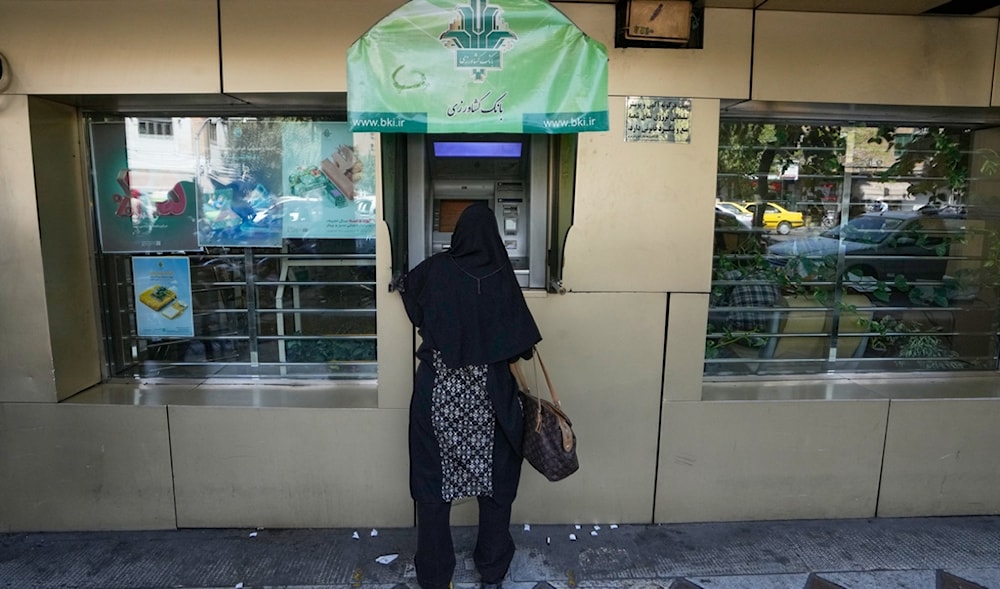
A woman uses an ATM in downtown Tehran, Iran, Monday, Aug. 24, 2026. (AP Photo/Vahid Salemi)
A senior Iranian political-security source told Al Mayadeen that the economic pressure plan Trump is expected to unveil is essentially media propaganda, part of a psychological campaign against the Iranian people rather than a substantive shift on the ground.
The source said the plan is based on a scheme drawn up by Trump's media team, arguing that Washington has practically exhausted the measures available against Iran, having already deployed sanctions, a naval blockade and other tools. Trump's recent claims and media campaigns, the source added, have proven to be psychological warfare rather than practical action.
The source pointed to a recurring pattern in which these media campaigns are timed to the eve of financial market reopenings, aimed at controlling energy prices. Each cycle ends with Trump signaling he will "give Iran time," after which talk of negotiations resurfaces in media outlets close to him.
A senior Iranian political-security source told Al Mayadeen that the economic pressure plan #Trump is expected to unveil is essentially a media-driven psychological operation rather than a measure capable of producing new realities on the ground.
— Al Mayadeen English (@MayadeenEnglish) August 24, 2026
The source described the… pic.twitter.com/RDDshoJWiP
Trump unveiled his latest economic pressure plan as markets were reopening and as a Pakistani mediator was present in Iran, which the source described as another example of the recurring media and psychological tactics Trump relies on.
The source stressed that no new development on the ground will result from Trump's announced economic measures or his stated desire to negotiate.
Trump, unable to achieve results on the battlefield, resorts to threats through the media while secretly pursuing projects that contradict the messaging behind his psychological operations, the source said, pointing to messages sent through back channels as one such example.
Bessent unveils sanctions package
US Treasury Secretary Scott Bessent announced Monday sanctions on nearly 60 Iran-linked entities, individuals and vessels spanning nuclear, missile, cyber and oil networks, along with the suspension of general licenses that the US claims have allowed some remittance payments to Iran.
The Treasury identified five sectors for potential secondary sanctions, including digital assets, technology, gold, aviation and shipping, and targeted a network of broker companies and shadow fleet vessels operating across the UAE, Hong Kong, China, Singapore, Switzerland and Europe.
Bessent claimed the US will enforce a "zero leakage" approach to Iran sanctions, adding that Trump is personally calling world leaders to press them to cut economic ties with Tehran. He said every country has been given a defined timeline to shut down identified activities, including closing Iran's bank branches abroad, warning that the US will act unilaterally through Treasury authorities if countries fail to comply.
Economic engagement of any kind with Iran, he said, would expose those responsible to the "full reach of American power," adding that no country, including China, is above the reach of US sanctions. Bessent said a major financial institution would be sanctioned by the end of the week over its dealings with Iran.
Iranian officials respond
Earlier on Monday, Iranian Central Bank Governor Abdolnasser Hemmati said Washington has effectively exhausted the sanctions measures available to it against Iran, noting that Iranian authorities anticipated the pressure months in advance and stockpiled foreign currency accordingly.
He said Iran currently faces no problem securing the foreign currency it needs, and that the Central Bank will provide $20 billion to the industrial sector through the end of the year.
Mohsen Rezaei, secretary of Iran's Supreme National Security Council, had warned Sunday that continued economic war could halt oil exports from the Gulf entirely, whether through the Strait of Hormuz or elsewhere.
He said Iran will regard any country's participation in or support for the US economic war against the Iranian people as an act of war.
Trump first raised the term "economic D-Day" last Wednesday in a Truth Social post, describing an unprecedented secondary sanctions push meant to target not only Iran but third countries and firms continuing to trade with it. Bessent formalized the campaign on Monday as "Operation Economic Outcast."


