
Former CAR president goes on trial in absentia over war crimes
 3 Min Read
The trial of former Central African Republic president Francois Bozize begins at a UN-backed court in Bangui over alleged crimes against humanity committed between 2009 and 2013, including murder, torture, and enforced disappearance.
-
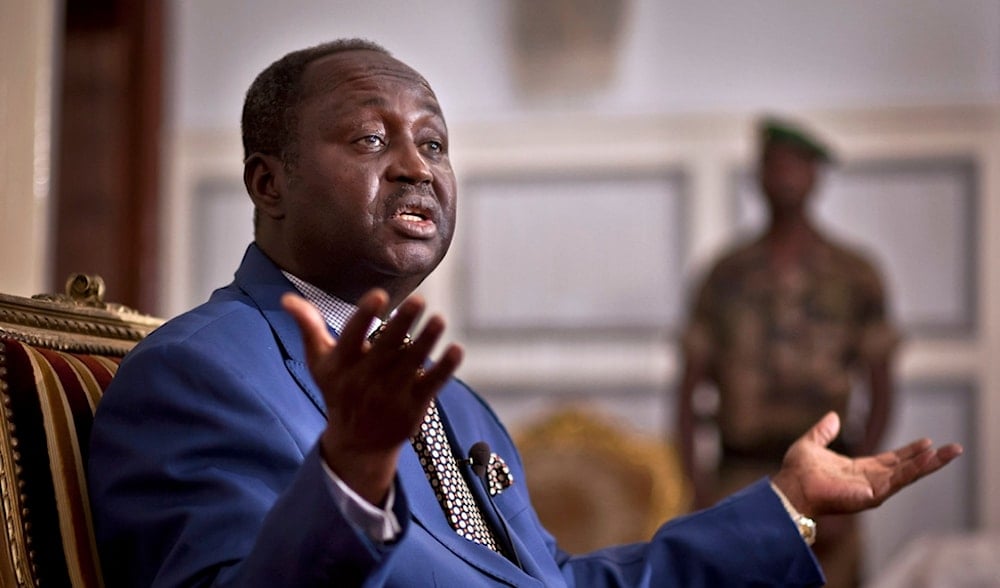
President of the Central African Republic Francois Bozize speaks to the media at the presidential palace in Bangui, Central African Republic, Jan. 8, 2013. (AP)
A UN-backed court in the Central African Republic began the trial in absentia of former president Francois Bozize on Tuesday, over alleged crimes against humanity committed between 2009 and 2013. The proceedings are taking place before the Special Criminal Court in Bangui, a hybrid tribunal composed of Central African and international judges.
The case marks one of the most significant accountability efforts in the country’s recent history, as the court examines allegations of abuses by members of Bozize’s security forces during his time in power.
The charges relate to serious human rights violations carried out by presidential security personnel, including murder, enforced disappearance, torture, and rape. The trial is being conducted in absentia, as Bozize has been living in exile since March 2023.
In February 2024, judges at the court issued an international arrest warrant for Bozize after concluding that there was "serious and consistent evidence against (Bozize), likely to incur his criminal liability, in his capacity as hierarchical superior and military leader".
The court is assessing whether Bozize bears command responsibility for the actions of his forces, particularly regarding incidents at detention sites and military facilities in the town of Bossembele.
Role of the special criminal court
The proceedings are being held before the Special Criminal Court, which was established to investigate and prosecute war crimes and crimes against humanity committed in the Central African Republic since 2003.
The tribunal combines domestic and international judicial expertise and operates amid a prolonged cycle of instability in the country following decades of political violence and civil conflict.
Francois Bozize seized power in a 2003 coup and remained in office until he was overthrown in 2013 by a rebel coalition. Since then, he has lived in exile, most recently in Guinea-Bissau after previously residing in Chad.
His ouster triggered a broader civil war in the Central African Republic, one of the world’s poorest countries, with violence spreading rapidly across the country.
Following Bozize’s overthrow, the predominantly Muslim rebel coalition known as Seleka took control, triggering widespread violence and retaliatory mobilization.
In response, Bozize-aligned militias, largely composed of Christian and animist fighters known as anti-Balaka, emerged in an attempt to regain political control. The resulting conflict led to thousands of civilian deaths and widespread allegations of war crimes on all sides, according to United Nations assessments.
International arrest warrant and continuing instability
In addition to the current trial, Bozize was sentenced in absentia in September 2022 to forced labor for life for conspiracy, rebellion, and murder.
After returning to political activity in 2020 as a figure within a rebel alliance, he later became linked to the Coalition of Patriots for Change, which challenged the government of President Faustin-Archange Touadera.
The government subsequently received support from Russian-linked paramilitary forces associated with the Wagner group, helping to push back rebel advances and reassert state control in key areas.
The current trial is seen as a key test for judicial accountability in the Central African Republic, as the country continues to grapple with cycles of armed conflict, political fragmentation, and fragile state institutions.
Read more: Sudan's RSF recruiting Central African citizens for Sudan war, UN says


