
France condemns Trump remarks targeting Pope Leo XIV
 3 Min Read
France condemned Trump’s remarks against Pope Leo XIV as tensions deepen between Washington and the Vatican over the Iran war and broader disputes over moral authority and global policy.
-
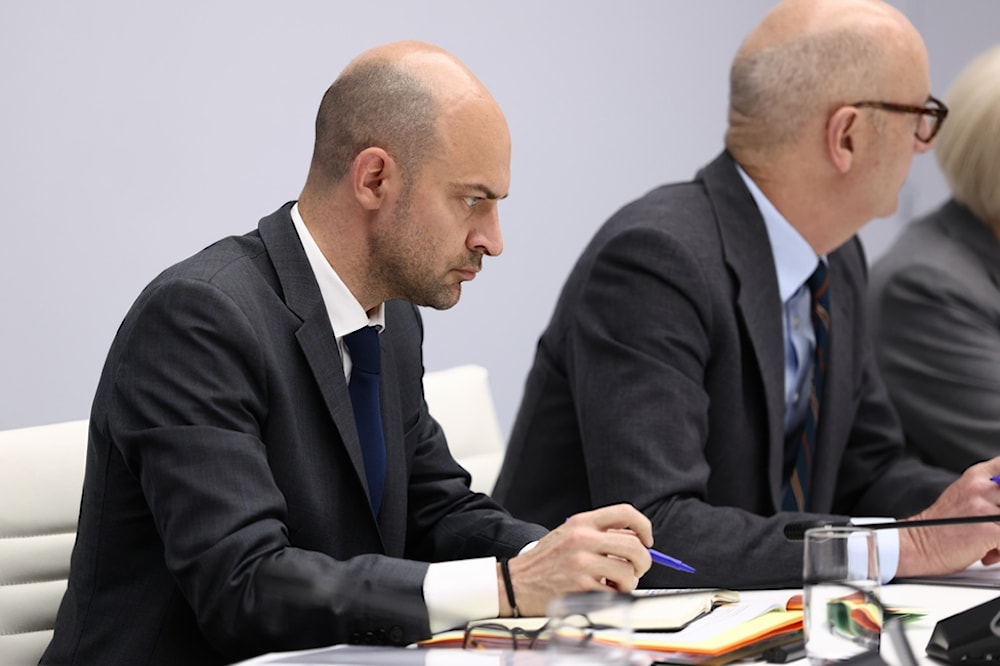
French Foreign Minister Jean-Noel Barrot attends a meeting of France's defense and security council, at the Elysee Palace in Paris, France, Wednesday, April 8, 2026 (AP)
French Foreign Minister Jean-Noël Barrot criticized comments made by US President Donald Trump targeting Pope Leo XIV, describing them as inappropriate and unjustified.
"I do not understand [these statements] and do not consider them acceptable, because the mission of the pontiff is to call for peace and brotherhood everywhere and under all circumstances," Barrot said in an interview with Radio J.
The exchange comes amid escalating tensions between Washington and the Vatican, driven in large part by sharp disagreements over the war on Iran. Pope Leo has repeatedly condemned US actions and rhetoric toward Tehran, warning that threats directed at the Iranian people are unacceptable and urging restraint, dialogue, and an end to military escalation.
Trump responded with direct criticism of the pontiff, stating he did not need a pope who challenges his policies. He also claimed that Pope Leo would not be in the Vatican if Trump himself were not in power, framing the dispute in personal and political terms.
The dispute builds on a broader interpretation of Pope Leo’s leadership, with some observers viewing his election as positioning the Vatican to more directly confront Washington’s current policies. “The US is no longer the superpower that it was, it’s a declining power,” Iacopo Scaramuzzi, an author specializing in Vatican affairs, told the Financial Times. “If it is true they elected an American because he was an American, it was because he is the most pre-eminent person in the world who can confront Trump.”
Moral clash
The confrontation marks a rare and deepening rift between the United States and the Holy See, extending beyond Iran to broader issues such as the use of military force and the role of moral authority in global affairs. Observers have described the standoff as a clash between the Vatican’s emphasis on ethical leadership and Washington’s strategic posture in an increasingly volatile international environment.
At the core of the dispute lies a deeper struggle over the scope of religious authority. While some voices in the United States argue that the Church should remain focused on social and family issues, Pope Leo has framed war, economic inequality, and global justice as central moral concerns.
Father Antonio Spadaro, under-secretary of the Vatican’s Dicastery for Culture and Education, described the pontiff as offering “a counter-narrative” to nationalist currents within US Catholicism. “He is implicitly recalling another America,” Spadaro told the Financial Times. “It’s the America that, in its better moments, was a moral force in the world: the America . . . of leadership grounded in legitimacy rather than coercion.”
Despite the escalation, Pope Leo signaled he would avoid engaging in a direct dispute with the US president, stating he would not enter into a public confrontation while continuing to speak out against war.
Read more: Archbishop of Canterbury backs Pope Leo XIV on West Asia peace


