
France declines Trump’s 'Board of Peace' over UN concerns
 4 Min Read
France says it will not join Donald Trump’s proposed “Board of Peace,” warning the initiative risks undermining UN principles and the multilateral order.
-
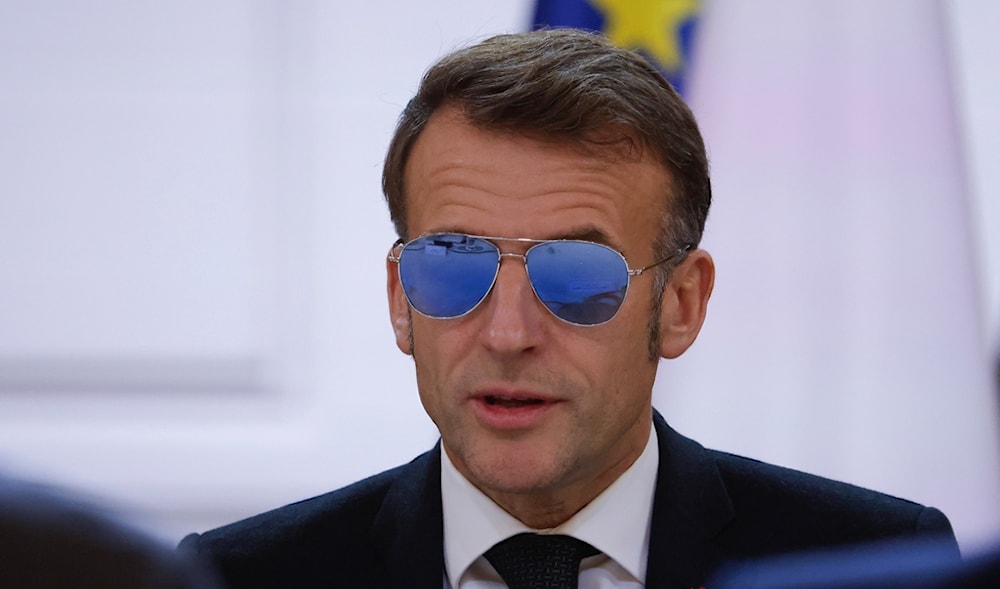
French President Emmanuel Macron speaks during a meeting on the institutional future of New Caledonia at the Elysee Palace in Paris, Friday, Jan. 16, 2026. (AP)
France has declined an invitation to join US President Donald Trump’s so-called “Board of Peace,” citing concerns that the initiative could undermine the role and principles of the United Nations, a source close to French President Emmanuel Macron told AFP on Monday.
The source said France “does not intend to answer favorably” to the invitation, noting that the board’s legal and political scope extends beyond its initial focus on Gaza.
The board was originally presented as a mechanism to oversee the reconstruction of Gaza, but its charter does not appear to restrict its mandate to the occupied Palestinian territory.
“Its charter goes beyond the sole framework of Gaza,” the source close to the French president said. “It raises major questions, particularly regarding respect for the principles and structure of the United Nations, which under no circumstances can be called into question,” the source added.
France is a permanent member of the United Nations Security Council, a status that Paris has repeatedly cited in defending the UN's centrality in managing international conflicts.
France reaffirms commitment to UN framework
Earlier on Monday, France’s foreign ministry issued a statement reiterating the country’s commitment to the United Nations, stressing its role as the foundation of global multilateralism.
“This remains the keystone of effective multilateralism, where international law, the sovereign equality of states, and the peaceful settlement of disputes prevail over arbitrariness, power politics and war,” the ministry said.
The statement added that France is reviewing the proposed legal framework of the board with its partners, expressing concern that the “project extends beyond the situation in Gaza.”
Despite rejecting participation in the initiative, the source close to Macron emphasized that France “remains fully committed to a ceasefire in Gaza and to a credible political horizon for Palestinians and Israelis.”
France has consistently argued that any post-war arrangements related to Gaza must remain anchored within established international institutions and legal frameworks, particularly the United Nations.
Reality of 'Board of Peace'
While the international community rushes to take part in the colonial-style project, Palestinian resistance officials continue warning against the initiative, stating that it represents an externally imposed framework that undermines Palestinian sovereignty.
In November 2025, resistance leaders issued a joint statement of condemnation, stressing that the proposed establishment violates national rights and risks worsening political fragmentation.
The formation of the committee coincides with Trump's unveiling of the so-called Gaza Peace Council, a broader body composed of international and regional representatives. According to the announcement, the council will allegedly oversee "peace and conflict management initiatives", starting with the Gaza Strip, under direct US leadership.
The efforts by foreign powers to establish government structures within the Gaza Strip have also drawn significant pushback from rights groups.
The Gaza Center for Human Rights (GCHR) warned that US‑backed reconstruction efforts and proposed governing bodies risk violating international law by reshaping demographics and undermining Palestinian rights to land ownership, adequate housing, and freedom of movement, as well as sidelining direct Palestinian participation in decisions about their future.
Alongside the concerns raised about foreign administrative influence, the United Nations Security Council adopted a US‑backed resolution late in 2025, which aims to authorize an international force in Gaza under the guise of securing borders, supporting reconstruction, and maintaining order. The adoption of that resolution, seen by supporters of the Gaza "peace" process as a step toward stabilization, was welcomed by US leadership but also sparked criticism from regional actors worried that such deployments could entrench external control over Palestinian affairs.
Read more: Kazakhstan accepts Trump's Gaza 'BOP' offer, Putin, Germany invited


