
FT: Mediators close to 60-day ceasefire extension, Strait opening
 3 Min Read
Mediators are close to a draft agreement extending the US-Iran ceasefire by 60 days, reopening the Strait of Hormuz, and establishing a nuclear framework, with Iran open to concessions once hostilities end, the Financial Times reports.
-
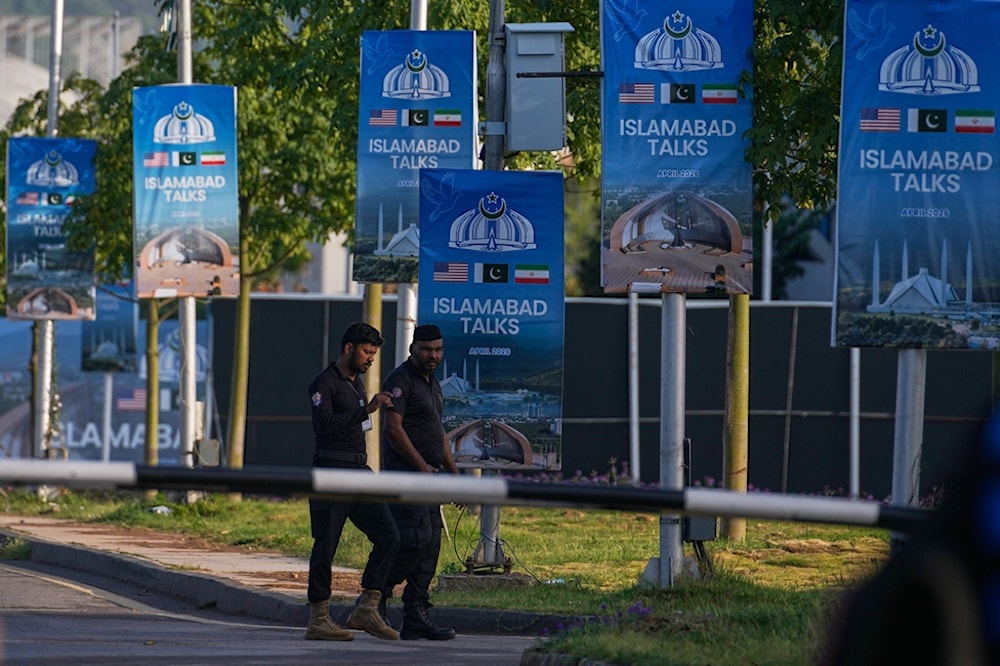
Security personnels walk past billboards of U.S. and Iran talks near the venue Serena Hotel, in Islamabad, Pakistan, Saturday, April 25, 2026. (AP Photo/Anjum Naveed)
Mediators are nearing a draft agreement that would extend the US-Iran ceasefire by 60 days and establish a framework for broader negotiations on Iran's nuclear programme, The Financial Times has reported, citing people briefed on the high-level talks.
According to the FT, the emerging deal would include a gradual reopening of the Strait of Hormuz, alongside commitments to discuss either diluting or transferring Iran's stockpile of highly enriched uranium. The proposed arrangement would also see the United States ease its restrictions on Iranian ports, with provisions for sanctions relief and the phased unfreezing of Iranian assets held abroad.
A diplomat briefed on the discussions told the FT that the process is "going in the right direction" and is currently under review by Washington.
Iran open to nuclear concessions once hostilities end
The diplomat added that Iran may be prepared to make further concessions on nuclear energy, but not while hostilities continue, suggesting that the proposed deal is designed to bridge that gap.
While the reported draft agreement would see Washington ease restrictions on Iranian ports, the United States has maintained an illegal naval blockade on Iranian shipping since April. Iran has repeatedly demanded the complete lifting of all restrictions on its maritime traffic as a precondition for any lasting resolution.
The FT's report suggests that mediators are working to bridge the gap between the two sides, but significant obstacles remain, including deep disagreements over the nuclear file and the future of US sanctions.
Background: Iran describes talks as 'very far and very close' to agreement
The claimed progress toward a 60‑day ceasefire extension comes just hours after Iran's Foreign Ministry offered a cautious assessment of the state of negotiations, describing them as a delicate balance between being "very far and very close" to an agreement.
Earlier on Saturday, Iranian Foreign Ministry spokesperson Esmaeil Baqaei warned that Washington's contradictory positions make it impossible to predict a clear breakthrough in the near term. He noted that while views have become closer on some issues, the narrowing of differences has reached only the point where a possible solution may begin to be discussed.
Baqaei also cautioned against expecting rapid results, stressing that US hostility toward Iran is long‑term in nature. "Due to the contradictory positions of the United States, it cannot be said that the process is clearly moving in a new direction," he said.
On the Strait of Hormuz, the spokesperson asserted that the waterway "has nothing to do with the United States" and is a matter exclusively between Iran and the coastal states of the Gulf. The statement reaffirms Tehran's position that the strait's security and management are matters for the littoral states, not for external powers.
Despite the cautious tone, Baqaei noted that the trend over the past week has been toward a reduction in disagreements, while adding that it remains necessary to wait and see how developments unfold in the coming days. The FT's report suggests that mediators may have made more progress than Tehran's public statements indicate, but significant obstacles remain, including deep disagreements over the nuclear file and the future of US sanctions.


