
Ghalibaf warns Washington during meeting with Pakistan army chief
 4 Min Read
Iranian Parliament Speaker Mohammad Bagher Ghalibaf met Pakistani Army Chief Asim Munir in Tehran to discuss Iran-US tensions, regional mediation efforts, and diplomacy aimed at preventing further escalation in West Asia.
-
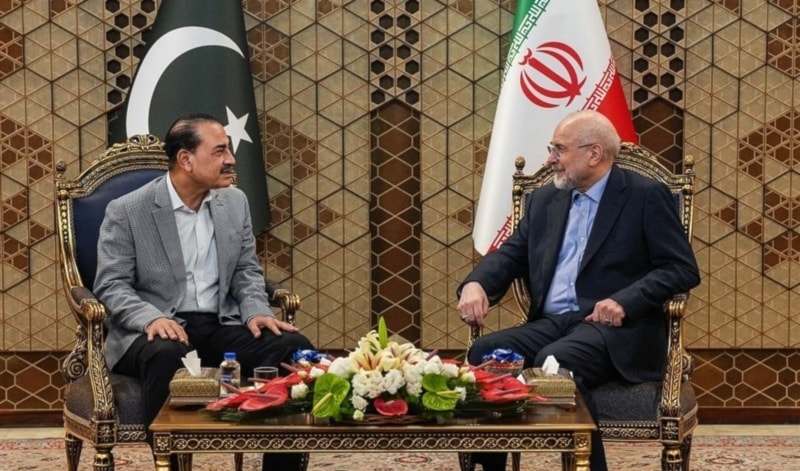
Chief of the Army Staff of the Pakistan Army Field Marshal Asim Munir (L) and Iranian Parliament Speaker Mohammad Bagher Ghalibaf (R) in a meeting in Tehran on May 23, 2026. (Tasnim)
Iranian Parliament Speaker Mohammad Bagher Ghalibaf met with Pakistani Army Chief Field Marshal Asim Munir on Saturday in Tehran, as diplomatic efforts continue to contain escalating tensions between Iran, the US, and the Israeli occupation. The meeting comes amid ongoing regional mediation attempts led by Pakistan to prevent further military escalation and revive negotiations between Tehran and Washington.
During the meeting, Ghalibaf stressed that Iran "will not compromise on its rights and the rights of its people, especially with a party that has no credibility whatsoever and is not trustworthy", adding, "We were in the process of negotiating when Washington launched its aggression against us, and now we are negotiating to end it". He further stated that Iran was involved in a truce mediated by Pakistan, but the United States broke the agreement and imposed a naval blockade, and is not seeking to lift it.
The Iranian parliament speaker emphasized that Tehran would continue defending its interests both militarily and diplomatically. “Iran, just as it bravely and powerfully defended the Iranian entity on the battlefield, will also strive intelligently and forcefully in the diplomatic arena to secure the legitimate rights of the country and safeguard its national interests", he said.
Ghalibaf also underlined the role of the Iranian armed forces during the truce period, saying the military "rebuilt itself during the truce period", warning that "the Iranian response to Washington will be more severe and more bitter than the first day of the war, should US President Donald Trump make another mistake against Iran".
Munir praises Iranian leadership
For his part, Munir told Ghalibaf, "You and I are both soldiers of our people, and soldiers speak candidly and without hesitation, not in shades of gray or in absolute black-and-white terms", expressing satisfaction that "Iran is led by intelligent people with deep insight". He added that the government and people of Pakistan "hold the best wishes and prayers for the future of the Iranians".
Munir’s visit to Tehran is part of broader Pakistani mediation efforts aimed at reducing tensions between Iran and the US and preventing the war from expanding across West Asia.
During his visit, the Pakistani army chief also met Iranian President Masoud Pezeshkian and Foreign Minister Abbas Araghchi. The discussions focused on diplomatic initiatives aimed at preventing further escalation and bringing an end to the US-Israeli war against Iran. The two sides also explored ways to enhance peace, stability, and security across the West Asia region.
Regional diplomacy intensifies amid war threats
Munir arrived in Tehran on Friday amid reports of ongoing diplomatic contacts involving regional mediators. While Pakistani officials indicated that his presence does not necessarily mean an agreement is imminent, the visit reflects continued efforts to establish a framework for negotiations.
According to the ISNA news agency, Iranian officials said mediation talks remain ongoing despite persistent tensions. Iranian Foreign Ministry spokesperson Esmail Baghaei described the meetings as “a continuation of the same diplomatic path".
"We cannot say that we have necessarily reached a stage where an agreement is close", Baghaei said, adding that "a Qatari delegation is holding talks with Foreign Minister Abbas Araghchi", while Pakistan remains the primary mediator.
The diplomatic efforts come as Washington continues to examine military options in the event negotiations collapse. Meanwhile, Tehran has reiterated that it will respond to any future aggression and warned that a return to military confrontation "will be accompanied by much bigger surprises".


