
Fujimori and Sánchez close Peru campaign ahead of runoff vote
 3 Min Read
Keiko Fujimori and Roberto Sánchez held their final campaign rallies in Lima as Peru heads to a tightly contested presidential runoff with over 26 million voters expected.
-
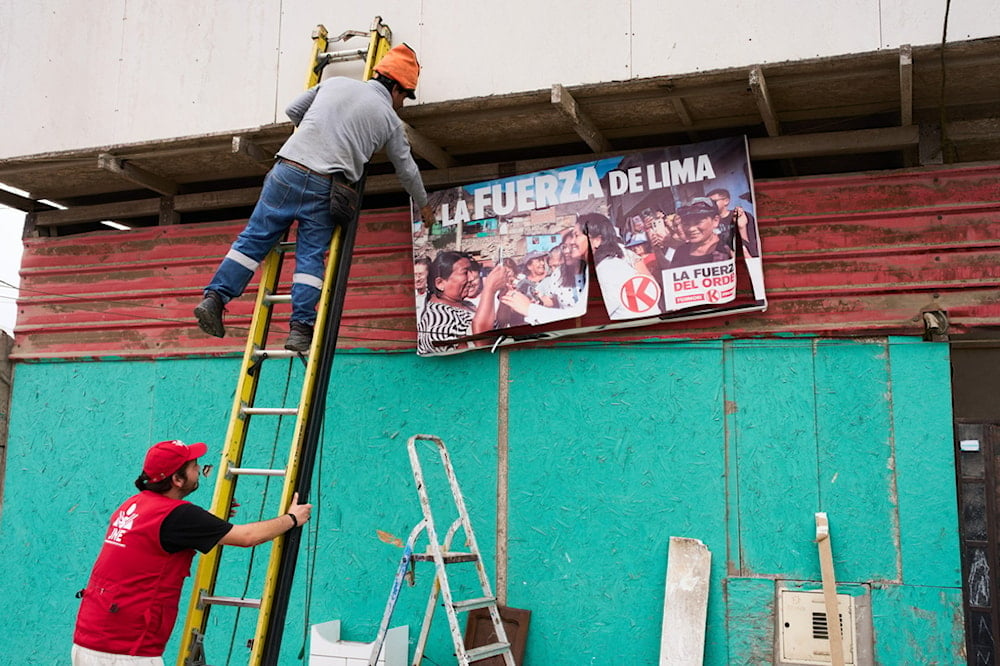
A worker removes a campaign banner of presidential candidate Keiko Fujimori of the Popular Force party placed near a polling station in Lima, Peru, Saturday, June 6, 2026, ahead of Peru's presidential runoff election. (AP Photo/Rodrigo Abd)
Peruvian presidential candidates Keiko Fujimori and Roberto Sánchez concluded their campaign activities in Lima on Thursday with large rallies, marking the final stage of political mobilization ahead of Peru’s presidential runoff scheduled for Sunday, June 7.
The events brought thousands of supporters into the capital as both candidates sought to consolidate their bases and win over undecided voters in one of the country’s most polarized electoral contests in recent years.
The final day of campaigning was held in line with regulations set by Peru’s National Jury of Elections (Jurado Nacional de Elecciones, JNE), which designated Thursday as the last permitted day for electoral activities. From Friday onward, all campaign events and political gatherings were prohibited.
Mass rallies close campaign period in Lima
Both Fujimori and Sánchez held separate events in Lima, the political and administrative center of the country, as they delivered their final appeals to voters.
The closing rallies reflected the intensity of a race that has increasingly focused on security, economic stability, and institutional trust, with both campaigns attempting to define the final narrative before voting day.
Election authorities monitored compliance with campaign rules as Peru entered the mandatory silence period ahead of the vote.
Tight runoff between two contrasting political forces
The runoff election pits two ideologically distinct candidates against each other following the first round held on April 12, in which no contender secured a majority.
Keiko Fujimori, leader of the Fuerza Popular party, campaigns on a platform centred on law and order, economic stability, and a tougher stance on crime. Her political profile remains closely associated with Peru’s right-wing bloc.
Roberto Sánchez, representing Juntos por el Perú, positions himself on the left of the political spectrum and seeks to consolidate support from progressive voters as well as segments of the electorate opposed to Fujimorism, a political current rooted in the legacy of former president Alberto Fujimori’s 1990s administration.
Over 26 million voters expected at the polls
More than 26 million Peruvians are eligible to vote in Sunday’s runoff, which will determine the country’s next president amid ongoing debates over corruption, economic inequality, and political instability.
The election comes at a time of continued institutional tension, with frequent changes in government leadership in recent years contributing to voter fragmentation and uncertainty.
Read more: Trump’s 'Monroe Doctrine 2.0' risks stalling Latin America’s growth


