
Gaza faces winter without adequate shelter; aid covers 17% of needs
 4 Min Read
Nearly two million Palestinians need shelter as worn-out tents, unsafe buildings, and blocked aid leave Gaza exposed to winter rains and flooding amid Israeli genocide.
-
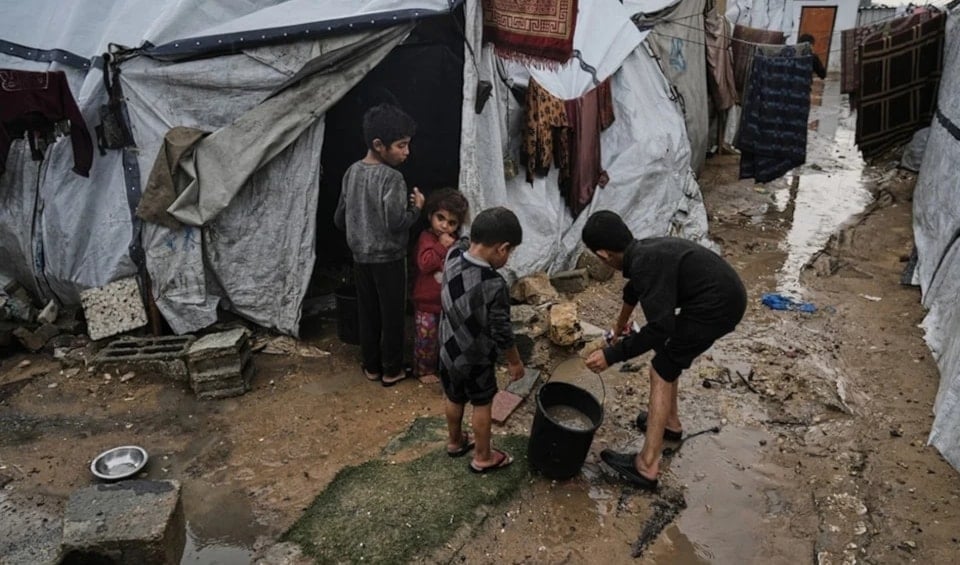
Forcibly displaced Palestinian children clear water from their flooded tent after heavy rainfall in Gaza City, Tuesday, November 25, 2025 (AP)
Nearly two million Palestinians in Gaza still need emergency shelter assistance, with humanitarian organizations able to cover only around 17% of winter-related needs, the International Organization for Migration (IOM) warned on Friday, as seasonal rains begin to threaten forcibly displaced families.
IOM Director General Amy Pope said the shortage comes one year after a ceasefire was announced, with inadequate funding and Israeli restrictions on the entry of essential supplies hampering relief efforts.
Years of forcible displacement and widespread destruction have left Palestinians facing another winter without sufficient protection against cold, heavy rain, and flooding. Many families remain in makeshift accommodation that offers little security against worsening weather conditions.
“Families who have already endured repeated displacement and devastating loss must be able to face the winter in safety and dignity,” Pope said, stressing that shelter materials must be allowed into Gaza rapidly, consistently, and in sufficient quantities.
Worn-out tents, unsafe buildings leave families exposed
More than half of Gaza’s tents and makeshift shelters are in poor or very poor condition and need to be replaced. Designed for short-term emergency use, tents typically last between six months and one year, leaving many forcibly displaced families with deteriorating protection after prolonged use.
With few alternatives available, Palestinians have also been forced to seek refuge in buildings damaged during the war, many of which pose serious safety hazards. Last month, the collapse of a war-damaged building in Gaza City killed dozens of people.
An assessment conducted in August by the Arab and International Organization to Construct in Palestine, an IOM partner, examined approximately 21,000 buildings. It identified 2,638 structures requiring demolition or removal and another 980 that needed to be evacuated because of safety risks.
The anticipated strengthening of the El Niño phenomenon could bring heavier rainfall, increasing the danger of further structural collapses. Meanwhile, severely damaged drainage infrastructure leaves communities vulnerable to flooding.
Flood risks threaten nearly 1.8 million displaced Palestinians
Humanitarian agencies estimate that approximately 1.77 million people are living across 1,783 displacement sites in Gaza, according to figures recorded on October 5. Most face inadequate shelter, while 56% of these sites are located in areas exposed to medium or high flood risks.
Flooding could destroy already fragile shelters, ruin families’ remaining belongings, and trigger yet another round of displacement for people who have repeatedly been forced from their homes.
The Palestine Shelter Cluster estimates that nearly 300,000 families, or approximately 1.65 million people, require winter-specific shelter assistance. Existing stocks and supplies awaiting delivery are sufficient to assist only around 52,000 families, leaving the overwhelming majority without adequate support.
Emergency supplies remain blocked outside Gaza
Despite the urgent need, approximately 8,600 IOM emergency shelter kits remain pre-positioned outside Gaza, ready for delivery but repeatedly turned away at crossing points by Israeli authorities.
Humanitarian teams have attempted to compensate by using materials salvaged from damaged structures and other supplies available locally. However, these improvised measures offer only limited relief and cannot address the scale of the crisis.
“The solutions are known, the supplies are ready and humanitarian teams are prepared to deliver,” Pope said, calling for immediate and sustained humanitarian access to protect lives, reinforce damaged shelters, and help families move beyond temporary accommodation.
She urged all parties to facilitate humanitarian operations and ensure that the response matches the severity of conditions facing Gaza’s population.
IOM calls for unrestricted entry of shelter materials
The organization is calling for the immediate and sustained delivery of tents, emergency shelter kits, temporary housing units, timber, tools, and other materials required to strengthen shelters, repair damaged homes, and help families find safer places to live.
Humanitarian agencies also need reliable access to specialized equipment, fuel, spare parts, and construction materials to remove rubble and support early recovery efforts.
With winter conditions intensifying the risks facing forcibly displaced Palestinians, aid organizations warn that delays in delivering essential supplies could leave hundreds of thousands of Palestinian families exposed to rain, flooding, cold, and the threat of further displacement.


