
Gaza shelter crisis deepens as tents fail to withstand winter storms
 5 Min Read
Thousands of displaced Palestinians in Gaza are struggling to survive winter storms in inadequate tents, as a new assessment reveals widespread failures in aid-supplied shelters.
-
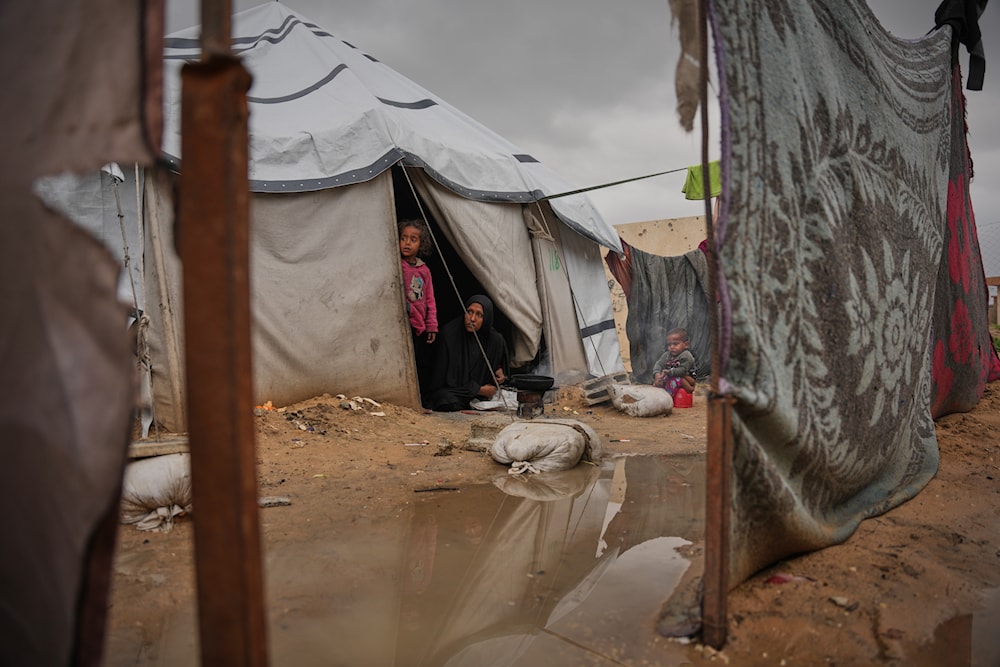
Nanaa Abu Jari cooks outside her tent after it was flooded by rainwater in Nuseirat, central Gaza Strip on January 2, 2026. (AP Photo/Abdel Kareem Hana)
Tens of thousands of displaced Palestinians in Gaza are facing worsening conditions as inadequate shelter fails to protect them from harsh winter weather. A new assessment by shelter experts in the devastated territory has revealed that many tents donated by countries offer little protection from wind and rain.
The findings contradict claims that Palestinians are receiving adequate shelter and underscore the growing humanitarian crisis in Gaza.
According to the Palestine Shelter Cluster, which coordinates nearly 700 NGOs and is jointly chaired by the Red Cross and the UN, most of the newly delivered tents "likely need to be replaced." The assessment, based on 9,000 survey responses and field observations, identified severe shortcomings in the provided tents.
Egyptian tents were described as poorly sewn, prone to tearing, and not waterproof. Saudi tents were made of thin, non-waterproof material with weak structures. Chinese tents were found to be "very light" and similarly unable to withstand weather conditions. By contrast, tents supplied by Qatar, the United Arab Emirates, and the United Nations were considered to meet acceptable specifications.
Limited shelter from storms
Fierce storms in recent weeks have damaged or destroyed thousands of tents, affecting an estimated 235,000 displaced Palestinians, according to the UN. Humanitarian officials report that many tents sold commercially are both inadequate for Gaza's winter and unaffordable for most families.
"The tent we live in is worn out and rainwater leaks inside," said Linda Abu Halima, a 30-year-old woman living in Mawasi after her home in Beit Lahia was destroyed. "We received it through the help of someone; it is handmade from wood and tarpaulin. We cannot buy a new tent due to the high prices, and we have not received any aid at all."
Almost all of Gaza’s 2.3 million residents have been displaced multiple times since the beginning of the Israeli genocide. Entire neighborhoods have been reduced to rubble, and most essential services are nonexistent.
Jawaher Abd Rabbo, 25, now lives with her husband and three children in a single, rat-infested room without windows or flooring in the ruins of a former apartment building in the Nasser neighborhood of Gaza City. "We left when we heard lots of explosions," she said, adding, "I left all our clothes and belongings behind, and carried my two-month-old daughter in my arms and held my two-year-old by the hand, while my husband was in a wheelchair due to an injury he got during the war."
Impact of aid restrictions by 'Israel'
Israeli restrictions on construction materials and essential equipment have hampered efforts to reinforce shelters and prepare for winter. Aid officials note that limitations on the entry of sandbags, plastic sheeting, and heavy machinery are significantly affecting humanitarian work. "During this storm, we had no sufficient blankets or clothing to protect us from the cold," Abd Rabbo said, adding, "Rainwater soaked everything. We only have one mattress, which my children and I share. I know staying in a ruined building during winter is extremely dangerous, but we have no other choice."
Since the ceasefire in October, only 20,000 out of 90,000 tents that entered Gaza were supplied by the UN or major international NGOs. The rest came through individual donations often approved by Israeli authorities, who seek to bypass UN channels. COGAT, the Israeli defense body overseeing aid, claimed it had allowed the delivery of over 25,000 tonnes of tarpaulins and tents as part of "winterisation" efforts. However, humanitarian officials say these materials are far from sufficient.
The temporary ceasefire didn't translate into a meaningful improvement in living conditions. Many in Gaza had hoped that the ceasefire would mark the beginning of reconstruction. Instead, with the territory divided and humanitarian access limited, the Gaza shelter crisis continued to intensify.
According to Palestinian officials, 414 Palestinians have been killed in Gaza since the October ceasefire. Nineteen others died in recent weeks due to building collapses following heavy rainfall. Aid officials warn that without swift improvements in shelter and humanitarian access, the situation will be catastrophic.
In his 20-point plan, US President Donald Trump proposed a second phase involving the disarmament of Hamas, the withdrawal of Israeli forces, the deployment of an international stabilization force, and the appointment of a technocratic administration in Gaza. The plan also includes the full flow of aid into the territory. However, these proposals remain theoretical as suffering continues unabated.


