
Ghalibaf says US lifted Iran sanctions, ensured Lebanon ceasefire
 4 Min Read
Iranian Parliament Speaker Mohammad Bagher Qalibaf says Tehran will not take further steps if Washington fails to fulfill its obligations, stressing that the Iran-US memorandum of understanding is based on a "step-for-step" principle.
-
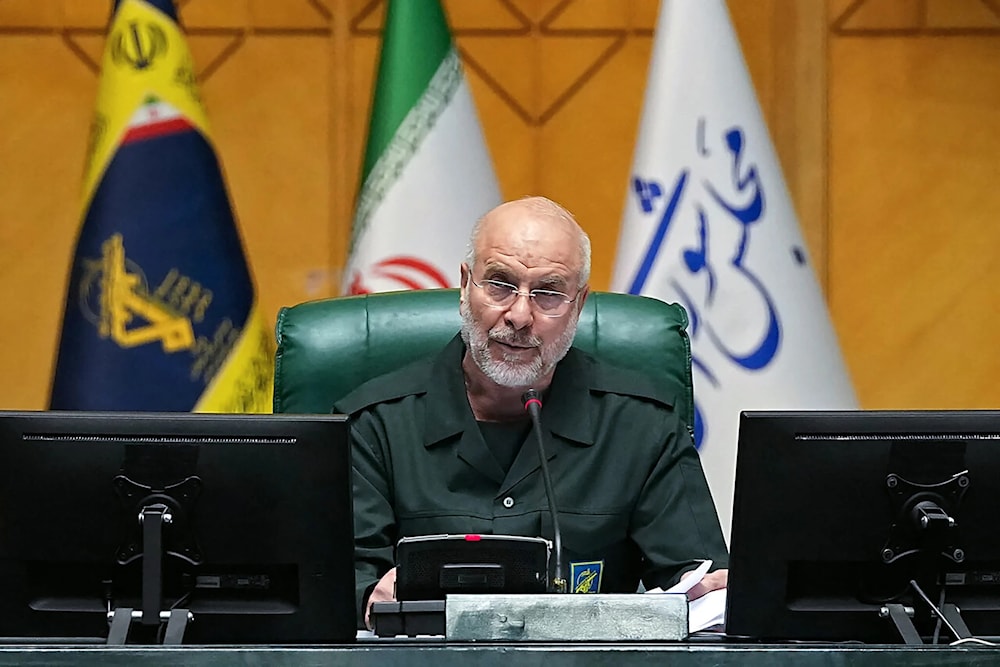
Iran's Parliament Speaker Mohammad Bagher Ghalibaf, dressed in an IRGC uniform, chairs a session in Tehran, Iran, on February 1, 2026 (AFP)
Iranian Parliament Speaker Mohammad Bagher Ghalibaf said Tehran would halt its commitments if the United States failed to uphold its obligations under the Iran-US memorandum of understanding, stressing that the agreement is based on the principle of "step for step."
In remarks broadcast by Iranian television, Ghalibaf thanked Iranian leader Ayatollah Mojtaba Khamenei for guiding the negotiation process and praised the Iranian people for their unity and support. He said the achievements reached so far were made possible by the sacrifices of Iran's armed forces and the country's "logic of power."
$300 billion allocated for reconstruction and investment
Ghalibaf said Article 6 of the memorandum of understanding allocates $300 billion for reconstruction and economic development in Iran, with part of the funds earmarked for rebuilding efforts and investment in the country.
He added that some provisions of the memorandum were debated for long hours because of legal sensitivities, noting that concerns about sanctions relief within 30 days proved unfounded because the restrictions were ultimately lifted within three days.
Describing the agreement as "a document of America's defeat," Ghalibaf said the Iranian people would judge the memorandum based on its implementation and results.
Lebanon ceasefire and Strait of Hormuz
The Iranian speaker said US President Donald Trump implemented sanctions relief "in one night," even though the memorandum originally stipulated a 30-day timeline. He also claimed that the ceasefire, initially limited to Beirut's southern suburbs, was expanded to encompass all of Lebanon.
Ghalibaf stressed that Tehran remains aware it is negotiating with "an untrustworthy enemy that breaks its commitments," warning that Iran's response would depend on Washington's adherence to the agreement.
He also declared that the Strait of Hormuz "will never return to pre-war conditions," arguing that littoral states possess sovereign rights under international law and are entitled to compensation for services related to the strategic waterway. He added that Iran's frozen assets must be placed under the control of the country's central bank.
Military strength underpins diplomacy
Ghalibaf argued that Iran had achieved through negotiations far more than it could have attained through military action, saying diplomacy and military deterrence had worked in tandem.
"The difference between the current negotiations and previous rounds is that the flag of victory on the battlefield today stands behind the negotiations," he said.
The speaker further stated that the war had unfolded across four arenas: military confrontation, public mobilization, diplomacy, and service to the people. He claimed that the world's leading military, political, and economic power, together with "Israel," had confronted Iran but failed to achieve the nine objectives they announced at the start of the war.
Lebanon and the resistance front
Ghalibaf stressed that Lebanon was part of the Axis of Resistance and said Iran's support for the resistance front and Washington's alliance with the Israeli regime made it natural for any ceasefire arrangement to apply to all fronts, particularly Lebanon.
He thanked the Lebanese people, especially Hezbollah and Lebanon's Shiite community, for their sacrifices, claiming they continued fighting and suffered nearly 4,000 martyrs while Iran was observing a ceasefire.
The Iranian speaker also said Tehran warned Washington following Israeli attacks on Beirut's southern suburbs and insisted that any renewed attacks would prompt an Iranian response. He said Iran's military capabilities and readiness in the field fundamentally shaped the atmosphere of the negotiations.


