
Ghalibaf to Washington: Time to repay near-zero-interest loans
 2 Min Read
Iran's Parliament Speaker rejects US predictions of Iran’s economic collapse, arguing that Washington faces mounting debt and energy pressures it cannot resolve without respecting Iranian rights.
-
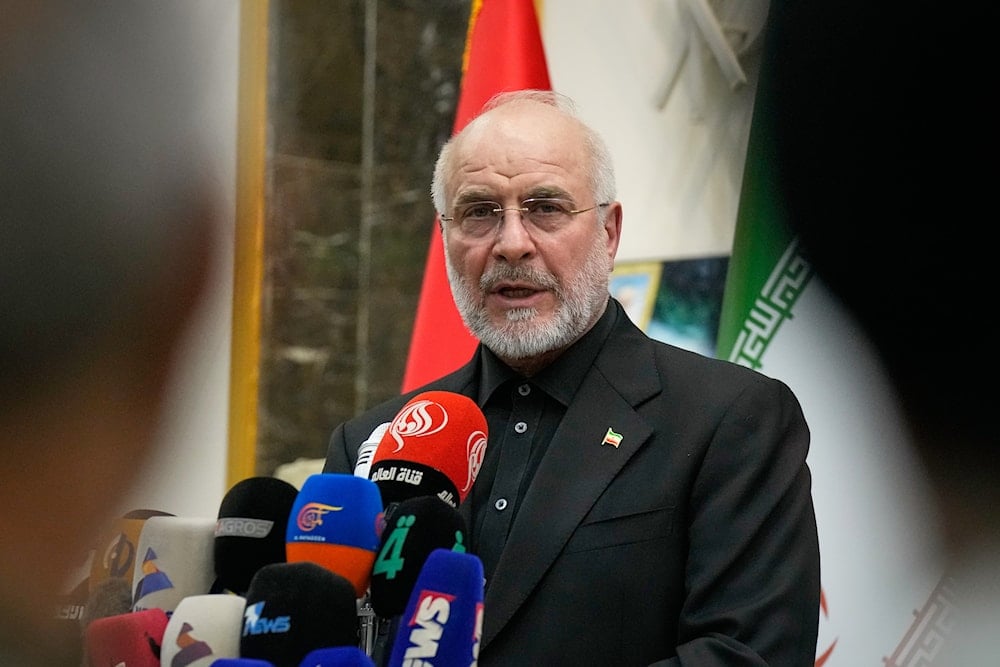
Iran's Parliament Speaker Mohammad Bagher Ghalibaf speaks during a 40-day commemoration ceremony for martyred Leader Sayyed Ali Khamenei at the Imam Hassan Mosque in Karbala, Iraq, Thursday, Aug. 20, 2026 (AP)
Iranian Parliament Speaker Mohammad Bagher Ghalibaf dismissed Washington’s prediction that Iran’s economy is nearing collapse, saying the United States faces a deepening debt crisis that it cannot overcome without respecting the rights of the Iranian people.
His remarks came in response to the US Treasury secretary’s claim that “Iran’s economy will collapse within the next two weeks.”
Trajectory of Stress on the House:
— محمدباقر قالیباف | MB Ghalibaf (@mb_ghalibaf) September 30, 2026
Ω(t)=Weight/Capacity+Iran Levers
Weight↑=(MaturityWall↑+PileOnDebt↑)×Yields↑+YieldVelocity↑
Capacity↓=FedRoom↓×(FedParkingLot↓+Growth?+ForeignBuyers↓+DealersCapacity↓)
Iran Levers↑=Energy↑+Bonds↑+OnFed↑
Ω(t0)<Ω(Nov)<Ω(2027) https://t.co/9sL4pIpXKn pic.twitter.com/NYUnsRRBnG
“The US administration previously took out large loans at interest rates close to zero, and the time has now come to repay them,” Ghalibaf said.
He argued that Washington must borrow again at significantly higher interest rates to meet those obligations, adding to the pressure on US finances.
Higher debt costs, weaker demand
Ghalibaf said those refinancing needs coincide with a steady decline in investors’ capacity to purchase US Treasury bonds. He pointed to China and Japan, two major holders of US debt, saying they were no longer interested in buying new bonds or retaining their existing holdings.
He also linked Washington’s financial difficulties to the continued closure of the Strait of Hormuz, saying Iran’s role in keeping the waterway closed and driving up energy prices was confronting the US Treasury with a worsening, prolonged crisis.
Washington would not be able to resolve these economic problems unless it respected the Iranian people’s rights, he stressed.
Diplomatic exchanges over seven-day proposal
The remarks come as Iran and the United States exchange proposals through Qatari mediation over a possible settlement.
Iran presented Washington with a seven-day plan through Qatar on the sidelines of the UN General Assembly. Conditional on US acceptance of Iran’s terms, the proposal envisages reopening the Strait of Hormuz on the sixth day and resuming negotiations on the seventh.
An official speaking anonymously to Reuters said Qatari officials conveyed Washington’s response to the Iranian foreign minister during his visit to Doha on Tuesday, as he returned to Iran from New York.
“The two sides largely agree on the steps but remain at odds over the order in which those steps should be taken,” the official said.
Read more: US official tells Al Mayadeen nuclear remain obstacle to Iran deal


