
Global confidence in US plunges under Trump, Pew analysis finds
 4 Min Read
A Pew Research Center analysis says international confidence in the US has reached historic lows under US President Donald Trump's second administration, citing growing concern over its foreign policy and democracy.
-
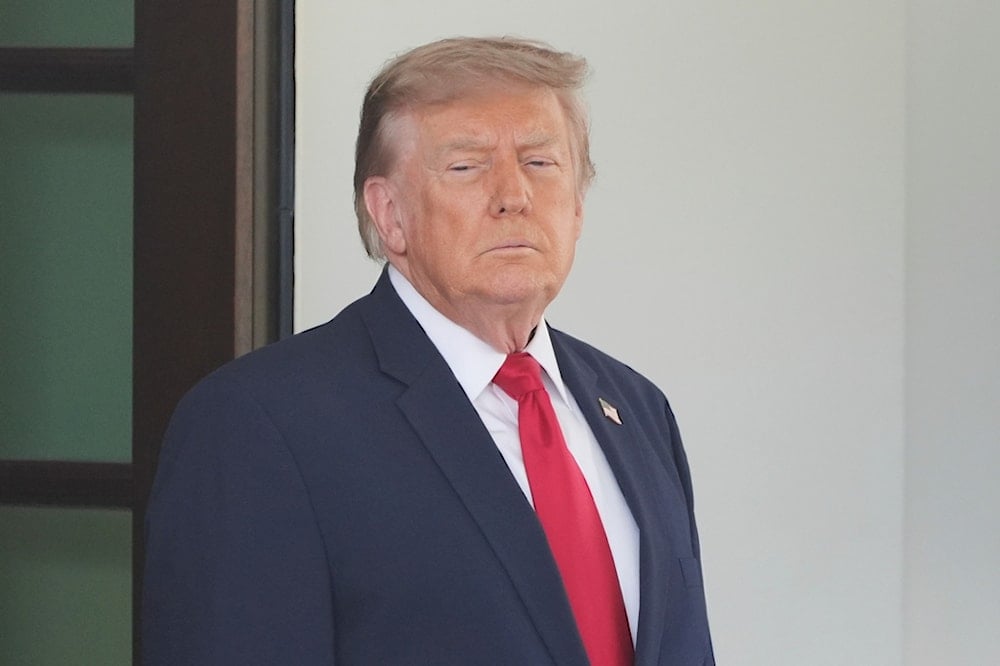
US President Donald Trump waits to greet Iraq's Prime Minister Ali al-Zaidi at the White House on July 14, 2026, in Washington. (AP Photo/Alex Brandon)
An analysis by Richard Wike, director of global attitudes research at the Pew Research Center, published in Foreign Affairs, argues that the United States is experiencing one of the sharpest declines in its international standing in decades, with global confidence in Washington's leadership, democratic institutions, and foreign policy falling to historic lows under US President Donald Trump's second administration.
Drawing on a new Pew survey covering 36 countries, Wike contends that growing reliance on military force, protectionist economic policies, and mounting concerns over the state of US democracy have fundamentally reshaped international perceptions of the United States.
Read more: Trump demands Gulf states reimburse US for Strait of Hormuz operations
Pew survey points to historic decline in global views of the US
According to Wike, favorable views of the United States have dropped to their lowest levels since the organization began measuring international attitudes in 2002 across many of the countries surveyed.
The analysis argues that while previous declines in America's global image, such as during former US president George W. Bush's invasion of Iraq or Trump's first administration, proved temporary, the current downturn appears deeper and potentially more enduring.
Wike writes that many countries are no longer merely criticizing specific US policies but are increasingly questioning the country's broader political system and international role.
Confidence in US democracy and civil liberties weakens
One of the report's central findings is the growing international skepticism toward the state of American democracy.
According to the survey, only a minority of respondents across the 36 countries believe the US government respects the personal freedoms of its own citizens, with support falling sharply since 2021.
The report also references assessments by international democracy monitors, including Freedom House and the Varieties of Democracy (V-Dem) Institute, noting broader concerns over democratic backsliding in the United States.
Among several longtime US allies, including Australia, Italy, the Netherlands, Poland, and South Korea, the share of respondents who believe the United States protects individual freedoms has fallen to record lows.
Military escalation fuels international criticism
Wike argues that international criticism now extends beyond trade and immigration policies to Washington's expanding use of military force.
The analysis points to widespread opposition to Trump's handling of the war on Iran and aggressive actions targeting Venezuela, as well as concerns over threats directed toward Greenland.
The numbers cited in the report show that only a median of 20% of respondents approved of Trump's handling of the war on Iran, while 22% supported US aggressive operations against Venezuela.
The article argues these policies have reinforced perceptions that Washington increasingly relies on military coercion while showing less regard for multilateral cooperation and international norms.
Read more: US no longer reliable ally, special ties must be dropped: UK advisor
Support for US global leadership continues to erode
The analysis concludes that confidence in the United States as a guarantor of international stability continues to diminish.
Since 2023, the share of respondents who believe the United States contributes to global peace and stability has declined significantly in most countries surveyed, while perceptions of Washington as a reliable international partner have also deteriorated.
Wike argues that the United States risks exhausting decades of accumulated diplomatic goodwill if it continues prioritizing military power over international cooperation and democratic credibility.


