
Gov. data refute ICE claims of detainees being ‘worst of the worst’
 4 Min Read
Internal ICE data obtained by The New York Times indicates that most detainees held at Newark's Delaney Hall immigration detention center are not convicted criminals.
-
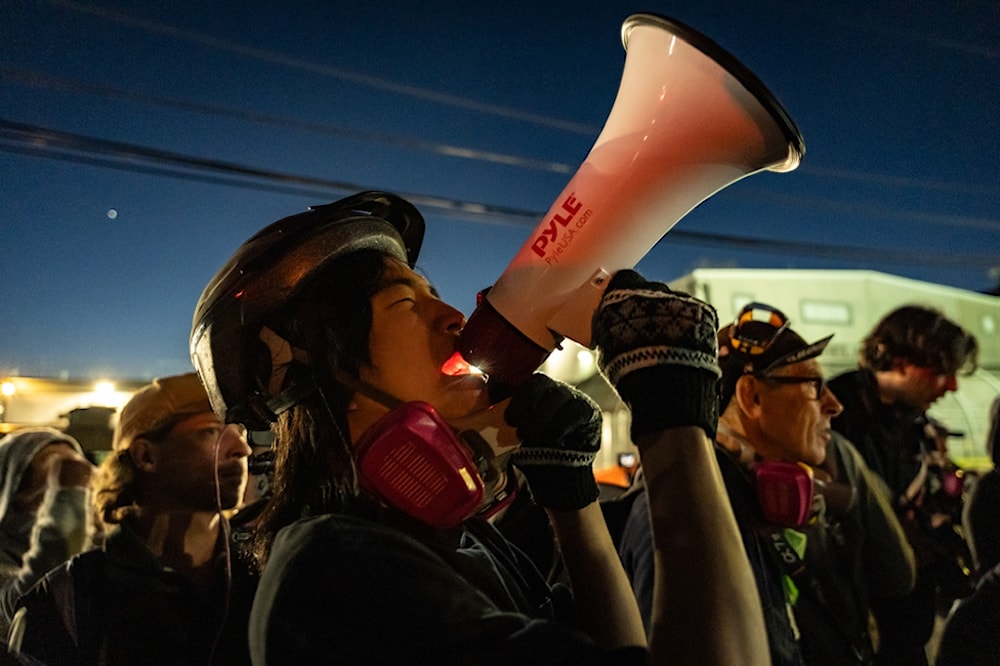
Anti-ICE protesters chant moments before clashes with law enforcement officers begin outside the Delaney Hall detention center on Saturday, May 30, 2026, in Newark, N.J. (AP)
Newly disclosed federal detention data are fueling criticism of US immigration enforcement policies, with advocates arguing that the figures expose a sharp gap between the Trump administration's rhetoric and the reality inside one of its largest immigration detention facilities.
The data, obtained by The New York Times, indicate that only a small minority of detainees held at Delaney Hall in Newark, New Jersey, have criminal convictions, despite repeated claims by federal officials that immigration authorities are removing dangerous criminals from American communities.
According to the records, 591 people were being held at the facility this week. Only 76 had criminal convictions, while 123 faced pending criminal charges. The overwhelming majority were being detained for immigration-related matters rather than serious criminal offenses.
Most detainees classified as low risk
The revelations come as Delaney Hall has become a flashpoint in the national debate over immigration detention. Reports of a hunger strike, allegations regarding conditions inside the facility, and the refusal of federal authorities to grant access to elected officials have sparked protests and intensified scrutiny of ICE operations.
Critics say the numbers challenge the administration's effort to portray detention centers as facilities primarily reserved for violent offenders.
The data show that nearly 90% of detainees previously assessed by ICE were classified as low-security risks. Agency records from April also indicated that only one detainee was considered a high-security risk and that roughly 90% carried no ICE threat designation under the agency's own classification system.
Research conducted by Syracuse University scholar Austin Kocher reached similar conclusions. Examining federal immigration enforcement records, Kocher found that around 70% of detainees at Delaney Hall had been accused only of immigration violations. Among those with criminal convictions, most had been convicted of misdemeanors rather than serious violent offenses.
"If you were looking for an ICE facility that holds a large number of dangerous criminals," Kocher wrote, "Delaney Hall just isn't it."
Critics question official narrative
Immigrant-rights advocates argue that the findings expose what they describe as a broader pattern in which migrants are publicly depicted as dangerous threats while large numbers of detainees have no record of serious criminal conduct.
The controversy has also renewed criticism of the immigration detention system itself. Opponents of ICE contend that facilities such as Delaney Hall function primarily as deportation-processing centers rather than public-safety institutions, with thousands of people held for extended periods despite posing little documented threat to their communities.
The detention center is operated by the GEO Group under a federal contract reportedly worth $1 billion over 15 years. Critics of private immigration detention argue that the arrangement allows corporations to profit from the expansion of migrant detention, creating financial incentives to maintain high detention levels.
Protests intensify over detention policies
For weeks, protesters have gathered outside Delaney Hall demanding greater transparency and independent oversight. Demonstrators have called for inspections of the facility and greater public disclosure regarding detainee treatment and conditions.
Federal officials have rejected those criticisms. The Department of Homeland Security has defended its operations and insisted that immigration laws are being enforced. In response to requests for updated detainee data, the department stated, "It is a crime to enter the United States illegally. Everyone being held inside Delaney Hall broke the law. If you come to our country illegally, we will find you and arrest you."
For immigrant-rights organizations, however, the newly disclosed figures reinforce a different argument: that the US government's immigration detention apparatus is sweeping up large numbers of nonviolent migrants while relying on the image of dangerous criminals to justify an increasingly aggressive enforcement regime.
Read more: At least 10 people have committed suicide in ICE detention: Probe


