
Hegseth says Hormuz “open”, if not for Iranian drones and missiles
 4 Min Read
US War Secretary Pete Hegseth insists the Strait of Hormuz is not closed despite disrupted shipping and soaring oil prices, blaming Iranian missile threats while offering no clear timeline for restoring transit.
-
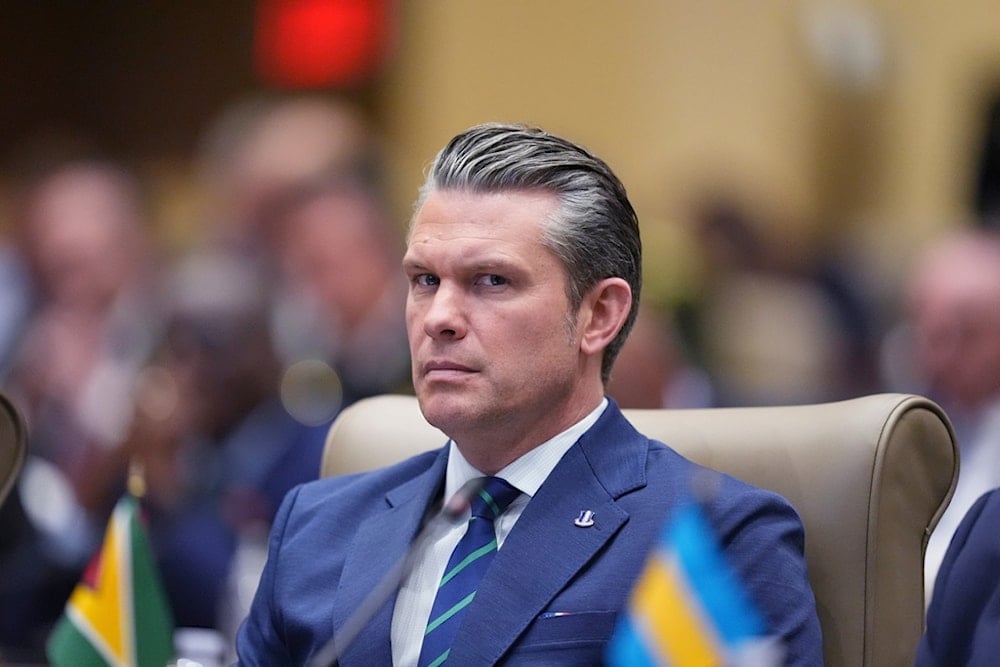
United States War Secretary Pete Hegseth listens during the inaugural Americas Counter Cartel Conference at US Southern Command in Doral, Florida, the United States, on March 5, 2026. (AP)
United States War Secretary Pete Hegseth dismissed concerns that the Strait of Hormuz has effectively been shut down by the ongoing US-Israeli war on Iran, claiming the key global shipping lane remains open and that ships would take the route if Iran were to stop firing missiles.
Speaking during a Pentagon press briefing on Friday, a visibly irate Hegseth rejected warnings that the disruption of traffic through the strait could persist, arguing that the situation is under control.
“The only thing prohibiting transit in the straits right now is Iran shooting at shipping,” Hegseth said, adding, “We have been dealing with it, and don’t need to worry about it.”
U.S. Secretary of Defense Pete Hegseth states that the Strait of Hormuz is “open for transit” and the only thing preventing that is continued drone and missile attacks by Iran. pic.twitter.com/tv2jzZq2ne
— OSINTdefender (@sentdefender) March 13, 2026
The comments came as uncertainty over shipping through the strategic waterway, through which a significant portion of the world’s oil exports passes, has roiled global energy markets since the start of the US-Israeli war on Iran on February 28.
Oil prices have surged sharply amid fears that the conflict could disrupt supplies from the Gulf region. The trading price of West Texas Intermediate crude reached roughly $93 per barrel on Friday, compared to about $67 per barrel the day before the war began.
Conflicting messages from US officials
Hegseth’s remarks came amid conflicting statements from senior US officials regarding the safety of maritime transit through the strait. On Thursday, US Energy Secretary Chris Wright told CNBC that the US Navy was not prepared to escort oil tankers through the Strait of Hormuz. Hours later, Treasury Secretary Scott Bessent said Washington, and potentially an international coalition, would begin escorting ships through the waterway as soon as it becomes “militarily possible”.
Despite dismissing concerns, Hegseth and Joint Chiefs of Staff Chairman Dan Caine declined to provide details on how or when the United States plans to secure shipping routes through the chokepoint.
“We have a plan for every option here,” Hegseth said, without outlining specific measures. Caine similarly said the US retains “a range of options” to address threats in the strait, including the possibility that sea mines could be deployed.
Market analysts, however, have expressed skepticism about Washington’s ability to quickly establish a secure escort system for commercial vessels.
Analysts at RBC Capital Markets said there is “significant skepticism that a robust US Navy tanker escort service will be operational soon,” citing capacity constraints and Iran’s enhanced military capabilities compared to previous confrontations in the Gulf.
Escalating rhetoric as war on Iran continues
During the same briefing, Hegseth adopted an increasingly combative tone toward Iranian leadership, claiming that Tehran’s officials were “rats” hiding from US strikes.
“The U.S. is decimating the radical Iranian regime’s military in a way the world has never seen before,” he said.
The secretary also claimed that Iranian Leader Sayyed Mojtaba Khamenei, whom he referred to as Iran’s “new so-called, not-so-supreme leader”, may have been “disfigured”, though he offered no evidence to support the claim.
The joint address by Hegseth and Caine came after four Air Force troops were killed in a KC-135 aerial refueling tanker in Iraq. The US claims that the aircraft collided with another KC-135 over Iraq, asserting that no hostile or friendly fire incident occured. However, the Islamic Reistsance in Iraq released a statement saying that its fighter downed the tanker overnight.
Iranian officials appear publicly in Tehran
Despite claims from Washington that Iran’s leadership is “hiding”, senior Iranian officials appeared publicly on Friday during large Al-Quds Day marches in Tehran, amid an Israeli strike that targeted a building where the rally was held.
Thousands of Iranians took to the streets in the capital in solidarity with Palestine and in defiance of the ongoing US-Israeli bombardment of Iran. Among those participating were Supreme National Security Council Secretary Ali Larijani, President Masoud Pezeshkian, Foreign Minister Abbas Araghchi, and Judiciary Chief Gholam-Hossein Mohseni-Eje’i.
Read more: Majority of Americans link Trump’s Iran war to Epstein cover‑up: Poll


