
Hezbollah, Amal Movement condemn US sanctions on MPs, officials
 3 Min Read
Lebanon's Hezbollah and Amal Movement condemn new US sanctions targeting lawmakers, military officers, and officials.
-
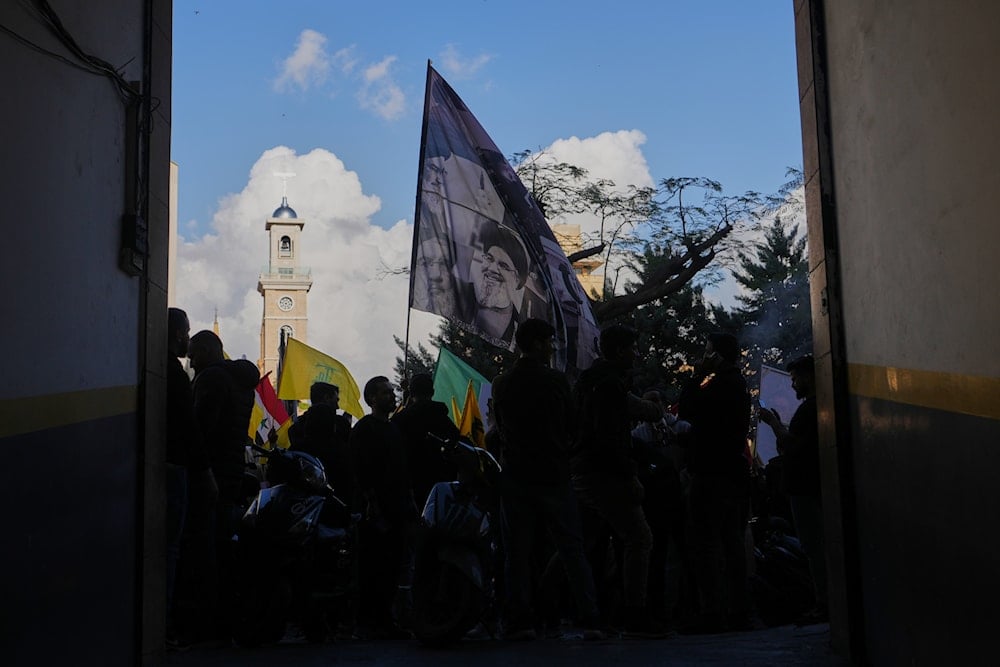
Silhouetted protesters gather outside a building, waving Hezbollah flags and holding a portrait of martyred leader Sayyed Hassan Nasrallah, with a church bell tower in the background in Beirut, Lebanon, on April 11, 2026 (AP)
Hezbollah strongly condemned the recent US sanctions, describing them as a politically motivated attempt to pressure Lebanon and its institutions. The political group said the measures amount to an attempt to intimidate the Lebanese people and bolster Israeli aggression against Lebanon by providing political cover after failures to deter Lebanese resistance activities.
The US Treasury Department, through the Office of Foreign Assets Control (OFAC), imposed sanctions on nine individuals in Lebanon, including lawmakers, security officials, and military figures, on allegations of "obstructing the peace process in Lebanon and hindering the disarmament of Hezbollah".
The sanctions included Hezbollah-affiliated politicians: former minister and MP Mohammad Fneish, MPs Hassan Fadlallah, Ibrahim al-Moussawi, and Hussein al-Hajj Hassan.
They also targeted Iran’s designated ambassador to Lebanon, Mohammad Reza Sheibani, along with Amal Movement security officials Ahmad Baalbaki and Ali Safaoui, as well as General Security brigadier Khattar Nasseredine and Lebanese Army colonel Samer Hamadeh.
In its statement, Hezbollah argued that the US administration's false accusations put forward against the group's MPs and officials stem from their refusal to disarm the resistance and their opposition to US-imposed plans of capitulation to impose on Lebanon in favor of the Israeli entity. This accusation, the group stressed, extends to the majority of the population that remains committed to resistance and rejects submission.
These sanctions are a badge of honor for those targeted and an additional confirmation of the correctness of our position.
Hezbollah condemned the sanctions imposed by the US Departments of State and Treasury on Lebanese MPs and officers in the Lebanese Army and General Security, as well as officials from Hezbollah and the Amal Movement.
— Al Mayadeen English (@MayadeenEnglish) May 21, 2026
In a statement, Hezbollah said the sanctions represent an… pic.twitter.com/AHqvhdg941
"In practical terms, they are worth less than the ink used to write them and will have no tangible impact on our choices or on the continued work of our members and officials in serving their people and defending their interests and sovereignty," the statement read.
Hezbollah further described the sanctions as a "badge of honor" for those targeted, insisting they would not alter their political positions or their continued work in public service and national defense. The statement also criticized the inclusion of Lebanese military officers, saying the timing, coming ahead of meetings at the Pentagon, amounts to an attempt to pressure Lebanon’s security institutions and undermine national sovereignty.
Additionally, Hezbollah called on Lebanese authorities to protect the country’s constitutional, military, and security institutions, warning against what it described as efforts to subject Lebanon to external influence.
Amal Movement condemns US sanctions on its members
For its part, Lebanon’s Amal Movement condemned the US sanctions imposed on two of its members, describing the measures as "unacceptable and unjustified," saying they directly target the movement’s political role.
Amal said the sanctions against Ahmad Baalbaki and Ali Safaoui are aimed primarily at the movement itself rather than the individuals named.
In its statement, the group added that the measures reflect an attempt to undermine Amal's political stance, which focuses on national issues and the protection of the state and its institutions.
Amal stressed that the sanctions are part of a broader pattern of external pressure targeting its role in Lebanon’s political landscape, rejecting them outright as interference in domestic affairs.


