
Hezbollah offers condolences to Hamas over martyrdom of commander Odeh
 4 Min Read
Hezbollah issues a statement mourning Hamas commander Mohammad Odeh killed in an airstrike in Gaza, condemning the attack and calling for continued resistance.
-
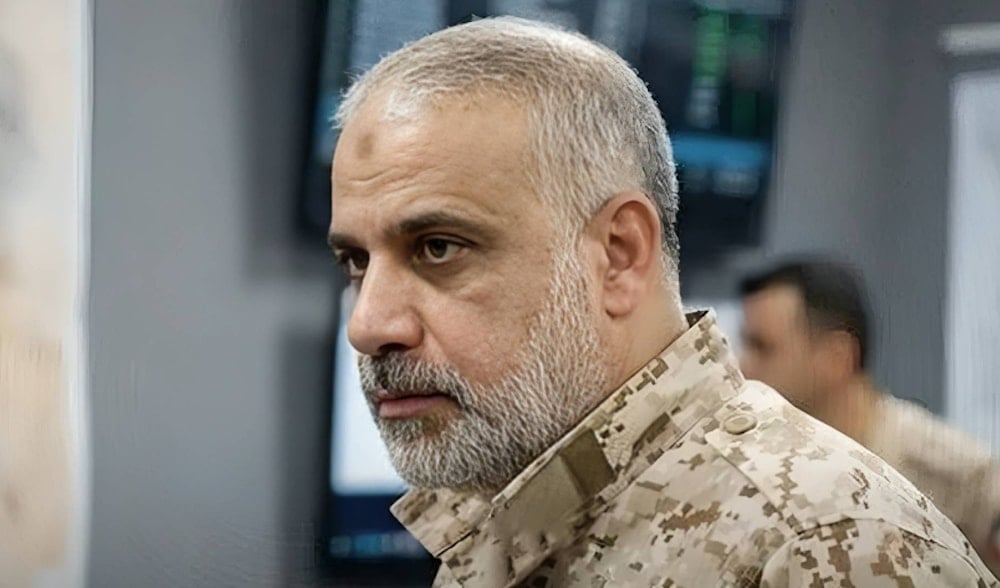
Hamas senior military commander Mohammad Odeh, undated (Social media)
Hezbollah issued a statement on Wednesday expressing condolences to Hamas, the Izz ad-Din al-Qassam Brigades, and the Palestinian people following the martyrdom of Commander Mohammad Odeh, also known as Abu Amro.
Odeh was killed in an Israeli airstrike that targeted a residential building west of Gaza City, along with members of his family.
The statement framed his death within the broader context of the ongoing war, emphasizing that such losses would not weaken the Palestinian Resistance but instead reinforce its determination.
Despite martyrdom, resistance continues
Hezbollah extended its condolences over the death of Odeh while also praising the continuity of the Palestinian Resistance movement.
The group stated that the martyrdom of leaders "will not weaken the resolve of the resistance fighters, but will increase their determination, steadfastness, and adherence to the option of resistance," adding that the future of the nation is shaped by "the blood of the resistance fighters and the steadfastness of the free people."
Hezbollah also extended its message of support to Hamas and its military wing, the Izz ad-Din al-Qassam Brigades, framing Odeh’s martyrdom as part of a long line of losses within the Palestinian armed movement.
In its statement, Hezbollah stressed that the killing of Resistance leaders would not change the movement’s strategic course. "The banner of resistance will continue to fly high," the group said, adding that efforts by the Zionist enemy to weaken the Resistance through targeted assassinations would ultimately fail.
According to its statement, Hezbollah further stressed that such actions would not achieve their intended objective and would instead strengthen continued resistance efforts "as long as there is occupation, aggression and injustice." The statement also strongly condemned the ongoing attacks on civilians in Gaza and Lebanon.
Hezbollah said the strike that killed Odeh and his family is added to "the black record full of massacres, genocide and brutality of this criminal entity," accusing it of targeting civilians, including women and children, in Gaza City. It further stated that these actions occur "in full view of the silent and complicit world," referencing international inaction regarding the war.
Background on Odeh’s role in Hamas
Odeh is considered a member of the first generation of Hamas’ military wing and one of its earliest founders, and worked alongside key historical figures, including commander Abu Muadh al-Namrouti, Abu Khaled Al-Dayf, and Sheikh Salah Shehadeh.
He spent 30 years alongside senior martyrs, outliving many of them. Despite leaving behind what the movement called a "great legacy," he remained largely unknown to the public. He lived his life of armed activism away from the spotlight. Aside from one well-known image, obtained by Israeli forces after the Al-Aqsa Flood operation, he was almost absent from media coverage.
Odeh was known for his bravery. In late 2000, when Palestinian Authority security forces came to arrest Sheikh Salah Shehadrh in the al-Alami area of the Beit Lahia project, Odeh reportedly opened fire and confronted them.
He rose through the ranks of the military apparatus:
- 2001: Became head of a central department within the military manufacturing branch.
- 2009: Appointed commander of the al-Khalifah Battalion (Central Camp), a position he held for two years.
- Later roles: Served as deputy commander of the Northern Brigade, head of combat intelligence at the central apparatus level, and from 2015 to 2020, served as commander of the Northern Brigade.
According to Hamas, his period of command oversaw a build-up of military capabilities and an ability to unify technical and specialized efforts. He was described as very close to the commander Mohammad Al-Dayf, who reportedly saw in him "trust, leadership, professionalism, and competence."


