
Hezbollah rejects foreign dictates, warns against capitulation
 4 Min Read
Hezbollah marked the anniversary of the failed May 17 agreement by rejecting all foreign dictates, warning Lebanese authorities against "deviant choices" with "Israel," and affirming that the occupation will never find stability as long as the resistance remains present.
-
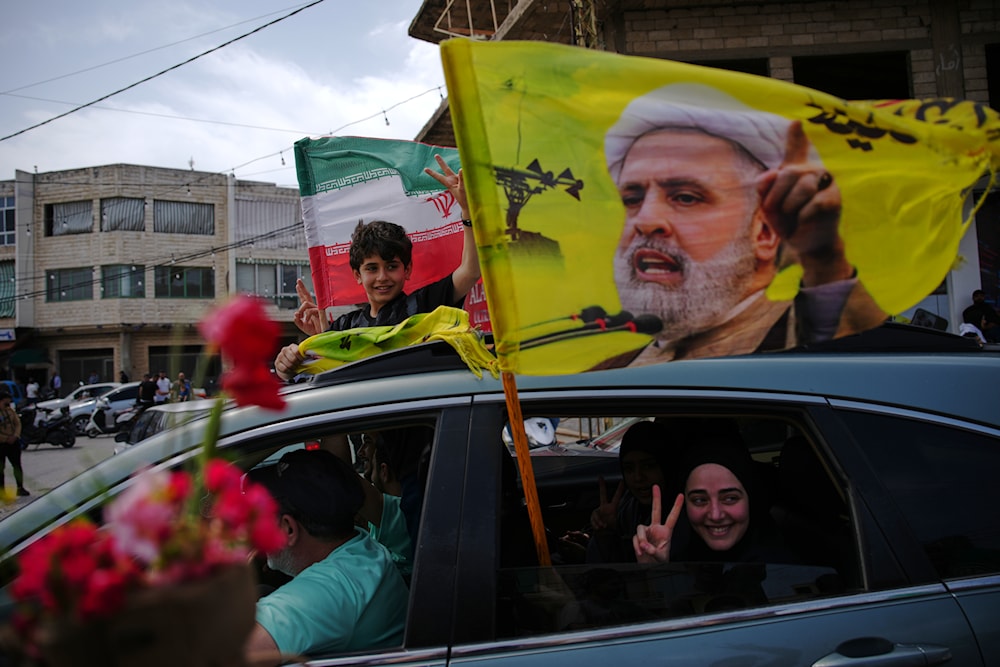
Displaced residents wave a flag with the image of Hezbollah leader Naim Qassem as they return to their villages following a ceasefire between Israel and Hezbollah, in Zefta, southern Lebanon, April 17, 2026 (AP)
On the anniversary of the failed May 17 agreement, Hezbollah has issued a comprehensive statement rejecting all forms of foreign interference in Lebanese affairs, warning Lebanese authorities against pursuing "deviant choices" with "Israel", and affirming that the Israeli occupation will never achieve stability on Lebanese land as long as the resistance remains present.
Hezbollah rejects all foreign dictates and pressures
In its statement, Hezbollah announced its complete rejection of any foreign dictates, pressures, or tutelage, whether American or otherwise, that seek to forcibly impose a path and destiny on Lebanon. The resistance movement condemned such interference as undermining Lebanon's sovereignty, independence, and dignity, while contradicting the most basic national principles and constants that all Lebanese are supposed to uphold.
Warning against 'deviant choices' with Israel
Hezbollah called on Lebanese authorities not to go too far in what it described as "deviant choices" with "Israel". The movement warned that such choices would carry serious consequences for Lebanon's stability, affecting both the state and society as a whole. The statement did not specify which policies or actions it was referring to, but the context pointed to ongoing US‑backed normalization efforts and indirect negotiations with the occupation.
Lebanese questioning the path of concessions
Hezbollah noted that many Lebanese, especially residents of the southern border areas who have borne the brunt of Israeli aggression, are asking a fundamental question: what has Lebanon gained from a path of concessions since the ceasefire agreement of November 27, 2024? The statement suggested that despite diplomatic engagements and internationally brokered truces, the occupation continues to threaten Lebanese sovereignty and violate Lebanese territory.
Call for national consensus
The resistance movement called on Lebanese authorities to cooperate within a framework of national consensus to achieve national constants. Hezbollah stressed that unilateral decisions or deals made without broad internal agreement would only weaken Lebanon's position and serve the interests of foreign powers, particularly the United States and "Israel".
Resistance as the only guarantee against occupation
Hezbollah firmly stressed that the Israeli occupation would never achieve stability on Lebanese land as long as the resistance, its fighters, its supporters, national forces, and "honorable free people" from all sects and regions of Lebanon remain present. The statement reaffirmed that armed resistance, not diplomatic concessions, remains the sole effective means of deterring Israeli aggression and liberating occupied Lebanese territory.
Background: The failed May 17 agreement
The May 17, 1983 agreement was a US‑brokered accord between Lebanon and "Israel" signed under heavy American pressure following the 1982 Israeli invasion of Lebanon. The agreement would have established formal diplomatic and economic relations between the two countries, granted "Israel" legitimacy on Lebanese soil, and created a framework for the partial withdrawal of Israeli occupation forces while leaving "Israel" with significant security arrangements inside Lebanon.
From Hezbollah's perspective, and from the perspective of the overwhelming majority of the Lebanese people at the time, the agreement represented a complete capitulation to American and Israeli interests. It was negotiated behind the backs of the Lebanese resistance and was seen as an attempt to permanently entrench Israeli influence in the country. The agreement collapsed under massive popular opposition, including widespread protests and armed resistance, and was formally annulled by the Lebanese parliament in 1984 under pressure from the resistance and nationalist forces.
For Hezbollah, the May 17 agreement remains a cautionary tale of what happens when Lebanese authorities submit to foreign dictates. Each anniversary serves as a reminder that true sovereignty and dignity cannot be achieved through concessions to the occupation, but only through steadfast resistance and national unity. The movement's statement reaffirms that the same logic applies today: any attempt to normalize with "Israel" or accept American diktats will be met with popular rejection and resistance.
Read More: Lebanon Resistance rejects direct talks, eyes on battlefield


