
Hormuz more important to Iran than atomic bomb: Iran Deputy Speaker
 3 Min Read
Iranian officials warn that any attack on Tehran’s oil exports could disrupt access to the region’s energy supplies, while emphasizing the strategic significance of the Strait of Hormuz amid ongoing US threats.
-
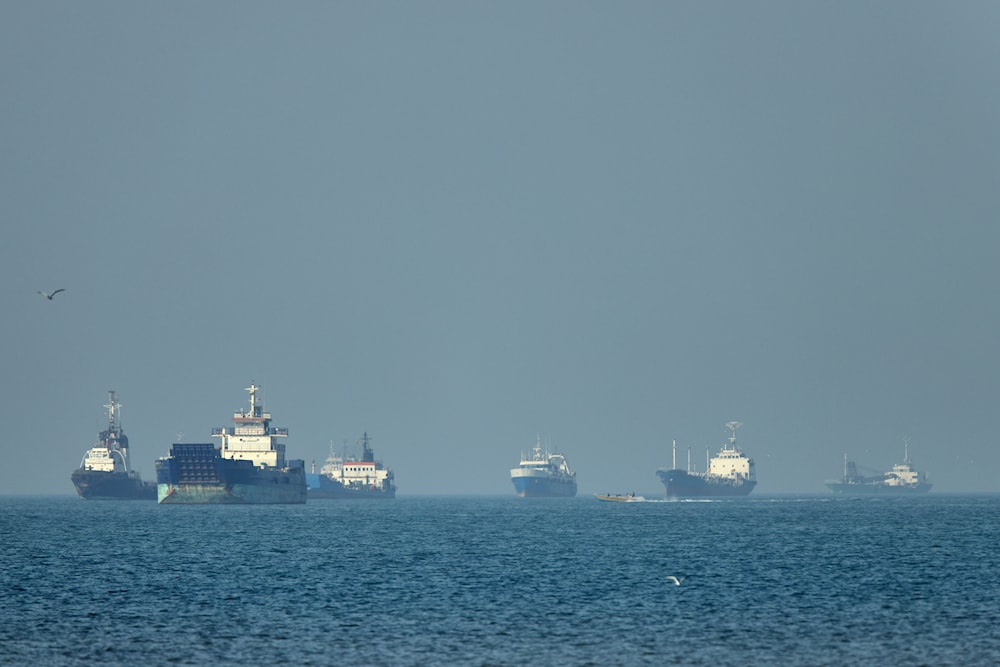
Cargo ships, including bulk carriers and general cargo vessels, sit at anchor offshore as a small motorboat passes in the foreground, in the Strait of Hormuz off Bandar Abbas, Iran, on May 4, 2026 (Amirhosein Khorgooi/ISNA via AP)
Iranian Deputy Speaker of Parliament Hamid-Reza Haji Babaei confirmed in an interview with Iran's state television that Tehran would take measures to prevent the United States from accessing the region's oil if Iranian oil were attacked, stressing that "no country in the world will be able to access the region's oil for a long period of time".
Haji Babaei pointed out that the Iranian leadership believes that the United States and its president "will not hesitate to do anything they are capable of doing", noting that "the Strait of Hormuz is more important to Iran than the atomic bomb".
He added that Iran today possesses “different capabilities than it did before the aggression”, stressing that Tehran would respond to any party imposing or enforcing US sanctions against it through reciprocal counter-sanctions.
Iran stresses strategic importance of Strait of Hormuz
Mohammad Mokhber, advisor and aide to Iran's Leader, stated that the Strait of Hormuz represents a "potential equivalent to an atomic bomb", emphasizing that Iran "will never relinquish it due to its strategic impact on the global economy".
For over a month, the United States has imposed a blockade on the Strait of Hormuz and is attempting to seize control of Iranian oil at sea, as well as attack various Iranian islands that host Iranian oil exports.
Inside Iran's bid for Strait of Hormuz insurance-based framework
In this context, Iran’s Ministry of Economy is reportedly advancing a proposal to manage the Strait of Hormuz through an insurance-based framework aimed at enabling post-war oversight of the strategic waterway in accordance with international law, while also creating a new source of revenue for the country.
According to a document obtained by Fars News Agency on Friday, the initiative seeks to establish a mechanism through which “management of the Strait of Hormuz becomes possible via insurance,” in a way that would remain acceptable to foreign states under non-war conditions while still allowing Iran to exercise effective control over maritime activity in the strait.
Under the proposed framework, Iran would gain broader oversight capabilities, including expanded access to maritime data and the ability to distinguish between vessels from different countries transiting the waterway.
Since the onset of the US-Israeli war, Iranian officials have maintained that “security of the Strait of Hormuz lies with the armed forces of the Islamic Republic.” Against that backdrop, the proposal argues that management of the strait should remain under Iranian authority due to the damage Tehran has sustained from the passage of hostile vessels through the corridor.


